
Lieferung heute & morgen

Qualitätsgarantie

Willkommens-Angebote freischalten: KOSTENLOSE Lieferung | Bis zu 80 % RABATT | Kostenlose 30-Tage-JoyPlus-Testphase
App herunterladen
A 28 cm frying pan gives you plenty of room for vegetables, meat, stir-fries and several portions at once. It will usually still fit on standard-sized hobs, too. But choosing the right pan involves more than just the diameter. The material, base construction, side height, coating and cleaning requirements all affect how practical it will be for everyday use.
The product information should explicitly list induction, gas, electric and Ceran or glass-ceramic hobs. A pan may work on several hob types but still require additional guidance from the manufacturer for halogen or infrared hobs. For induction, you’ll need a magnetic or induction-compatible base.
A non-stick frying pan makes it easier to release delicate foods. However, its lifespan depends heavily on how you use it. Metal utensils, scouring pads, prolonged heating while empty and sudden temperature changes can damage the coating. A “scratch-resistant” surface isn’t automatically suitable for knives or harsh cleaning either.
A ceramic coating is generally applied to a metal pan; it doesn’t mean the pan is made entirely of ceramic. Check the product information directly for claims such as “PFAS-free”, “PFOA-free” or “PTFE-free”, as these terms describe different properties.
The 28 cm measurement usually refers to the top rim. The actual base of the pan may be considerably smaller, which matters for induction hobs and even heat distribution. Higher sides make a pan better suited to slow-cooked dishes, but can make it harder to flip crêpes or pancakes.
Aluminium usually heats up quickly and is relatively lightweight. Stainless steel is durable and resistant to damage from many kitchen utensils, but you’ll need to manage the temperature carefully when frying. Multi-layer models often combine stainless steel with an aluminium core, helping to distribute heat more evenly from the base.
A stainless steel frying pan without a traditional non-stick coating is a good choice if you want to sear food at high heat and have a durable surface. For eggs, fish or delicate vegetables, a coated frying pan is often easier to use.
A coated pan is usually best used over a medium heat. Wooden, silicone or plastic utensils help reduce the risk of scratches. A dishwasher-safe frying pan can go in the dishwasher, but washing it by hand with a soft sponge may help the coating last longer.
Also check the specific temperature limit. “Oven-safe” doesn’t indicate a standard temperature. Some models are rated only up to 160 °C, while others can withstand 230 °C or 260 °C. Pans with plastic or silicone handles often have lower temperature limits than those with all-metal bodies.
A deep frying pan is ideal for sauces, ragù, rice dishes and slow-cooked meals. A glass lid keeps moisture in and lets you check on your food as it cooks. If you’re choosing a frying pan for family meals, look for a sturdy handle, a generously sized base and a weight you can move safely.
The models below cater to a range of needs. Information is based on the details provided for each product; check the product page before buying to confirm any specific marketing claims.
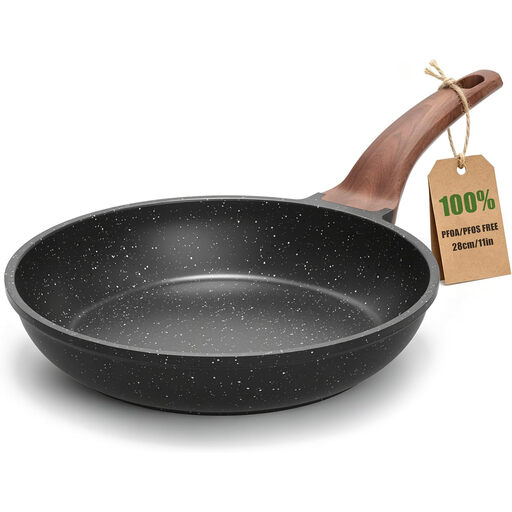
Why it suits this profile: According to the product information, this aluminium pan is suitable for induction, gas, electric and Ceran hobs. The insulated handle and choice of sizes make it a straightforward option for everyday cooking.
The product details specify which hobs it works with and clearly state that it should be washed by hand and isn’t oven-safe. This makes it easier to take these important limitations into account before buying.
The non-stick coating and magnetic base are designed for everyday use. The supplier recommends the 28 cm version for family-sized portions.
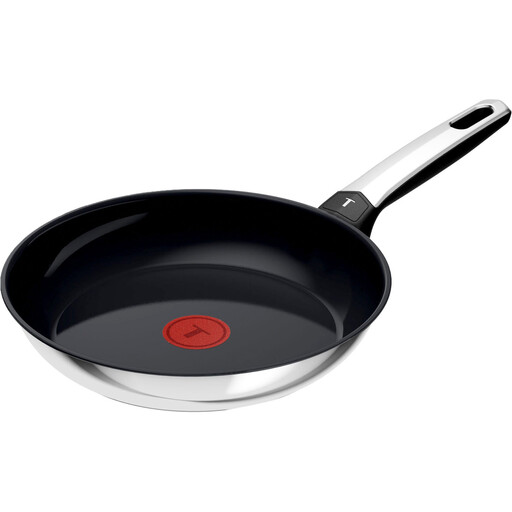
Why it suits this profile: The 18/10 stainless steel body, ceramic coating and deep sides make this a versatile 28 cm induction frying pan for households cooking larger portions.
The product details list its dimensions, weight, compatible hob types, dishwasher suitability and temperature indicator. Hand washing is also recommended to protect the coating.
The 8.2 cm-high body has room for generous portions. According to the product information, the pan is suitable for induction, gas, electric and glass-ceramic hobs.
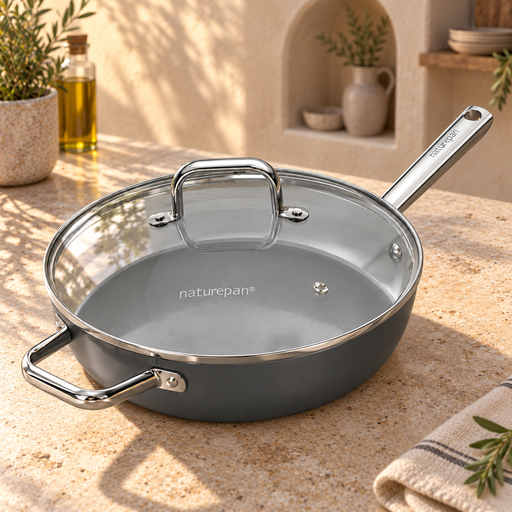
Why it suits this profile: Its deep sides, with a body height of 7.5 cm, and the included glass lid make it well suited to slow-cooked dishes, sauces, stews and one-pan meals.
The product details specify a maximum oven temperature of 260 °C and advise removing the lid before using the pan in the oven. The recommendation to cook over a low to medium heat is also clearly stated.
The diamond- and titanium-reinforced ceramic coating, stainless steel handle and compatibility with induction, gas, electric and Ceran hobs make it a versatile choice for everyday cooking.
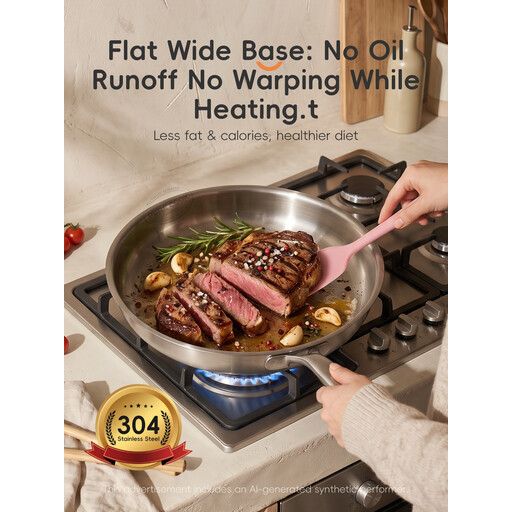
Why it suits this profile: Its three-layer construction, combining stainless steel with an aluminium core, is designed for cooks who prefer an uncoated surface and a pan for searing food at high heat.
As no traditional non-stick coating is listed, there’s no typical coating wear to contend with. However, delicate foods need careful temperature control and enough fat to cook well.
Its Tri-Ply construction, compatibility with various hob types and stated dishwasher suitability are practical features for everyday use.
We’ve put together a complete, regularly updated list of products that meet these strict selection criteria and fully comply with the safety regulations in force in the EU.
It depends on how much you’re cooking and how high the sides are. A shallow pan is often suitable for several portions of vegetables, meat or eggs. A deep frying pan offers more room for sauces, slow-cooked dishes and family meals.
Look for an explicit induction-compatible label or a magnetic base. Multi-layer stainless steel pans and models with an induction-ready base plate are often suitable. The base diameter should also match the size of your induction zone.
There’s no set lifespan that applies to every pan. It depends on the heat, utensils, cleaning and how often you use it. If the coating is damaged, peeling or clearly deteriorating, stop using the pan.