
Lieferung heute & morgen

Qualitätsgarantie

Willkommens-Angebote freischalten: KOSTENLOSE Lieferung | Bis zu 80 % RABATT | Kostenlose 30-Tage-JoyPlus-Testphase
App herunterladen
A frying pan should suit your hob, the number of people you’re cooking for and the way you like to prepare food. Yet many buyers choose based only on diameter, colour or the words ‘non-stick’. This can lead to common purchasing mistakes: the pan isn’t suitable for induction, the coating isn’t cared for properly or its stated capacity isn’t enough for everyday use.
This buying guide explains which technical details really matter and which models suit different households.
An induction frying pan needs a magnetic base. Many models are suitable for gas, electric and ceramic hobs, but that doesn’t automatically mean they’ll work on induction. Look for an explicit statement that the pan is induction-compatible, and check that its base sits flat on the hob.
Halogen and infrared hobs may have additional restrictions. If in doubt, check the manufacturer’s specifications to confirm compatibility.
A coated frying pan, ceramic frying pan or traditional non-stick frying pan usually needs careful temperature control and suitable kitchen utensils. Metal turners, scouring pads and prolonged heating while empty can damage the surface.
Even a dishwasher-safe frying pan won’t necessarily be best suited to every cleaning routine. Product information often recommends hand-washing, even when a pan is dishwasher-safe, to help the coating last longer.
The size usually refers to the pan’s top rim. A 28 cm frying pan may have less cooking surface than you expect if it has high sides or a smaller base. 20 cm or 22 cm pans are often easier to handle for single portions. 24 cm is suitable for couples and smaller households, while 28 to 30 cm gives you more room for family meals.
An uncoated stainless steel frying pan can withstand high temperatures and is resistant to damage from many kitchen utensils. It does, however, require the right technique: preheat the pan, add oil and don’t turn food too soon. A coated surface can be easier to use with delicate ingredients.
Aluminium heats up quickly and is usually lighter. A layered construction combining stainless steel and aluminium pairs a sturdy exterior with a heat-conducting core. With a ceramic coating, check the maximum temperature, which utensils are suitable and the cleaning instructions.
Induction requires a magnetic base. A so-called multi-layer or sandwich base can improve heat distribution. It’s still important that the base sits flat and suits the size of your hob ring. On a gas hob, the flame shouldn’t extend beyond the edge of the pan.
‘Oven-safe’ doesn’t always apply to the whole frying pan. Some models have a pan body that can withstand a certain temperature, but a handle that can’t. The WMF Durado is one example: according to the product information, the pan body is oven-safe up to 250 °C, but the heat-insulated handle must not go in the oven.
Also check whether a lid is included. A deep frying pan with lid is handy for stews, sauces and larger portions. You’ll often need to remove the lid before putting the pan in the oven.
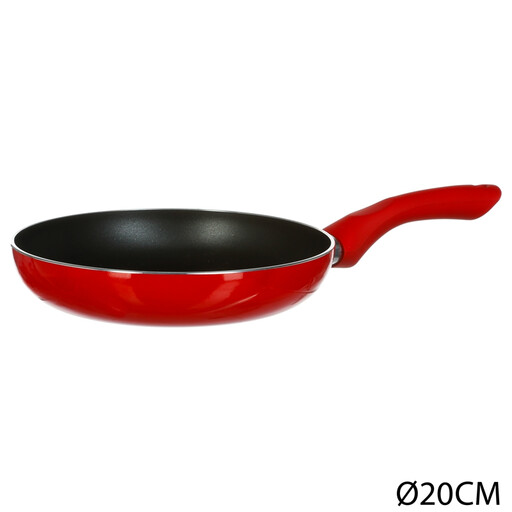
Why this product suits this profile: This compact 20 cm model is designed for single portions, small kitchens and quick meals. According to the product information, it’s suitable for gas, electric and induction hobs, and weighs 0.5 kg.
The compatible hob types and diameter are clearly stated, so you can check before buying whether the pan suits your hob and the portions you usually cook.
Aluminium body, 20 cm diameter and lightweight design; well suited to smaller quantities.
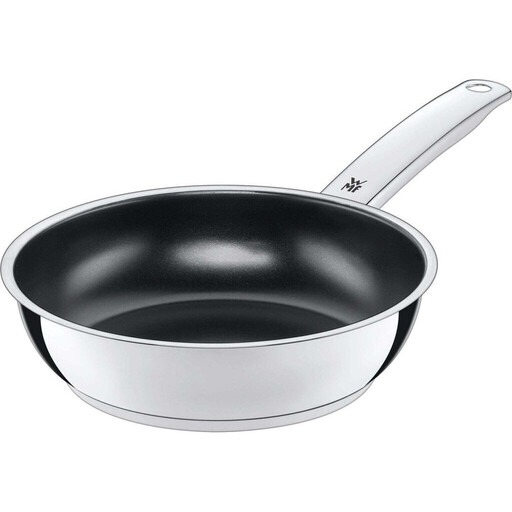
Why this product suits this profile: This stainless steel pan has a ceramic non-stick coating and is designed for use on a range of hob types, including induction. The TransTherm universal base and pouring rim round out its features.
The product information specifies separate temperature limits for the pan body and handle. Hand-washing with a mild detergent is also recommended.
Cromargan 18/10 stainless steel, ceramic coating, induction compatibility and a pan body stated to be oven-safe up to 250 °C.
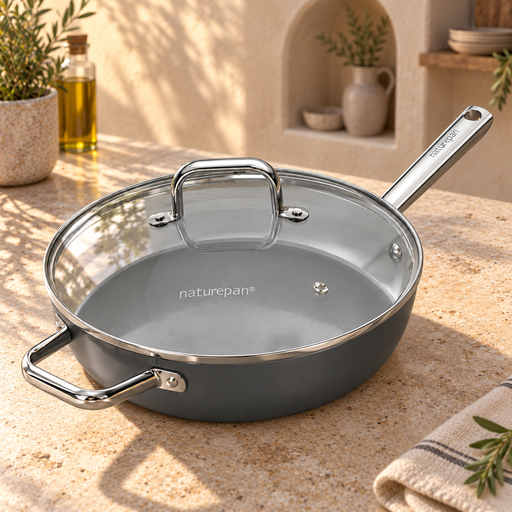
Why this product suits this profile: This deep 28 cm pan with lid is designed for family-sized portions, sauces, stews and one-pan recipes. According to the product information, it’s suitable for induction, gas, electric and ceramic hobs.
The product information specifies an oven temperature of up to 260 °C and states that the lid must be removed before oven use. This helps you avoid exceeding the limits for the handle and lid.
High sides, glass lid, ceramic coating and stated dishwasher-safe design; hand-washing is recommended to help protect the pan.
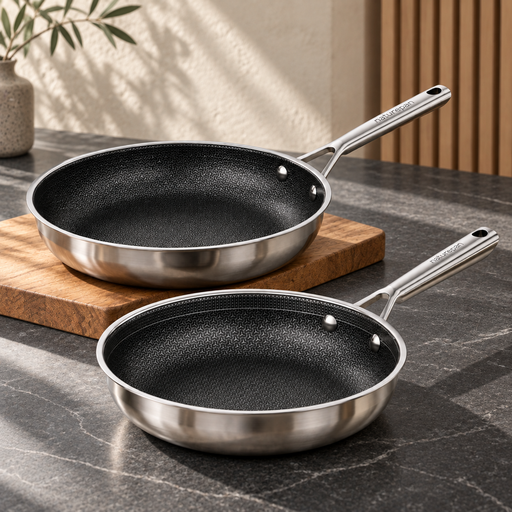
Why this product suits this profile: With 24 and 28 cm pans, this set covers both everyday meals and larger portions. Its hybrid surface combines stainless steel ridges with coated areas.
Having two different diameters means you don’t have to use the same pan for every quantity. The care instructions recommend low to medium heat and soft utensils.
Two sizes, multi-layer stainless steel body with an aluminium core, induction compatibility and stated dishwasher-safe design.
We’ve put together a complete, regularly updated list of products that meet these strict selection criteria and fully comply with the safety regulations in force in the EU.
A 24 cm frying pan is often suitable for two portions. A 20 cm pan may be enough for individual eggs, small side dishes or snacks. If you regularly cook larger vegetable dishes or meat portions, a 28 cm pan is a good choice.
Only if the base is explicitly stated to be induction-compatible. The coating alone doesn’t tell you whether the pan will work on your hob. Check the information about induction, the base construction and compatible hob types.
Its lifespan depends on the type of coating, temperature, utensils and cleaning. Gentle heating, hand-washing and avoiding metal tools can help keep the surface in good condition for longer. Stop using the pan if you notice visible damage.