Bread bakers using small amounts of yeast
If you weigh yeast according to a recipe, check the scale’s increments in that specific weighing range, as well as the small platform’s maximum capacity.


If your recipe calls for less than a gram of yeast, check the scale’s increments in the relevant weighing range. For flour and a heavy mixing bowl, the weighing platform and maximum capacity — including the bowl’s weight — matter more. A dual-platform scale handles both tasks, while a separate precision scale can save space alongside a kitchen scale you already own. A scale that measures in 1 g increments won’t display very small quantities of yeast in tenths of a gram.
If you weigh yeast according to a recipe, check the scale’s increments in that specific weighing range, as well as the small platform’s maximum capacity.
If you weigh ingredients directly into a bowl, you’ll need enough capacity for the bowl and its contents, a suitably sized platform and a tare function.
If you want to save space while your kitchen is being refurbished, compare a scale that covers both weighing ranges with a small precision scale to complement the one you already own.
A good fit if: You regularly want to weigh small amounts of yeast and larger quantities of ingredients with one appliance.
The trade-off: The precision platform has its own, lower maximum capacity. The manufacturer’s stated increments are not an independent accuracy test.
A good fit if: You already have a large kitchen scale and weigh yeast in a small container.
The trade-off: The small platform and maximum capacity limit its use with a mixing bowl.
A good fit if: Your recipes don’t call for less than a gram of yeast and you mainly weigh ingredients directly into a bowl.
The trade-off: A display in 1 g increments is no substitute for a finer display when weighing very small amounts of yeast.
First, check the amount of yeast you need and the scale’s increments in the relevant weighing range. Then consider the bowl’s weight and the scale’s capacity. Ease of care and storage space can help you decide between an all-in-one model and a supplementary scale.
| What matters | What to check before buying | Who should pay particular attention |
|---|---|---|
| Small amounts of yeast | Compare the recipe quantity with the scale’s increments in that weighing range; also allow for the weight of the container. | If my recipe calls for a small amount of yeast, I want to be able to read it accurately in the relevant range. Around 36% of consumers prioritise measuring small amounts of yeast. |
| Bowl and ingredients | Check the combined weight of the bowl and largest quantity of ingredients against the maximum capacity; make sure the display is easy to read. | When weighing into a large bowl, the total weight of the container and ingredients matters to me. Around 29% of consumers put capacity for this task first. |
| Space and versatility | Compare the dimensions with the scales you already own; for dual-platform models, check the features of both platforms. | If there’s little space in my refurbished kitchen, I want to keep the number of appliances I need for weighing to a minimum. Around 21% of consumers prioritise space and versatility. |
| Ease of use and care | Check how to use the tare function and the automatic shut-off time; follow the care instructions for the specific model. | When weighing several ingredients, I want to be able to read the display easily and look after the appliance without any fuss. Around 14% of consumers prioritise ease of use and care. |
The increments quoted for the models mentioned come from the manufacturers and are not the result of independent accuracy tests. Beurer states that the KS 36 measures in 0.1 g increments below 500 g and in larger increments above that; ADE states that the KE2354 Isabella measures in 0.1 g increments on its small platform. When using a bowl, its weight also counts towards the maximum capacity, even if the tare function resets the display to zero.
According to the specifications, the Beurer KS 36 uses different increments above 500 g. What’s more, a stated increment does not independently verify the scale’s actual accuracy.
Check the increments and weighing range for the amount of yeast you actually want to measure.
Tare resets the display, but it doesn’t increase the maximum capacity. The bowl and ingredients still count towards the total weight on the scale.
Compare the combined weight of the container and ingredients with the maximum capacity of the platform you’re using.
The Joybuy page for a WMF scale lists model number 06.0873.6040, while the WMF manufacturer page checked lists CMMF 3201000339. The same brand, colour or a similar capacity doesn’t, on its own, prove that they’re the same product variant.
Before matching products, compare the full model number and the key specifications of the specific item.
ADE offers the KE2354 Isabella dual kitchen scale and the Paul RW220 as a separate precision scale.
According to the manufacturer, Ooni’s digital dual scale combines a small weighing range with a larger platform for ingredients.
The KS 36 is a separate precision kitchen scale for weighing small quantities of ingredients.
According to WMF, the digital kitchen scale CMMF 3201000339 is an option for weighing larger quantities of everyday ingredients.
The Joybuy products below are digital scales for measuring small quantities and weighing bread ingredients. Before buying, check that the listed specifications suit the quantities of yeast, containers and ingredients you need to weigh.
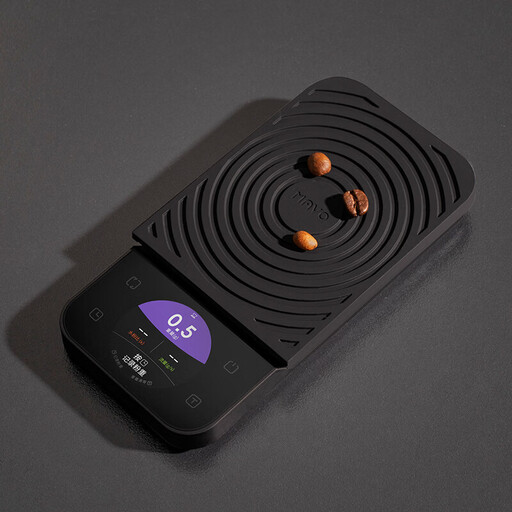 No image available
The product title describes this as a coffee scale. If you’re considering it for weighing yeast, check that its increments and capacity suit the quantity you need.
 No image available
The product title mentions a removable bowl. Before weighing ingredients, check that the maximum capacity and increments are suitable for the container and its contents.
 No image available
The product title lists a tare function and a maximum capacity of 5 kg. Check the increments in the range you need for weighing yeast, and add the bowl’s weight to the weight of the ingredients.
 No image available
The product title lists 1 g increments, a capacity of up to 5,000 g and a tare function. Check that the stated increments are suitable for the amount of yeast you need to weigh.
 No image available
The product title lists a capacity of up to 10 kg, 1 g increments, a tare function and dimensions of 21 × 15,5 × 2,9 cm. Check that the bowl and ingredients together stay within the maximum capacity.
No, not if you need to read an amount of yeast below one gram to the nearest tenth of a gram. Check the increments in the relevant weighing range: Beurer states that the KS 36 measures in 0.1 g increments below 500 g and uses larger increments above that. Display resolution alone doesn’t prove actual measuring accuracy.
Place the container on the appropriate platform and use its tare function before adding the next ingredient. The container and ingredients must stay within the maximum capacity when weighed together. According to the manufacturer, each platform on the ADE Isabella has its own tare function.
A verified scale isn’t a necessary buying criterion for home bread baking, according to the Physikalisch-Technische Bundesanstalt’s guidance on household scales. The PTB distinguishes household scales from scales used for legally regulated applications.