
Lieferung heute & morgen

Qualitätsgarantie

Willkommens-Angebote freischalten: KOSTENLOSE Lieferung | Bis zu 80 % RABATT | Kostenlose 30-Tage-JoyPlus-Testphase
App herunterladen
Whether you're baking bread, toast, cake, brownies or savoury oven dishes, the right tin affects baking time, how the batter spreads and how easily you can remove the finished bake. Many disappointing purchases aren't down to a single material feature, but to an unsuitable size, unclear temperature guidance or a coating that isn't cared for properly.
This buying guide from the Joybuy Product Recommendation Officer shows what home bakers and families should look for in bread and cake tins. We focus on clear, practical details such as dimensions, capacity, material, temperature tolerance and cleaning.
A non-stick baking tin can make removing your bake easier. However, it isn't automatically suitable for metal utensils, harsh cleaning products or the dishwasher. For several of the coated tins in this selection, hand washing with a soft sponge is recommended. If the surface becomes scratched or starts to peel, the tin should no longer be used.
A 1 kg bread tin is designed for a different amount of dough than a 1500 g bread tin. The weight usually refers to the intended loaf size, not the capacity in litres. Too much dough can rise over the rim; too little dough will result in a flat loaf.
Many oven baking tins made from steel or carbon steel are intended for oven use only. They should not be used on induction hobs, gas flames or open fires. You also need to check the maximum temperature: in the product data listed here, individual ratings are 220 °C or 250 °C.
For toast bread and evenly shaped sandwich slices, rectangular toast tins are ideal, often with a lid. A toast tin with a lid limits how much the dough can expand and helps create a uniform, square shape. Check the internal dimensions and the recommended dough quantity before you buy.
A loaf tin is suitable for bread, sponge cakes and savoury bakes. Models that are 30 cm long are good for larger cakes or loaves, while a 35 cm tin is designed for loaves up to 1500 g, according to the product information.
For cakes and tarts with a delicate edge, a 30 cm springform tin is practical. The removable side makes it easy to release the cake, but the clasp and the join between the base and ring need careful cleaning. A square baking tin with sides of 23 to 24 cm, on the other hand, is ideal for brownies, small traybakes and square savoury dishes.
Steel baking tins are sturdy and conduct heat evenly in the oven. Thicker walls can improve stability but also make the tin heavier. Carbon steel is comparatively light and is used in some toast and bread tins.
An enamelled base can be cut-resistant, but you should still follow the manufacturer's instructions. The tin must not be used on the hob or over an open flame if this is explicitly ruled out. Before you buy, the following details should be clearly stated:
Even with a non-stick surface, a light greasing can be helpful, especially with sticky doughs or cakes that are high in sugar. Use wooden, silicone or plastic utensils. Allow the tin to cool after baking and avoid a sudden temperature shock, such as placing it on a cold or wet surface.

Why this product fits the profile: The 450 g toast tin with lid is designed for compact loaves and small baking projects. It's ideal for households that want to start with evenly shaped toast.
The stated dough size and the lid help prevent overfilling and uneven shaping. The coating is designed to make removal easier; metal utensils should still be avoided.
Lid for a compact toast shape; non-stick coated surface according to the product description.

Why this product fits the profile: The 30 cm bread tin is designed for 1000 g loaves according to the product information, and is aimed at users who prefer defined dimensions and a sturdy steel construction.
The capacity rating distinguishes this tin from larger 1500 g models. The maximum temperature of 250 °C and hand-washing requirement are clearly stated.
Steel with coated interior; enamelled base and stated suitability for 1 kg loaves.
Why this product fits the profile: The longer tin is aimed at families and frequent bakers who want to make larger loaves or generous sweet and savoury bakes.
The stated suitability for 1500 g reduces the risk of overfilling a smaller loaf tin. According to the information, the tin is oven-safe up to 250 °C but is not dishwasher-safe.
35 cm length; steel construction with non-stick coating and enamelled base.
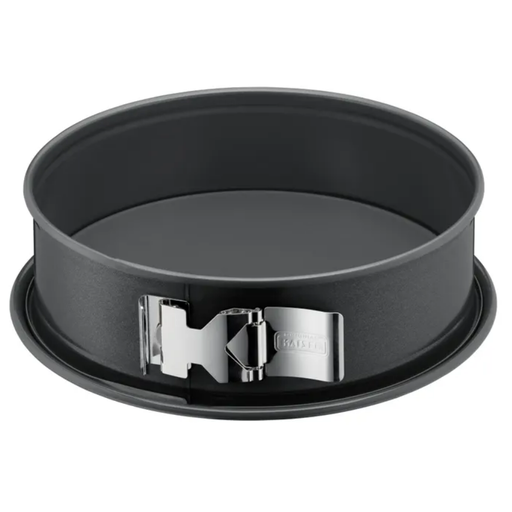
Why this product fits the profile: The 30 cm springform tin with a 4-litre capacity is ideal for larger cakes, tortes and tarts. The SafeClick closure makes handling the tension ring easier.
The 30 cm measurement and capacity provide clear guidance for larger recipes. According to the product data, only the base is dishwasher-safe; the ring should be washed by hand.
4-litre capacity; SafeClick closure and temperature resistance up to 250 °C according to the product information.
We've put together a full, regularly updated list of products that fully meet these strict selection criteria and the safety regulations in force in the EU.
A 1 kg bread tin should be explicitly designed for that amount of dough. The 30 cm La Forme Plus bread tin in this selection states it is suitable for 1000 g. The internal dimensions and the recipe you're using are also crucial, as different doughs rise to different extents.
It's impossible to give a fixed lifespan. It depends on usage, temperature and care. Hand washing, soft sponges and wooden, plastic or silicone utensils will protect the surface. If you notice visible scratches, flaking or damaged coating, the tin should be replaced.
Steel tins are often suitable for gas, electric and conventional ovens, provided the manufacturer states this. Not every tin is designed for open flames, hobs or induction. Always check the temperature limit and the explicitly stated areas of use before you buy.