Bakers working with staggered batches
For anyone starting several doughs or kitchen tasks at different times and wanting to keep track of each countdown separately.


For several batches of bread started at different times, you’ll need independent countdowns running in parallel. A single long countdown is suitable if you only want to keep track of one prove until your next check. With either option, make sure it covers the longest time you need: saved times don’t automatically mean you can run several timers at once. An alarm reminds you to check the dough, but it doesn’t tell you whether it’s ready.
For anyone starting several doughs or kitchen tasks at different times and wanting to keep track of each countdown separately.
For anyone wanting to set a longer stretch of time until the next dough check, without necessarily needing several timers running at once.
For anyone who wants to notice a reminder while doing other kitchen tasks, without an always-loud alarm being the right choice.
First, compare how many check-in times you need to track at once, then consider the longest time until your next check. Choose an alarm and a position where you’ll notice it in your kitchen.
| Buying priority | What to check | Who is it important for? |
|---|---|---|
| Tracking several times at once | Check how many countdowns can run simultaneously and the maximum time for each timer. ADE says the KT102 displays two countdowns at once; TFA Dostmann documents three timers that can be used simultaneously on the TRIPLE TIME 38.2020. | If I start several doughs at different times, I need separate remaining times rather than just saved presets. Around 31% of consumers prioritise this. |
| A long time until the next check | Compare your longest planned interval between checks with the time range specified for the model. TFA Dostmann states that the 99HOURS 38.2049.02 runs for up to 99 hours and 59 minutes. | If I only need to keep track of one dough until the next check, a long, continuous countdown matters more than several channels. Around 31% of consumers prioritise this. |
| The right kind of alarm | Check the volume settings, mute mode and whether there’s a visual signal. TFA Dostmann lists an LED warning light and a sound that can be switched off for the 99HOURS 38.2049.02; ADE says the sound on the KT102 can be disabled. | When I’m doing other things in the kitchen, I want to notice the reminder without an alarm always getting in the way. Around 23% of consumers prioritise the alarm. |
| A visible position that saves space | Check whether a stand, magnet or hanging loop will work with the surfaces in your kitchen and be visible from where you’re working. TFA Dostmann lists a magnet, stand and hanging loop for the 99HOURS; the KT102 from ADE has a stand and magnet. | If I have little space on the worktop, I want to position the timer so I can see the display while I’m working. Around 15% of consumers prioritise this. |
A memory function saves times, but that doesn’t mean several countdowns can run at once. TFA Dostmann lists three saved times for the 99HOURS, while the TRIPLE TIME explicitly offers three timers that can be used simultaneously.
If your batches overlap, check specifically how many countdowns can run at once, rather than just how many times can be saved.
Models differ both in how many countdowns can run in parallel and in the maximum time you can set. A channel won’t help if its time range is too short for your planned interval between checks.
Compare the number of timers that can run at once with the longest planned interval until your next check.
A timer measures time, not how far the dough has proved. King Arthur Baking points out that factors including the temperature of the dough and its surroundings affect proving.
Use the alarm as a prompt to check, then assess the dough according to your recipe.
Battery type, quantity and what’s included vary by model. HENDI lists different battery quantities for the Double timer 582046 on the same product page.
Check the details for the exact version before buying.
Some versions may need additional batteries; check what’s included with the specific model.
The 99HOURS 38.2049.02 and TRIPLE TIME 38.2020 are designed for different timing needs.
The KT102 is worth considering if you want to track two countdowns at once.
The Double timer 582046 is designed for two short, independent timing tasks.
The CONTARE 12330 is a minute timer for short check intervals.
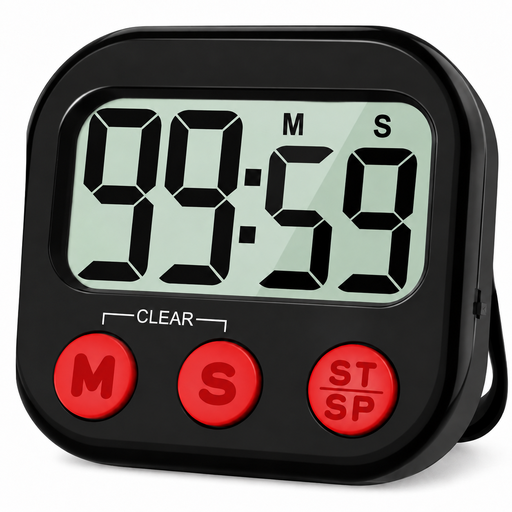
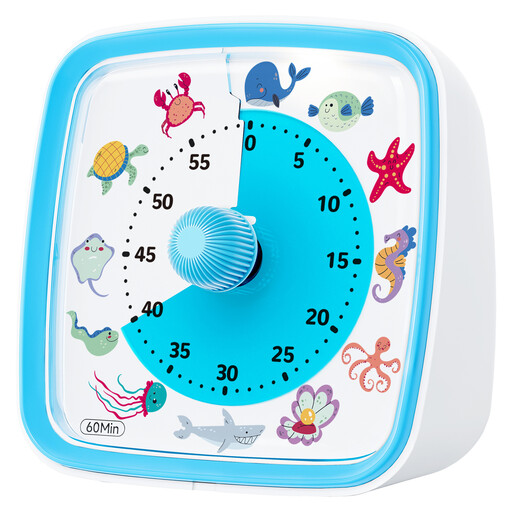
According to their product details, the following digital timers are suitable for short check intervals: their countdowns run for up to 99 minutes and 59 seconds or 60 minutes.
 No image available
For short check intervals when a countdown of up to 99 minutes and 59 seconds is enough.
The countdown runs for up to 99 minutes and 59 seconds, and a stopwatch is also included.
The product details list adjustable volume, an LCD display, a stand, a magnet and a hanging loop.
 No image available
For short check intervals when a countdown of up to 60 minutes is enough and you’d like a visual display of the time.
The product details list quiet operation, a colour display that shrinks as time passes, and a pause function.
The countdown is limited to 60 minutes.
No. Use the alarm as a prompt to check, as a timer doesn’t measure how far the dough has proved. King Arthur Baking explains that factors including the dough and room temperature, as well as the leavening agents, affect proving.
Set a separate countdown for each batch to the next check-in time, provided the model has enough independent channels and a suitable time range. ADE says the KT102 displays two countdowns at once; TFA Dostmann documents three timers that can be used simultaneously on the TRIPLE TIME.
Check the type, quantity and what’s included for the exact model. TFA Dostmann lists two AAA batteries, not included, for the 99HOURS and one AAA battery, included, for the TRIPLE TIME; these details don’t automatically apply to other timers.
Germany’s Federal Ministry for the Environment explains that waste electrical and electronic equipment must be collected separately and taken to an authorised collection point. Used batteries should be returned to a collection point or a retailer; removable batteries should be taken out before disposing of the device.
The Verbraucherzentrale (German consumer advice service) explains that online contracts generally come with a 14-day right to cancel. You must notify the other party to the contract that you’re cancelling; simply sending the item back isn’t enough.