First, check whether your existing freezer compartment is suitable for freezing fresh food and has room for your usual portions of bread. The German Federal Centre for Nutrition classifies a four-star compartment as suitable for freezing food. If there isn’t enough space, consider a small drawer freezer for portioned supplies or a chest freezer for larger stocks. Compare the usable capacity, floor space required and stated annual energy consumption of each model.
Which option is right for you?
A small supply of bread for lunchboxes
If you only freeze a few fresh slices for weekdays, first check that your existing compartment is suitable and has enough room. The German Federal Centre for Nutrition recommends freezing bread as fresh as possible and already sliced.
A household needing extra freezer space
If you need room for other food as well as bread, a small freezer may be worth considering if your existing compartment isn’t big enough. Its usable capacity and internal layout should suit the amount you usually store overall.
A household with larger, varied stocks
If bread makes up only a small part of larger, regularly replenished stocks, the appliance style, available floor space and annual energy consumption all matter too. A large appliance on its own is not a good enough reason to buy one just for a few portions of bread.
What should you look for when buying?
The German Federal Centre for Nutrition distinguishes between freezing fresh food and storing food that is already frozen. A four-star compartment is suitable for freezing fresh food; three-star compartments are intended for long-term storage of food that is already frozen, while one- and two-star compartments are for short-term storage.
Existing four-star freezer compartment
A good fit if: It has room for a few portions of sliced bread and is suitable for freezing fresh food.
Consider: You won’t need another appliance, but space and organisation in your existing compartment will still be limited.
Small freezer or under-counter model
A good fit if: You regularly want to store bread and other modest supplies separately and within easy reach.
Consider: Drawers can make it easier to stay organised, but you’ll need space for the appliance and its door to open. Compare the stated annual energy consumption of the specific model.
Large upright freezer
A good fit if: You regularly need separate compartments for substantially more frozen food as well as bread for lunchboxes.
Consider: More capacity isn’t a reason to buy a large appliance just for bread. Check its external dimensions and annual energy consumption.
Chest freezer
A good fit if: You already store larger quantities, have enough floor space and find top access practical for your daily routine.
Consider: The German Consumer Advice Centre describes chest freezers as more energy-efficient than upright models. However, organising individual slices for daily access can be less convenient. This is not a comparison based on measured results for specific models.
| Priority |
What to look for |
Who is this especially important to? |
| Suitable freezing function |
Check for a four-star rating and make sure there’s room for your usual portions. |
If I’m freezing fresh slices, I want to know whether my compartment is suitable. Around 33% of consumers say the freezing function is their top priority. |
| The right amount of storage |
Compare the usable capacity and internal layout with all the frozen food you usually keep. |
If I store other food as well as bread, I want enough room without choosing an unnecessarily large appliance. Around 27% of consumers prioritise having the right amount of storage. |
| Energy consumption |
Compare annual consumption in kWh alongside the energy efficiency class. |
If an extra appliance runs regularly, I want to take its stated energy consumption into account when choosing. Around 20% of consumers put ongoing electricity consumption first. |
| Space and access |
Check the external dimensions and the space needed to open the door where you plan to put it. |
If I take out individual portions every day, I need a suitable place for the appliance and easy access that works in everyday life. Around 20% of consumers prioritise space and easy access. |
Avoid common buying mistakes
-
Buying a separate appliance straight away for a few slices of bread
A suitable compartment with enough room may already meet your needs. First, check its star rating and whether it has space for your usual portions.
An extra appliance takes up space and adds to your ongoing electricity consumption.
-
Assuming mini appliances are always more energy-efficient
The German Consumer Advice Centre points out that a mini freezer can use more electricity than a larger, well-insulated appliance. Compare the stated annual energy consumption with the usable capacity you need.
Over a year, a small appliance may use more energy than another model that’s a better fit for your needs.
-
Confusing MinFrost with NoFrost
Beko describes MinFrost as reducing ice build-up, while Liebherr advertises the FNe 1404’s NoFrost feature as eliminating the need for manual defrosting. Check the defrosting system on the exact model rather than relying on a similar-sounding name.
If an appliance only reduces ice build-up, you may still need to defrost it manually.
-
Measuring only the appliance depth with the door closed
For the Exquisit GS81-040C weiss, the manufacturer gives a depth of 58 cm and a depth of 107 cm with the door open. Measure the available space and door clearance against the dimensions of your chosen model.
An unsuitable location can make installation difficult or prevent you from accessing the appliance as intended.
Brands and models to consider
Exquisit
The Exquisit GS81-040C weiss is a compact drawer freezer that could be an option for a small extra supply of frozen food.
- Exquisit lists a usable capacity of 87 l, three drawers, a four-star freezer compartment and annual energy consumption of 105,04 kWh for this model.
- The stated depth with the door open is 107 cm. These specifications apply to this model only, not automatically to other appliances from the brand.
Liebherr
The Liebherr FNe 1404 Pure is an example of a small freezer with NoFrost, for households looking to avoid manual defrosting.
- Liebherr lists a total capacity of 92 l, external dimensions of 85 × 55 × 60,7 cm and a noise level of 37 dB for this model.
- NoFrost is a feature of this model and, on its own, doesn’t prove that it uses less electricity than other appliances.
Siemens
The Siemens GS33NVWEP is an example of a larger upright freezer for households where bread makes up only a small part of their frozen supplies.
- Siemens lists a freezer capacity of 225 l, a four-star rating, NoFrost and annual energy consumption of 229 kWh for this model.
- Its capacity alone isn’t a reason to buy it for a few portions of bread. Check that you have other supplies to store and enough space for an appliance of this size.
Beko
The Beko FSE1074N is another under-counter model. Check the exact product specifications before deciding whether it’s right for you.
- Beko lists a capacity of 95 l, static cooling, MinFrost and energy efficiency class E in the technical specifications.
- The model heading says 90 l, while the technical specifications state 95 l. MinFrost is not the same as NoFrost.
Joybuy products for extra freezer space
The Joybuy products below include small extra freezers, a chest freezer and larger upright models for storing additional supplies.
 No image available
Upstreman UF35 mini freezer, 35 l
Could be a handy small extra freezer for lunchbox slices if your existing compartment doesn’t have enough room.
35 l; four-star rating; reversible door; 41 dB.
View at Joybuy
 No image available
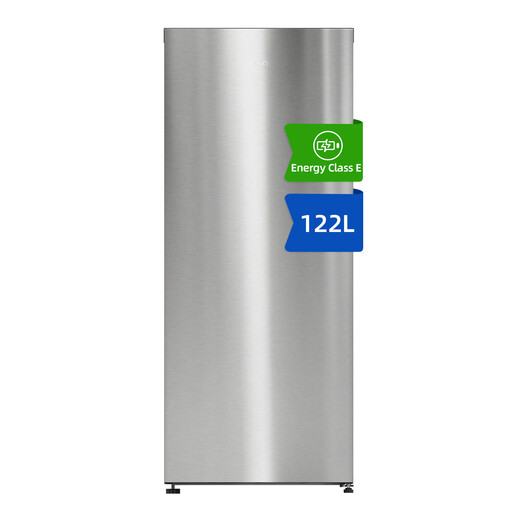
CHiQ JR122WSD freezer, 122 l
An option if you need extra freezer space for more than just slices of bread.
122 l; four-star rating; No-Frost; energy efficiency class E.
The title also mentions a convertible fridge mode and 39 dB.
View at Joybuy
 No image available
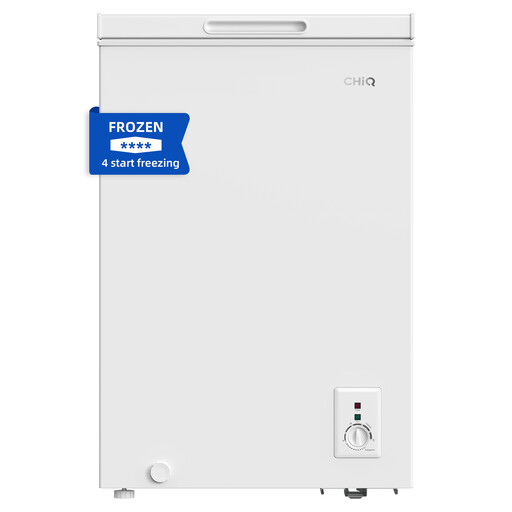
CHiQ chest freezer, 99 l
A chest freezer could be a good fit if you need room for other supplies as well as bread for lunchboxes.
99 l; four-star rating; wire shelf inside.
View at Joybuy
 No image available
COMFEE' RCU60WH2(E) upright freezer, 60 l
Could provide a little extra freezer space. Before freezing fresh slices of bread, check the star rating of the specific appliance.
60 l; three separate storage compartments; reversible door.
View at Joybuy
 No image available
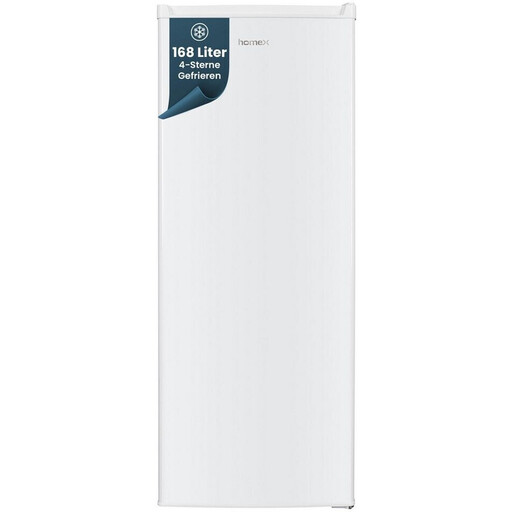
homeX FS1681E-W upright freezer, 168 l
A larger option if you want to store other supplies separately from bread for lunchboxes.
168 l; four-star rating; four drawers and a flap compartment; energy efficiency class E.
The title also lists 40 dB and a reversible door.
View at Joybuy
Frequently asked questions
Can I freeze fresh slices of bread in any freezer compartment?
No. According to the German Federal Centre for Nutrition, a four-star compartment can freeze fresh food. Three-star compartments are suitable for long-term storage of food that is already frozen; one- and two-star compartments are intended for short-term storage.
How should I prepare bread slices for lunchboxes?
Freeze the bread as fresh as possible and already sliced. The German Federal Centre for Nutrition says that frozen bread keeps for one to three months and recommends using clearly labelled freezer-safe film, bags or containers.
Will frozen bread keep a perishable filling cool enough until lunchtime?
You shouldn’t rely on it to do so. The German Federal Institute for Risk Assessment recommends keeping perishable food as cold as possible until it’s eaten or prepared. So plan how you’ll transport and store a filled sandwich separately from freezing the slices.
How do I compare the energy consumption of freezers?
Compare the stated annual energy consumption in kWh with the usable capacity you need, and also consider the energy efficiency class. Your actual electricity costs will depend on your tariff too. The European Commission says the energy label shows annual consumption, capacity, efficiency class and noise level.
What does a freezer’s EU energy label show?
According to the European Commission, the label includes information such as the energy efficiency class, energy consumption, storage capacity and noise emissions. When comparing two appliances, pay particular attention to the specifications of the exact model and the storage space you need.


