First, check whether your existing four-star freezer compartment has room for freshly sliced, packaged portions of bread as well as your other frozen food. An extra appliance isn’t automatically worthwhile just for a few slices. If you regularly run out of space, a table-top freezer could suit a modest need for extra capacity, an upright freezer could keep the family’s frozen food separate, and a chest freezer could accommodate larger quantities. In each case, make sure the available floor space, internal capacity and stated annual energy consumption suit your needs.
Who might benefit from an extra appliance?
Families with an existing freezer compartment
If you only want to keep a few slices handy for meals, start by checking whether your existing compartment can freeze food and how much room is available. The Federal Centre for Nutrition distinguishes between freezing food in a four-star compartment and storing food that is already frozen.
Families short on freezer space
If you regularly freeze bread in portions but have very little room left in your existing compartment, a compact extra appliance may be worth considering. What matters is the internal capacity you actually need and the space available for the appliance.
Families with larger stocks of frozen food
If you store other foods as well as bread, consider whether drawers or top access would suit your day-to-day routine better. The consumer advice centre recommends considering an additional freezer especially if you regularly store or freeze larger quantities.
What should you look for when buying?
Existing freezer compartment
A good fit if: The compartment is suitable for freezing fresh food and has enough room for bread portions once the rest of your frozen food is in place.
The trade-off: You won’t need another appliance, but the amount of bread you can store depends on how much space is free.
Table-top freezer
A good fit if: You regularly need a little extra space for bread and smaller portions, but don’t plan to store large quantities.
The trade-off: Compact appliances offer less internal space; dimensions and defrosting methods vary by model.
Upright freezer
A good fit if: You want to store several types of family provisions separately, with easy access from the front.
The trade-off: A larger appliance needs more floor space, so check the internal capacity and kWh per year for the specific model.
Chest freezer
A good fit if: You plan to store significantly more than just bread portions and have enough room for the appliance and to open its lid.
The trade-off: You access the contents from above. Baskets help keep things organised, but they don’t replace drawers.
| What you’re looking for |
What to check before buying |
Who will find this most important? |
| Freezing fresh bread |
Check that your existing compartment has a four-star rating, or that the appliance you’re buying has a freezing function; package bread in portions. |
If I want to freeze fresh slices of bread for the first time, I’ll check first that my existing compartment is suitable. Around 36% of consumers put freezing performance first. |
| Suitable storage space |
Match the usable capacity, internal layout and external dimensions to the amount you actually store and the space available. |
If there’s barely room for the family’s frozen food alongside bread in the existing compartment, I want extra space without having to install an unnecessarily large appliance. Around 29% of consumers prioritise suitable storage space. |
| Energy consumption |
Compare the stated annual energy consumption in kWh for appliances with a suitable capacity. |
If an extra appliance is going to run all the time, I want to compare the annual energy consumption of appliances with a suitable capacity. Around 21% of consumers put energy consumption first. |
| Access and maintenance |
Check whether the appliance has drawers or baskets, whether you access it from the front or above, and its stated defrosting method. |
If I regularly take out individual slices, I need a clear layout and want to factor in the maintenance involved. Around 14% of consumers prioritise access and maintenance. |
Common buying pitfalls
-
Assuming a three-star compartment is suitable for freezing
A suitable storage temperature alone doesn’t tell you whether fresh slices of bread can be frozen in the compartment. The Federal Centre for Nutrition distinguishes between long-term storage of food that is already frozen and the actual freezing process.
Check the star rating of your existing compartment or the details for the specific appliance you’re considering before putting fresh bread in it.
-
Buying a large extra appliance too soon for a few portions of bread
An additional appliance is worth considering above all if you regularly have more food to freeze. Capacity and annual energy consumption vary between models.
First, work out how much space is actually free in your existing compartment and what other provisions you regularly add.
-
Confusing MinFrost with NoFrost
These names don’t refer to the same function: Beko describes MinFrost and static cooling on the FSE1074N, while Liebherr lists NoFrost for the FNdi 1624. The Exquisit GT5150-E-041E is listed as requiring manual defrosting.
Check the defrosting method for the specific model rather than assuming it from the brand or appliance type.
If you choose a model that needs manual defrosting, you’ll need to set aside time for it.
-
Comparing old A+++ ratings with current energy classes
The EU changed the energy label scale for freezers to a scale from A to G in 2021. Older ratings therefore can’t be directly matched to current classes.
Compare the energy label and annual energy consumption in kWh for the specific appliance.
Notable brands and appliance ranges
Beko
The FSE1074N table-top freezer is one option if you need a limited amount of extra freezer space.
- Beko lists static cooling, MinFrost and a reversible door hinge for this model. According to the manufacturer, MinFrost reduces ice build-up.
- MinFrost isn’t the same as NoFrost. Also check the stated capacity of the specific appliance before buying.
Liebherr
The compact FNdi 1624 table-top freezer is an option if you specifically want NoFrost.
- For this model, Liebherr lists NoFrost, a total capacity of 92 l and external dimensions of 85 × 60 × 60,7 cm.
- Check that the internal capacity and dimensions will accommodate the bread portions and other provisions you plan to store.
Bosch
The GSN29VWEP upright freezer is designed for a larger, well-organised family food supply.
- For this model, Bosch lists 200 l of freezer space, NoFrost and drawers that can be arranged flexibly.
- The manufacturer states an annual energy consumption of 221 kWh and external dimensions of 161 × 60 × 65 cm. Check that the height, available space and annual consumption suit your needs.
Gorenje
The FH15E6W5 chest freezer is an option for larger stocks of frozen food; the temperature rating applies to this model.
- Gorenje lists baskets and FreezeProtect for ambient temperatures down to −15 °C.
- You access the contents from above. Allow enough room for the appliance and to open the lid.
Exquisit
The GT5150-E-041E chest freezer is another way to store provisions beyond bread portions.
- For this model, Exquisit lists 142 l of usable capacity, a removable basket and a fast-freeze function.
- The energy label shows an annual consumption of 182 kWh; the manufacturer says the appliance needs to be defrosted manually.
Appliances for extra freezer space
This selection includes upright and compact freezers, as well as a fridge with a separately stated freezer compartment. For each model, check that it is suitable for freezing fresh food and compare its capacity and dimensions with your needs.
 No image available
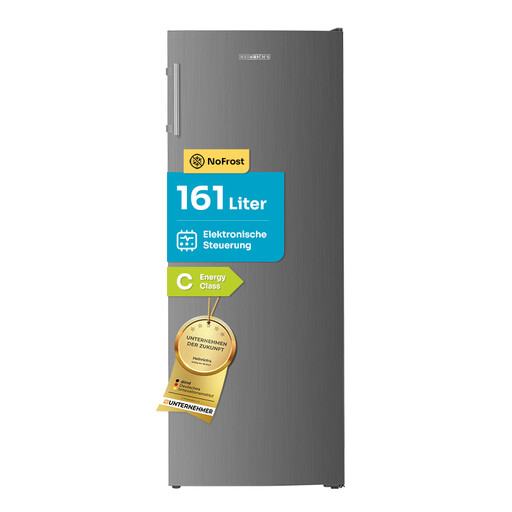
Heinrich’s freezer, 161 l
A possible choice if you want to store other family provisions neatly alongside portions of bread.
Features listed include NoFrost, Multi-Flow cooling, three freezer drawers and two shelves. According to the description, the Fast-Freeze function switches off automatically after about two days. Check the appliance details to make sure it is suitable for freezing fresh food.
View at Joybuy
 No image available
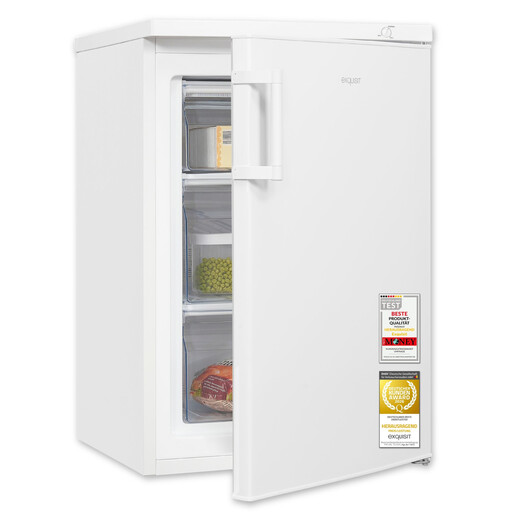
Exquisit GS581-H-010E, 85 l
A compact option if you’re looking for a smaller upright freezer with a stated four-star rating.
The product name lists 85 l, three drawers and manual temperature control. According to the description, the appliance needs to be defrosted manually.
View at Joybuy
 No image available
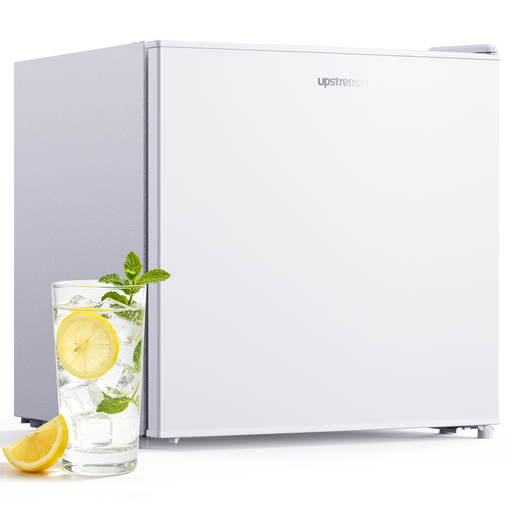
Upstreman UF35 mini freezer, 35 l
A space-saving option for a limited need for extra capacity, provided its stated four-star rating makes it suitable for freezing fresh slices.
The product name lists a capacity of 35 l and a reversible door. Space is limited, so check that it will fit your bread portions and other items.
View at Joybuy
 No image available
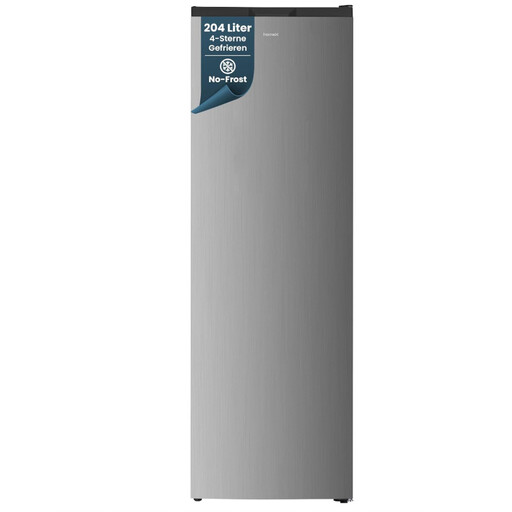
homeX FSN2041E-S, 204 l
A possible choice if you want to store different family provisions separately, alongside bread.
The product name lists 204 l, NoFrost and energy class E. Check the appliance details to confirm it is suitable for freezing fresh food, and look at its stated annual energy consumption.
View at Joybuy
 No image available
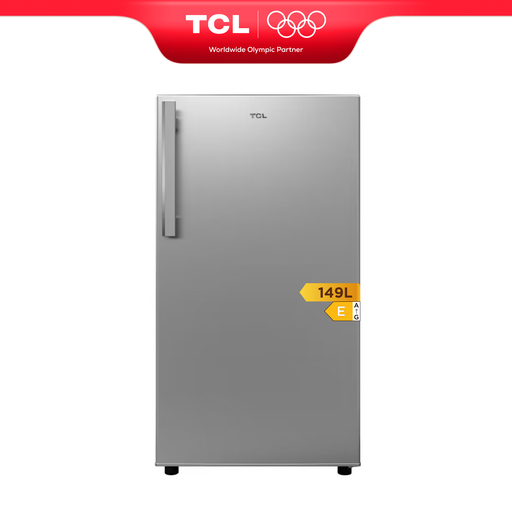
TCL FC199FSE0DE fridge with freezer compartment
An option if you need a fridge as well as a separately stated freezer compartment.
The product name lists a total capacity of 199 l and energy class E. According to the description, 122 l is for the fridge and 27 l for the freezer compartment. Check that the freezer space is large enough for your bread portions and suitable for freezing fresh food.
View at Joybuy
Frequently asked questions
Can I freeze fresh sliced bread in a three-star freezer compartment?
For the actual freezing process, the Federal Centre for Nutrition specifies a four-star compartment. Three stars are suitable for the long-term storage of food that is already frozen at a temperature of at least −18 °C, but don’t indicate that the compartment is equally suitable for freezing fresh slices of bread.
How should I prepare portions of bread for family meals?
Freeze fresh bread, preferably sliced and in portions, in suitable containers or freezer bags, and label each portion with its contents and date. The Federal Centre for Nutrition recommends storing frozen bread for one to three months; you can defrost the slices you need or toast them straight from frozen.
How can I compare the energy consumption of extra appliances?
Compare the stated annual energy consumption in kWh for appliances with a capacity that suits your needs. The label value doesn’t replace checking that the location and how you plan to use the appliance meet your requirements.
Which energy label scale applies to freezers?
Freezers use the EU scale from A to G. The European Commission Representation in Germany explains that the new scale was introduced in 2021, so older A+++ ratings aren’t on the same scale as current energy classes.


