What should you look for when buying?
First decide whether you only want to bake the dough or also want the machine to knead it in future. Then look for a cycle that suits your recipe and the right loaf size.
The proportions refer to consumers choosing a bread maker for already prepared seeded dough; each figure reflects the buyer’s main priority.
| Priority |
What to check |
Who is this particularly important to? |
| Bake the dough without kneading it again |
Check for a separately startable baking function and baking and proving times that suit your recipe. |
If my dough has already been kneaded, I don’t want to accidentally start a full kneading programme. Consumers who prioritise this particular process are likely to account for around 40%. |
| Add seeds automatically |
Check what ingredients the dispenser is designed to hold and which programme it is used with. |
If I don’t want to add seeds by hand during future bread programmes, I look for a dispenser designed for this purpose. Consumers with this as their main priority are likely to account for around 23%. |
| Adjust programme stages |
Check whether the proving and baking times can be adjusted on the specific model. |
If my recipe needs a particular proving time, I want to be able to adjust the cycle to suit it. Consumers who mainly want flexible programme stages are likely to account for around 23%. |
| Loaf size and ease of use |
Check the stated loaf size against the quantity in your recipe and read the instructions for cleaning the tin. |
If I’m baking a particular quantity of dough, the tin should be the right size and easy to handle after baking. Consumers who mainly prioritise loaf size are likely to account for around 14%. |
Joybuy products for seeded bread and automatic programmes
The bread makers below may suit consumers looking for automatic ingredient dispensing or the bread-making features listed in the product titles. Before buying, check whether the specific programme can bake your prepared dough without kneading it again.
 No image available
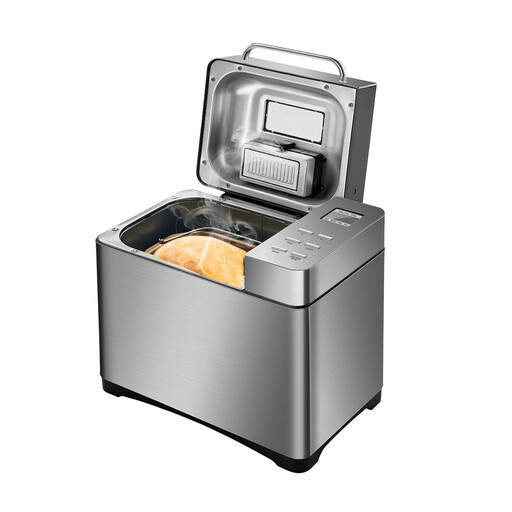
Bread maker, 650 W, 19 programmes
May suit consumers looking for automatic ingredient dispensing in future bread programmes.
The product title lists 650 W, 19 programmes, three crust settings, three loaf sizes, a 15-hour delay timer and a one-hour keep-warm function.
View at Joybuy
 No image available
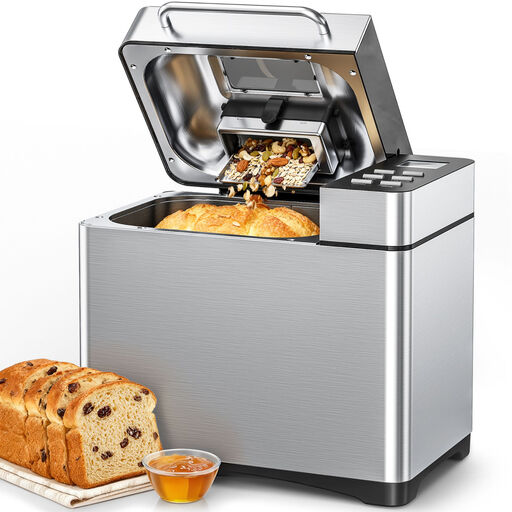
HavenWell bread maker with ingredient dispenser
May suit consumers who want to add seeds or other ingredients automatically during future baking programmes.
The product title lists 19 programmes, three loaf sizes, three crust settings and a 15-hour delay timer.
View at Joybuy
 No image available
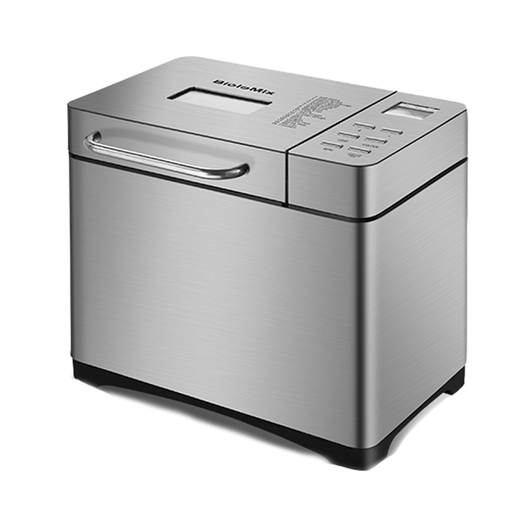
BioloMix BBM013 bread maker
May suit consumers considering automatic fruit and nut dispensing for future baking programmes.
The product title lists 17 programmes, a fruit and nut dispenser, a dual-tube baking system, a 15-hour delay timer and a one-hour keep-warm function.
View at Joybuy
Frequently asked questions about bread makers for prepared seeded dough
Can I put fully kneaded dough into any bread programme?
No, it depends on the model and recipe. Check whether the specific model has a baking function you can start separately and whether your dough needs to rise again before baking. Manual baking and a baking time of 10–60 minutes are documented for the Rommelsbacher BA 550, but that doesn’t mean the cycle will suit every recipe.
How should I store dough I’ve prepared in advance?
Follow the storage instructions in your recipe and for the ingredients you’re using; perishable ingredients need to be kept sufficiently chilled. The German Federal Institute for Risk Assessment also advises against eating raw dough containing uncooked flour.
What should I bear in mind when cleaning the bread tin?
Follow the instructions for the specific model. Rommelsbacher lists a removable tin for the BA 550, but this doesn’t mean it is suitable for cleaning in a dishwasher.
Are a warranty and statutory consumer rights the same thing?
No. Your statutory rights apply in relation to the seller; a warranty is a voluntary promise and is subject to its own terms and conditions. The consumer advice centre explains the difference.
What rules apply to food-contact parts and disposal?
Parts intended to come into contact with food must meet EU requirements, including Regulation (EC) No 1935/2004. Check the details for these parts on the specific appliance. A bread maker that has reached the end of its life should be taken to an authorised collection or take-back point for electrical waste, not put in household rubbish, as advised by the German Federal Ministry for the Environment.


