For cinnamon bun dough, a clearly explained dough programme matters more than a long list of bread programmes. Depending on the model, the machine may take care of kneading and possibly the first prove. Rolling out, filling and shaping the dough, proving the buns again and baking them are separate steps. Check the recipe quantity against the guidance for your specific model, and allow time for cooling. If your topping needs to be kept chilled, plan to transport it in a cool bag or another suitable way.
Who can benefit from a dough programme?
Picnic bakers short on kneading time
If you want to shape your own cinnamon buns and bake them in the oven, a suitable dough programme can take care of the kneading and possibly the first prove. The key is to check which stages the specific programme includes.
Hosts making a larger batch of dough
If you’re baking for several picnic guests, the recipe quantity, space in the tin and rise of the sweet yeast dough all need to work together. A stated loaf weight doesn’t automatically tell you how much yeast dough the machine can handle.
Leisure bakers who like to plan ahead
A timed start can fit neatly into your day. But you’ll still need to allow time afterwards for shaping, a second prove, baking and cooling.
What should you look for when buying?
First, check which stages of dough preparation the programme covers. Then compare the recipe quantity and your full schedule with the guidance for the model.
| What to look for |
What to check |
Who is it important for? |
| Dough programme |
Check the manual to see whether the programme includes kneading and a first prove. |
If you’re shaping individual buns, you’ll want to know which dough-making steps the machine takes care of. Around 36% of consumers prioritise a suitable dough-making process. |
| Batch size |
Compare the permitted quantity of flour or dough, and any guidance for dough that rises substantially, with your recipe. |
If you’re baking for several picnic guests, the dough needs to fit in the tin with enough room to rise. Around 29% of consumers put choosing the right batch size first. |
| Timing |
Allow separately for the programme duration and the recipe steps that follow. |
If you need the buns ready for a particular departure time, you’ll still need time after the dough programme for shaping, proving, baking and cooling. Around 21% of consumers prioritise the process right through to packing the baked goods. |
| Cleaning and spare parts |
Check which parts are removable, the care instructions and whether model-specific spare parts are available. |
If you plan to use the bread maker regularly, cleaning the tin and kneading blade, as well as finding the right spare parts, will matter. Around 14% of consumers prioritise care and future access to spare parts. |
Common misconceptions
-
Lots of bread programmes mean there’s a programme for cinnamon buns
The number of programmes doesn’t tell you which kneading and proving stages a particular dough programme includes. Once the dough is ready, cinnamon buns need to be rolled out, filled and shaped, then left to rise again and baked individually.
Before buying, check the instructions for the specific dough programme and allow time for the steps you’ll need to do after taking the dough out.
Shaping and baking still take time and hands-on work.
-
Finished loaf weight is the same as the permitted quantity of yeast dough
The stated finished loaf weight and the quantity of flour refer to different things. Sweet yeast dough can rise considerably and take up more space.
Compare the quantities and guidance on rising in the manual for your specific model with your recipe.
If your recipe won’t fit in the tin, making a second batch could take extra time.
-
Packing a topping that needs chilling without planning how to transport it
If food isn’t kept at a sufficiently low temperature during storage and transport, harmful bacteria can multiply. The German Federal Institute for Risk Assessment highlights this risk.
If your topping needs to be kept chilled, make sure it stays cool right up until it’s eaten, or choose a topping with storage requirements that suit your picnic.
You’ll need to plan a suitable way to keep any topping that needs chilling cool.
Brands and models to consider
Panasonic
The SD-YR2550 is an example of a model with adjustable kneading and proving times for your own recipes.
- Panasonic lists 31 programmes for this model, as well as a yeast dispenser and a raisin and nut dispenser.
- The manufacturer’s information doesn’t confirm a tested process for cinnamon bun dough. Check that the specific model is available and read its manual.
Rommelsbacher
The BA 550 combines dough functions with specific guidance on yeast dough quantities.
- Rommelsbacher specifies a removable 2-litre tin and a maximum of 500 g of flour for yeast dough.
- Rommelsbacher notes that doughs that rise a lot, such as brioche, can rise considerably in the tin. Also check which stages the relevant programme includes.
Gastroback
According to the manufacturer, the Design Brotbackautomat Advanced 42823 has a dough programme and a custom programme.
- Gastroback lists programme stages that can be adjusted individually.
- The stated sizes of 500 g, 750 g and 1,000 g refer to loaves, not a confirmed maximum quantity of cinnamon bun dough.
Clatronic
The BBA 3774 is an example of a model that specifically lists a dough programme.
- Clatronic specifies a removable 3-litre tin.
- The stated loaf weight of up to 1,500 g doesn’t confirm a permitted maximum quantity for sweet yeast dough that rises considerably. Check the manual for the specific model.
Tefal
According to the manufacturer, the Pain & Délices PF240E38 offers pizza dough functions as well as bread programmes.
- Tefal lists 20 programmes and loaf sizes from 500 g to 1 kg.
- This information doesn’t confirm a specific cinnamon bun recipe or guarantee a better result. Check that the exact variant code in the listing matches the model you want.
Joybuy products
Joybuy bread maker options for preparing dough. For each model, check that the programme, recipe quantity and remaining steps suit what you have in mind.
 No image available
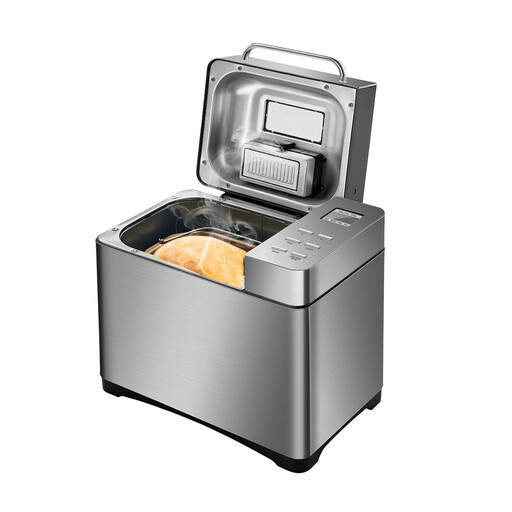
Bread maker, 650 W, 19 programmes, 3 loaf sizes
When choosing a bread maker for preparing dough, check the manual to see whether the programme includes the proving stages required for your cinnamon bun recipe.
The product title lists three crust settings, a timer of up to 15 hours, a 1-hour keep-warm function, a non-stick tin and a capacity of 2.2 lbs.
Joybuy
 No image available
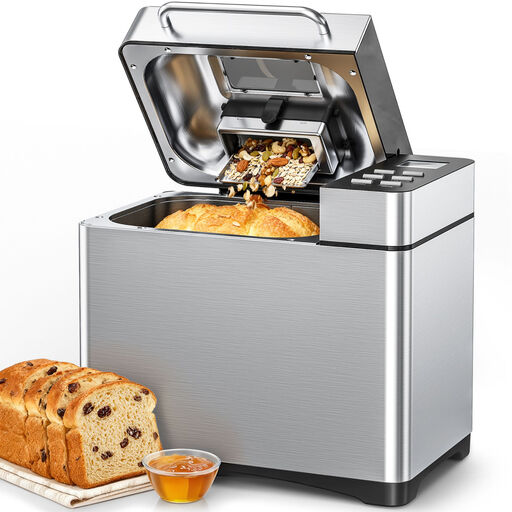
HavenWell bread maker, 19 programmes, 1 kg
If you’re considering a model for preparing dough, check the exact programme sequence and make sure there’s room for the quantity you plan to make to rise.
The product title lists three loaf sizes, three crust settings, a timer of up to 15 hours and an automatic ingredient dispenser.
Joybuy
 No image available
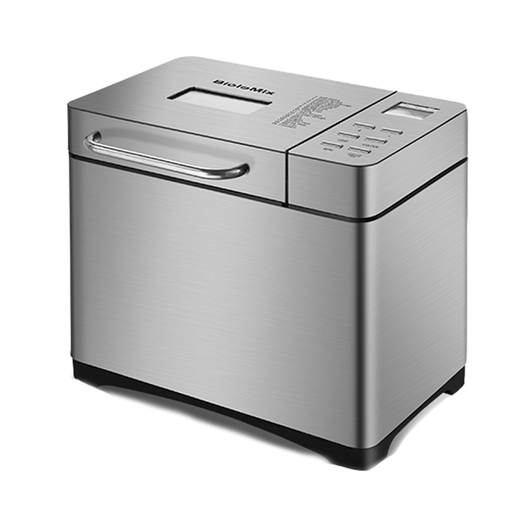
BioloMix BBM013 bread maker with 17 programmes
If you want to fit the machine’s start time around your day, check how much time you’ll have after the programme for shaping, a second prove, baking and cooling.
The product title lists an automatic ingredient dispenser, dual-tube baking, 3D stereo baking, a 1-hour keep-warm function and a delayed start of up to 15 hours.
Joybuy
Frequently asked questions
Does a bread maker bake individual cinnamon buns all the way through?
A dough programme isn’t the same as baking shaped cinnamon buns. A cinnamon bun recipe published by Tefal calls for the dough to be rolled out, filled and cut after kneading, then left to prove again and baked in the oven. It doesn’t confirm an automatic process for the bread makers mentioned here.
Can I put in a large quantity of dough in one go?
Only if it’s within the limits for your specific model. Rommelsbacher specifies a maximum of 500 g of flour for yeast dough in the BA 550 and notes that dough such as brioche can rise considerably. This guidance doesn’t automatically apply to other machines.
How do I clean the tin and kneading blade?
Follow the care instructions for your specific model. The BA 550 has a removable baking tin and kneading blade, but removable parts aren’t necessarily dishwasher-safe.
What should I bear in mind when taking cream cheese icing on a picnic?
If the topping needs to be kept chilled, make sure it stays sufficiently cool until it’s eaten, including during transport. The German Federal Institute for Risk Assessment warns that insufficiently low temperatures during storage and transport can allow harmful bacteria to multiply. This doesn’t mean there’s a general safe time for every type of icing to be left unrefrigerated.
Is CE marking a government safety test of the appliance?
No. For a new electrical appliance placed on the EU market and covered by the Low Voltage Directive, the manufacturer is responsible for conformity assessment, an EU declaration of conformity and CE marking. The European Commission makes clear that CE marking doesn’t mean a government body has approved the safety of an individual product.


