Who can benefit from a bread maker for making several batches?

Bakers making several batches of dough

If you want to divide a cinnamon roll recipe across several batches, you need a clear dough capacity rather than just a stated loaf size. For example, Rommelsbacher specifies a maximum of 500 g of flour for yeast dough in the BA 550.

Bakers who want the machine to knead and prove the dough

If you want to prepare the yeast dough in the bread maker, then shape the rolls yourself and bake them in the oven, check exactly which steps the dough programme handles. Gastroback describes the Model 42823 as having a dough programme and a custom programme with freely adjustable phases.

Bakers short on time between batches

When making batches one after another, programme duration and how easy it is to handle the bread pan and kneading blade matter too. Rommelsbacher advises against putting the BA 550’s parts in the dishwasher.

What matters when making several batches of dough?

Buying priority What to check before buying Who it matters most to
Recipe quantity per batch Compare the amount of flour or dough with the relevant manufacturer’s specification. Rommelsbacher gives a maximum of 500 g of flour for yeast dough in the BA 550; Gastroback specifies a maximum capacity of 1,000 g for the dough container in Model 42823. If my recipe needs to be made in several batches, I want to compare the flour quantity per batch reliably with the model’s specifications. Batch quantity is the main priority for around 36% of consumers.
Programme for sweet yeast dough Check the manual to see whether the programme includes kneading and proving, or only certain steps. Rommelsbacher lists separate kneading and mixing functions for the BA 550. If I’m not sure whether my sweet yeast dough can also prove in the bread maker, I want to know exactly which steps the programme includes. The yeast dough process is the main priority for around 29% of consumers.
Planning several batches Compare the programme phases and duration in the manual with the number of batches you plan to make; also check whether the bread pan can be removed. If I want to make several batches one after another, I need to know how the programme cycles will fit into my schedule. Scheduling is the main priority for around 21% of consumers.
Cleaning between batches Check the model’s manual for instructions on removing and caring for the bread pan and kneading blade. Rommelsbacher advises against putting these parts of the BA 550 in the dishwasher. If I’m making several batches of dough one after another, I want to know how much work it will take to clean the pan and kneading blade between batches. Cleaning and handling are the main priority for around 14% of consumers.

Common buying misconceptions

  • Assuming loaf weight tells you how much sweet yeast dough the machine can handle

    Loaf sizes and maximum quantities of yeast dough are different specifications. Rommelsbacher lists loaf sizes of 700 g and 900 g for the BA 550, but separately sets a maximum of 500 g of flour for yeast dough. Dough that rises a lot can take up considerable room in the pan.

    Before deciding how many batches to make, compare your complete recipe with the flour or dough limit for the specific model.

  • Assuming a programme name covers the whole yeast dough process

    Mixing, kneading and a programme with proving phases do different jobs. The name ‘dough programme’ alone doesn’t tell you which steps the specific appliance carries out.

    Check the programme stages for the model in the manual rather than simply comparing the number of programmes.

    Depending on the process, you may need to allow extra time for proving and supervise the dough yourself.

  • Overlooking cleaning time between batches

    Cleaning instructions vary depending on the model and its parts. Rommelsbacher advises against cleaning the BA 550’s bread pan and kneading blade in the dishwasher.

    When planning consecutive batches, allow for the care instructions and the time needed to remove the parts.

Relevant brands at a glance

Rommelsbacher

The BA 550 may appeal if you want to compare your recipe with a clearly stated flour limit for yeast dough.

  • Rommelsbacher specifies a maximum of 500 g of flour for yeast dough and notes that dough that rises a lot can reach almost as high as the viewing window.
  • Kneading and mixing are listed as separate functions. Check the manual to see how each programme works with your recipe.

Gastroback

The Design Bread Maker Advanced 42823 has a dough programme and a custom programme, which may suit buyers who want more control over the programme phases.

  • Gastroback specifies a maximum capacity of 1,000 g for the dough container and lists a dough programme for uses including bread roll dough.
  • The stated loaf sizes of 500 g, 750 g and 1,000 g are not flour limits for yeast dough.

Panasonic

According to Panasonic, the SD-YR2540 offers manual kneading and proving settings as well as automatic programmes.

  • Panasonic lists programmes for items including brioche and pizza dough.
  • These specifications don’t confirm the maximum quantity for a particular cinnamon roll recipe. Check the model’s quantity and programme information.

Tefal

According to Tefal, the Pain & Délices PF240E has an automatic dough preparation programme, for example for pizza.

  • Tefal lists loaf sizes from 500 g to 1 kg.
  • These loaf sizes don’t confirm how much sweet yeast dough the machine can handle. Check the exact model variant too.

Medion

The LIFE MD 12040 has two kneading blades and, according to the manufacturer, is suitable for yeast dough, making it a useful model to compare.

  • Medion specifies a loaf size of up to 1,600 g and two kneading blades.
  • The loaf size alone doesn’t confirm the maximum quantity of cinnamon roll dough. Check the model’s dough specifications instead.

Joybuy products for preparing dough

Joybuy product options for bread makers and dough preparation.
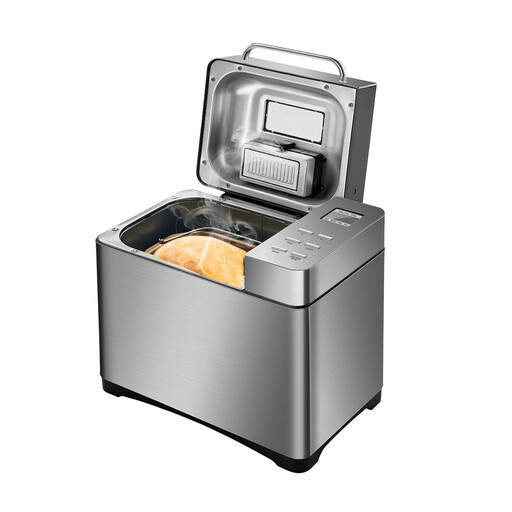
Bread maker with 19 programmes, three loaf sizes and 650 W

Bread maker, 650 W, 19 programmes, three loaf sizes

The product listing mentions a dough programme; check the manual to see whether it also covers the proving phase for your sweet yeast dough.

19 programmes; three browning settings; three loaf sizes; 15-hour timer; 1-hour keep-warm function; non-stick pan; stated capacity: 2,2 lbs.

View at Joybuy
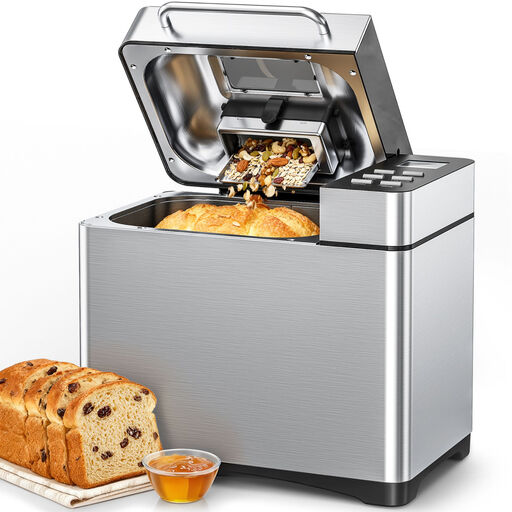
HavenWell bread maker with 19 programmes and automatic ingredient dispenser

HavenWell bread maker, 19 programmes, 1 kg

The product description lists pizza dough as one of its uses; check the programme cycle and recipe quantity for cinnamon roll dough against the manual.

Three loaf sizes; three browning settings; automatic ingredient dispenser; 15-hour timer; keep-warm function; stainless steel, silver and black.

View at Joybuy
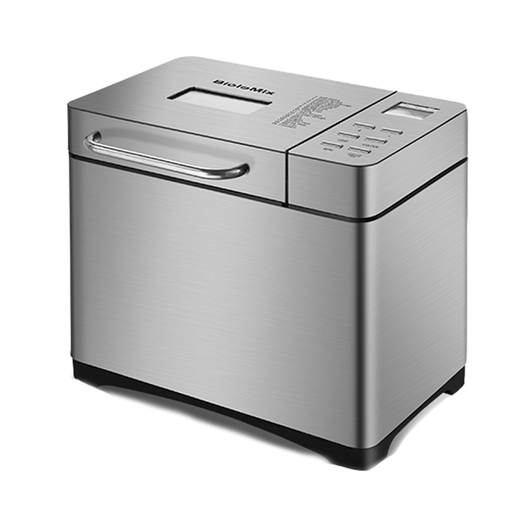
BioloMix BBM013 bread maker with 17 automatic programmes

BioloMix BBM013 bread maker, 17 programmes

The product name identifies this as an automatic bread maker; before buying, check which dough stages it offers for your cinnamon roll recipe.

17 automatic programmes; dual heating; automatic ingredient dispenser; 1-hour keep-warm function; 15-hour timer.

View at Joybuy

Frequently asked questions

Can a bread maker bake shaped cinnamon rolls?

To make classic, individually shaped cinnamon rolls, prepare the dough, then roll it out, add the filling and shape the rolls. After a further proving period, bake them in the oven. Tefal’s cinnamon roll recipe describes these steps using a food processor; it doesn’t confirm that the recipe can be made in a bread maker.

Can I use the stated loaf size as the maximum dough quantity?

No, not without a relevant specification from the manufacturer for that particular model. Rommelsbacher lists loaf sizes of 700 g and 900 g for the BA 550, as well as a separate maximum of 500 g of flour for yeast dough. Compare your complete recipe with the stated dough limit.

How should I add the ingredients and clean the pan after a batch?

Follow the instructions for your appliance. For the appliance described in its recipe booklet, Tefal recommends adding the liquid ingredients first, then the dry ingredients, and the yeast last. For the bread pan and kneading blade in the Rommelsbacher BA 550, the manufacturer recommends hand washing rather than using the dishwasher.

What should I do if the appliance is faulty or has reached the end of its life in Germany?

Your statutory rights against the seller are separate from any voluntary guarantee; if the product is faulty, repair or replacement may be the first remedy. The consumer advice centre explains the difference. Electrical waste must not go in household rubbish; take it to an authorised collection or return point, as explained by the Federal Ministry for the Environment.

What does the CE marking on a bread maker mean?

For products covered by the relevant EU rules, the manufacturer uses the CE marking to declare that the product complies with the applicable requirements. The European Union’s Your Europe website explains that the marking is only required for products where harmonised rules explicitly require it. It is not an independent endorsement of the quality of the kneading results.