Who is a bread maker suitable for?

Cinnamon roll bakers with limited worktop space

If you want a machine to prepare sweet yeast dough, but need the shared worktop afterwards for rolling and shaping, check the dough programme and the appliance dimensions. Panasonic Experience Fresh’s cinnamon roll recipe uses the bread dough programme, followed by some hands-on preparation.

Housemates with limited storage space

If you’ll need to put the appliance away after use and clean it for someone else, weight, dimensions and care instructions are important things to consider. Gastroback lists the dimensions of model 42823 as around 353 × 274 × 334 mm (width × depth × height) and its weight as around 5.75 kg.

Bakers catering for larger groups

If you want to prepare a larger batch of dough, compare the flour quantity in your recipe with the stated yeast dough capacity for the specific model. Rommelsbacher specifies a maximum of 500 g of flour for yeast dough in the BA 550; loaf weight and flour quantity are not the same thing.

What should you look for when buying?

Adjustable kneading and proving phases

Choose this if: You want to adjust the proving phase to suit your sweet yeast dough recipe. Panasonic lists manual kneading and proving settings for the SD-YR2550; Graef describes the BA806 as having a DIY programme with adjustable phases.

Trade-off: The settings need to suit your recipe. Even with adjustable phases, you’ll still need to take the dough out, shape it and bake it in the oven.

Separate dough programme

Choose this if: You mainly want the machine to do the kneading. Rommelsbacher lists a “Knead dough” programme for the BA 550, while Tefal lists a pizza dough programme for the PF240E.

Trade-off: A kneading programme alone doesn’t tell you whether it’s followed by a proving phase. Check the specific model’s programme cycle; you may need to prove the dough outside the machine.

Buying priority What to check Who is it most important to?
Dough programme Check whether the cycle includes kneading and, if applicable, proving, and ends before baking. If I want to roll and shape the dough afterwards, I need a programme that lets me take it out before the baking phase. Around 36% of consumers put the dough function first.
Worktop space and storage Compare the width, depth, height and weight with your available worktop and storage space. If I need to use the same worktop for rolling the dough afterwards and put the appliance away, I’ll check its dimensions and weight first. Around 29% of consumers prioritise worktop space and storage.
Cleaning Check whether the pan can be removed and what the care instructions say about the pan and kneading paddle. If the appliance needs to be clean and ready for my housemates after use, I’ll look for accessible parts and clear care instructions. Around 21% of consumers prioritise easy cleaning.
Dough quantity Compare the flour quantity in your recipe with the stated yeast dough capacity for the specific model. If I’m baking for several people, I want to know whether the batch size will suit the appliance. Around 14% of consumers prioritise the quantity they can make per batch.

Common buying mistakes

  • Assuming a bread programme is the same as a dough programme

    For cinnamon rolls, the dough needs to be taken out and shaped before baking. A programme that moves straight on to baking won’t suit this process.

    Check the individual programme phases in the instructions. The name “Knead dough” alone doesn’t tell you whether it also includes a proving phase.

  • Confusing loaf weight with the permitted flour quantity

    For the BA 550, Rommelsbacher specifies a finished loaf weight of up to 900 g, but a maximum of 500 g of flour for yeast dough. A stated loaf weight doesn’t confirm that the same quantity of flour can be used.

    Compare the flour quantity in your recipe with a limit specifically stated for yeast dough for that model.

    Key brands to consider

    Panasonic

    Panasonic Experience Fresh has published a cinnamon roll recipe that starts by preparing the dough using the bread dough programme.

    • Panasonic says you can manually adjust the kneading and proving times on the SD-YR2550; the model also has a yeast dispenser.
    • The recipe involves further shaping the dough and baking it in an oven.

    Graef

    According to Graef, the BA806 has a manual DIY programme with adjustable kneading, proving and baking phases.

    • Adjustable phases may be useful if you want to tailor the cycle to your own recipe.
    • The stated loaf sizes of 500 and 750 g do not confirm the maximum flour quantities for cinnamon roll dough.

    Rommelsbacher

    The BA 550 has a dedicated dough-kneading programme.

    • Rommelsbacher specifies a maximum flour quantity of 500 g for yeast dough.
    • The manufacturer advises against cleaning the baking pan and kneading paddle in the dishwasher. Also check whether the programme includes the proving phase you need.

    Tefal

    According to Tefal, the Pain Délice PF240E includes a pizza dough programme, among others.

    • The baking pan can be removed for cleaning.
    • Having a pizza dough programme doesn’t confirm that its proving times will suit every sweet yeast dough recipe. Check the cycle and the recipe.

    Gastroback

    According to Gastroback, the Design Bread Maker Advanced 42823 has a separate dough programme and a custom programme with adjustable phases.

    • Adjustable phases are worth considering if you want to tailor the programme cycle to your recipe.
    • Gastroback lists dimensions of around 353 × 274 × 334 mm (width × depth × height) and a weight of around 5.75 kg. Compare these with your available worktop and storage space.

Bread makers at Joybuy

This selection includes bread makers that may be suitable for preparing dough. Check the specific model to see whether its programme kneads sweet yeast dough and allows you to take the dough out before baking.
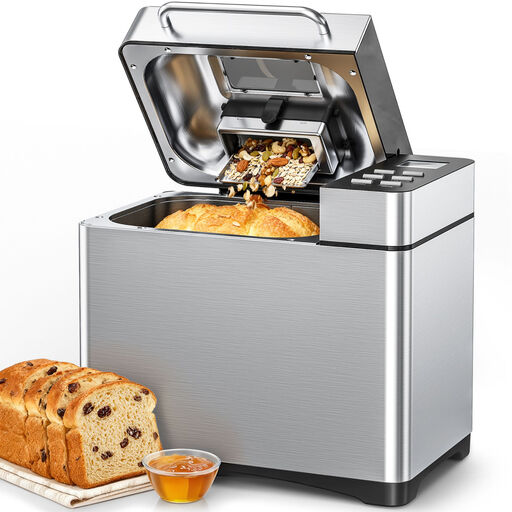
HavenWell bread maker with 19 programmes

HavenWell bread maker, 19 programmes

If you’re looking for an appliance to prepare dough, check whether its programme for sweet yeast dough includes the proving phase you need and ends before baking.

The product title lists 1 kg, three loaf sizes and three browning levels. The 1 kg figure doesn’t specify the maximum flour quantity for yeast dough.

View at Joybuy
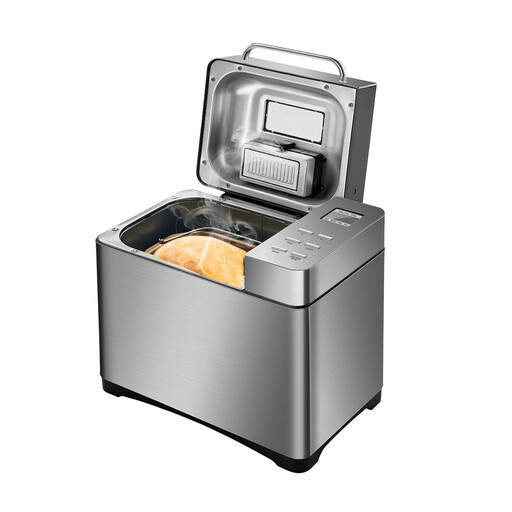
Fully automatic bread maker with 650 W and 19 programmes

Fully automatic bread maker, 650 W, 19 programmes

If you’re choosing this appliance for its dough function, check whether the specific programme cycle also includes a proving phase for sweet yeast dough.

The product title lists 650 W, three loaf sizes, three browning levels and a capacity of 2.2 lbs. This capacity figure doesn’t specify the flour quantity for yeast dough.

View at Joybuy
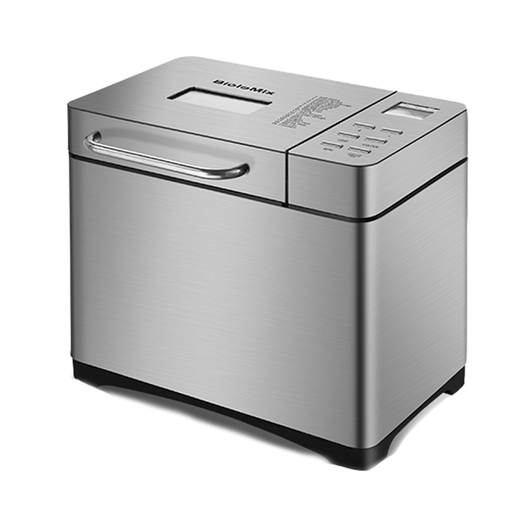
BioloMix BBM013 bread maker with 17 programmes

BioloMix BBM013 bread maker

This model is only suitable for cinnamon roll dough if the specific listing includes a suitable dough programme and lets you take the dough out before baking.

The product title lists 17 programmes, a fruit and nut dispenser, a 15-hour delay timer and a 1-hour keep-warm function.

View at Joybuy

Frequently asked questions

Does the bread maker bake the cinnamon rolls too?

In the method published by Panasonic Experience Fresh, the dough is rolled out, filled and shaped after the bread dough programme, then baked in an oven. So check whether an oven is available in your shared kitchen.

Can I put the baking pan in the shared dishwasher?

It depends on the model. Rommelsbacher specifically advises against cleaning the baking pan and kneading paddle of the BA 550 in the dishwasher, as this could damage the coating. Always follow the care instructions for the specific appliance.

How much flour can I put in a bread maker for yeast dough?

The permitted flour quantity varies by model and should be stated specifically for yeast dough. Rommelsbacher lists a maximum of 500 g of flour for the BA 550; a loaf weight figure can’t be used as a flour limit.

What should I check on an electrical appliance’s labelling?

Check the appliance labelling and safety information on the specific listing. Appliances covered by the EU Low Voltage Directive must meet the relevant EU requirements, including CE marking. The European Commission points out that CE marking is a declaration by the manufacturer, not proof of independent testing.

What are my rights if the appliance is faulty?

If you buy from a business seller, your statutory rights for faulty goods apply against the seller. According to Your Europe, the minimum protection in the EU is two years from the date you receive the goods; any additional voluntary manufacturer’s guarantee does not replace these rights.