For a well-planned pizza night, use the flour quantity specified for the dough programme as your guide, not the stated loaf size. Compare the amount you need with the recipe and the instructions for the exact model, and plan the programme time, shaping and baking separately. Before you buy, also check the labelling and details of the parts that come into contact with the dough.
Who is a bread maker suitable for?
A baking session with several trays
You want to work out how many batches of dough you’ll need for the pizzas you’re planning. Rommelsbacher specifies a maximum of 500 g of flour for yeast doughs in the BA 550; Graef’s recipe for programme 27 on the BA806 uses 400 g of flour for one tray.
A baking session with a set start time
You want the dough to be ready in time for everyone to shape it together. Panasonic, Rommelsbacher and Graef list dough programmes or a pizza dough recipe; check the programme time and the steps that follow for the exact model.
A household that will use it regularly for different things
You’d like to use the same appliance for bread and other doughs too. Compare the programmes you actually need and how easy the removable parts are to clean against the recipes you have planned.
What should you look for when buying?
For a group baking session, the recipe yield and how the dough programme works are what matter. Loaf size alone doesn’t tell you how much pizza dough the machine can handle.
| What you need |
What to check when buying |
Who is this important to? |
| Enough dough for your baking session |
Compare the recipe’s flour quantity with the dough quantity specified for the exact model and the number of trays you need. |
If I’m planning several trays, I want to know whether one batch will be enough and how many cycles I’ll need. Dough quantity is the main consideration for around 33% of consumers. |
| Having the dough ready on time |
Check the duration and steps of the exact dough programme; don’t assume the delay timer for bread can also be used for pizza dough. |
If I have a set start time, I want to plan the kneading, any resting time and shaping afterwards. Timing is the main consideration for around 27% of consumers. |
| Easy to get started |
Check whether the machine has a pizza dough or suitable kneading cycle, and which parts can be removed for cleaning. |
I’m looking for a clearly described dough function and don’t want to choose features I won’t use. A straightforward start is the main consideration for around 20% of consumers. |
| Using it for other recipes too |
Compare the programmes and accessories with the breads and doughs you actually plan to make. |
If I regularly make bread or other doughs too, the extra functions should suit my recipes. Versatility is the priority for around 13% of consumers. |
| Gluten-free preparation |
If this is a consideration, check the ingredients as well as how to clean and keep the baking pan, kneading blade and work surfaces separate. |
If gluten-free pizza is needed, I have to plan for the ingredients and how I organise my kitchen, rather than relying on a programme alone. This is the main consideration for around 7% of consumers. |
Common misconceptions
-
Assuming loaf weight tells you how much pizza dough the machine can handle
Loaf size information applies to the bread programme and doesn’t show how much pizza dough you can make in one batch.
Compare flour quantities on the same recipe basis and check the instructions for the exact model. Rommelsbacher specifies a maximum of 500 g of flour for yeast doughs in the BA 550.
-
Assuming the bread delay timer can be used for pizza dough
A delay timer for freshly baked bread doesn’t tell you when a dough programme will finish or whether it can be used for this process.
Check the programme list for the exact model, and plan shaping and baking separately after the dough has been prepared.
-
Assuming a gluten-free programme makes your kitchen gluten-free
For people with coeliac disease, ingredients and shared kitchen equipment can pose a risk of cross-contamination; an appliance programme alone won’t prevent this.
Check the ingredients and plan how to clean and keep the parts and work surfaces separate. The German Coeliac Society offers advice on managing this in the kitchen.
Brands to consider for pizza dough
Rommelsbacher
Worth considering if you’re looking for a manufacturer’s stated flour quantity for yeast dough to help plan your batches.
- Rommelsbacher specifies a maximum of 500 g of flour for yeast doughs in the BA 550.
- The 700 g and 900 g figures refer to loaf sizes, not portions of pizza dough.
Graef
Worth considering if you’re looking for a dedicated pizza dough programme and a matching recipe.
- Graef’s recipe for programme 27 on the BA806 uses 400 g of flour for one tray.
- This recipe quantity isn’t stated as a general maximum capacity for the appliance.
Medion
Worth considering if you’re looking at a model that the manufacturer says can be used for pizza dough.
- Medion lists two kneading blades and pizza dough as an application for the MD 12040.
- The stated loaf weight of up to 1,600 g doesn’t indicate the maximum pizza dough quantity.
Panasonic
Worth considering if you’d like to use the pizza dough programmes and make other doughs with the SD-YR2550.
- Panasonic lists a standard and a gluten-free pizza dough programme, as well as a yeast dispenser.
- The yeast dispenser is only relevant if the programme you choose uses it; these details don’t indicate the maximum pizza dough quantity.
Tefal
Worth considering if you’d like to make more than just pizza dough and use a range of programmes.
- Tefal lists a pizza dough programme, a removable baking pan and yoghurt accessories for the PF240E38.
- The stated loaf sizes of 500 g to 1 kg don’t indicate the maximum pizza dough batch size.
Bread makers at Joybuy
This selection includes bread makers whose product descriptions mention a dough function, as well as models whose suitability for pizza dough you should check in the instructions. CE marking is required for mains-powered appliances that fall within the scope of low voltage requirements; EUR-Lex explains the scope, while Your Europe clarifies that CE marking is the manufacturer’s declaration, not an independent quality mark. EU requirements also apply to parts that come into contact with food, as described by EUR-Lex. Check the details for the specific listing and the parts that come into contact with dough.
 No image available
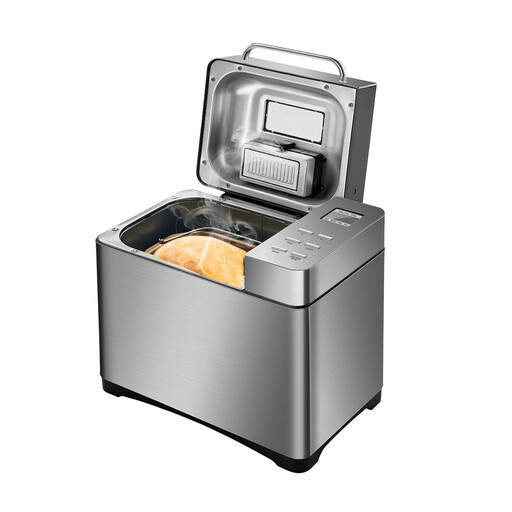
Bread maker, 650 W, 19 programmes
The product description mentions a dough programme; check the instructions to see whether its cycle is suitable for pizza dough.
The product name also lists three crust settings and three loaf sizes.
View at Joybuy
 No image available
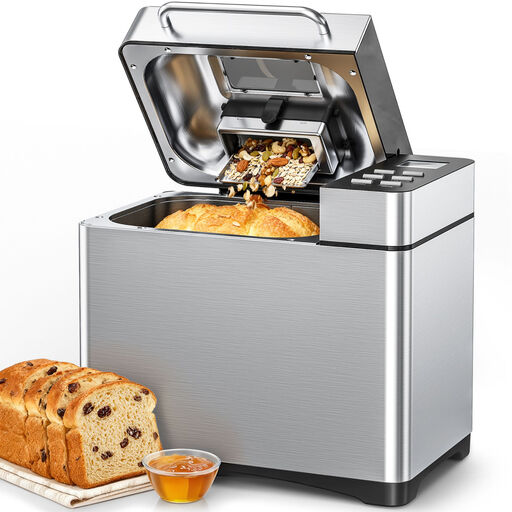
HavenWell bread maker, 19 programmes
The product description specifically lists pizza dough as an application. Compare the quantity in your planned recipe with the instructions for the exact model.
The product description also lists an automatic ingredient dispenser, three loaf sizes and three crust settings.
View at Joybuy
 No image available
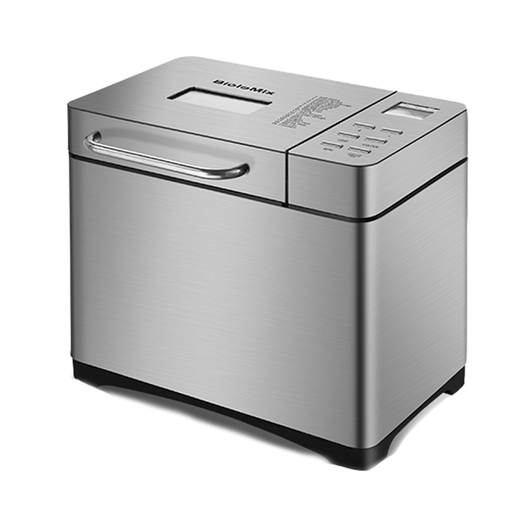
BioloMix BBM013 bread maker
If you’re considering this model for pizza dough, check the instructions to see whether it has a suitable kneading cycle and what recipe quantity applies.
The product name lists 17 programmes, a fruit and nut dispenser, and a 15-hour delay timer.
View at Joybuy
Frequently asked questions
How do I plan the quantity for several pizzas?
First decide how many trays or portions of dough you want, then choose your recipe. Rommelsbacher specifies a maximum of 500 g of flour for yeast dough in the BA 550; Graef’s recipe for the BA806 uses 400 g of flour for one tray. If the recipe quantity isn’t enough for one cycle, plan to make several batches.
Does the pizza dough programme bake the topped pizza too?
No. The Graef pizza dough programme is designed to prepare the dough; you then shape and top it before baking it in the oven. For other models, check the exact programme steps in the relevant instructions.
What should I know about cleaning and gluten-free dough?
Follow the cleaning instructions for the baking pan and kneading blade. If someone has coeliac disease, you’ll also need to consider gluten-free ingredients and organise your kitchen to avoid the risk of cross-contamination; an appliance programme alone can’t guarantee this.
What are my rights if an online purchase is faulty in Germany?
According to the German consumer advice centre, statutory liability for defects generally applies against the seller for two years; this is separate from any voluntary manufacturer’s warranty. Online purchases also usually come with a 14-day right to cancel, which you must exercise with the retailer.
Is CE marking required for these appliances?
CE marking is required for mains-powered appliances within the scope of low voltage requirements, in this case 50 to 1,000 V AC; EUR-Lex explains the scope. Your Europe explains that CE marking is the manufacturer’s declaration, not an independent quality mark. Additional requirements apply to materials that come into contact with food, as described by EUR-Lex.


