What should you look for when buying?
First, check that the machine supports the dough cycle you want and can handle the quantity in your recipe. In a shared kitchen, cleaning, storage space and coordinating when it’s used are also key considerations.
The following checks are for anyone looking to make pizza dough in a bread maker in a shared kitchen.
| What matters |
What to check before buying |
Who will find this particularly important? |
| Dough programme |
Check the manual for the exact model for a pizza dough programme or suitable kneading and proving stages, and find out the permitted recipe quantity. |
If I make pizza regularly, I want the machine to prepare the dough while I shape the pizza and bake it in the oven myself. Around 36% of consumers put a suitable dough cycle first. |
| Cleaning |
Check whether the bread pan and kneading blade can be removed, and read the machine’s cleaning instructions. |
In a shared kitchen, I want to be able to reach the pan and kneading blade easily and clean the worktop after handling flour. Around 29% of consumers prioritise cleaning after use. |
| Space and noise |
Compare the machine’s dimensions and the space needed to open the lid with the available worktop or storage space. Only apply noise ratings to the model that was tested. |
If I need to put the machine away after use or take quiet hours into account, its size and kneading noise matter more than extra programmes. Around 21% of consumers prioritise being able to plan when they use it. |
| Dough quantity |
Compare the permitted flour or dough quantity for the specific dough programme with your recipe. Don’t use the bread weight as an indication of pizza dough capacity. |
When making several pizzas, I want to prepare a suitable batch if possible, without assuming that bread weight and pizza dough quantity are the same. Around 14% of consumers prioritise the amount per batch. |
Brands to consider
The details below relate to the product ranges mentioned and can help you compare dough functions, bread pans and settings. They are not a general assessment of the brands.
Panasonic
The SD-YR2540 is worth considering if you want a dedicated pizza dough programme and manually adjustable kneading and proving stages.
- Panasonic lists 32 programmes and a yeast dispenser for the SD-YR2540.
- Check the recipe quantity against the details for the specific programme, and remember to shape and bake the pizza separately.
Rommelsbacher
The BA 550 is worth comparing if you’re looking for a kneading programme and a customisable cycle.
- Rommelsbacher lists a removable 2-litre pan, a removable kneading blade and a custom programme.
- The stated 700 and 900 g figures are loaf sizes; check the manual for the permitted pizza dough quantity.
Tefal
The Pain Delice PF240E38 is worth considering if you want a dedicated pizza dough programme and a removable pan.
- Tefal lists 20 programmes, three loaf sizes from 500 g to 1 kg, and a removable coated pan.
- Check that the quantity of dough in your recipe suits the cycle on the specific model.
GRAEF
The BA806 is worth comparing if you want to set the dough cycle yourself.
- GRAEF lists 36 programmes, including a DIY function and programmes for preparing dough. CHIP places the BA806EU it tested in the ‘Particularly quiet’ category.
- The noise rating applies to the BA806EU that was tested. For the specific BA806, check whether its adjustable cycle suits your recipe.
Medion
The LIFE MD 12040 is worth comparing if you’re considering making larger loaves.
- Medion lists 20 programmes and a maximum bread weight of 1,600 g.
- The bread weight doesn’t indicate a matching pizza dough quantity. Also check the dimensions and available space.
Bread makers at Joybuy
Joybuy product options for this topic: for each model, check whether the dough programme, recipe quantity, cleaning requirements and footprint suit your shared kitchen.
 No image available
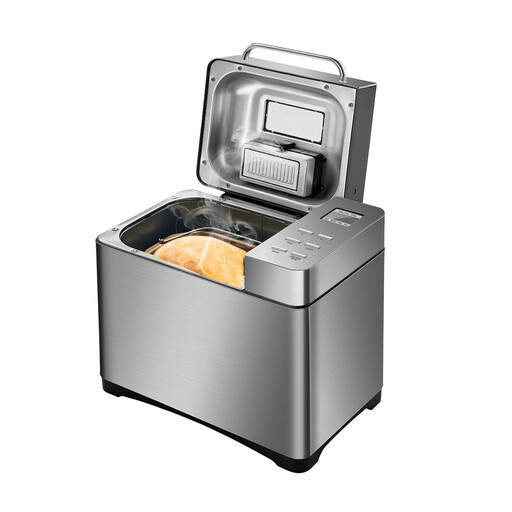
Bread maker, 650 W, 19 programmes, 2.2 lbs
A general dough programme is listed. Check the manual to see whether the cycle and permitted quantity suit your pizza dough recipe.
650 W, 19 programmes, three browning settings, three loaf sizes, 15-hour delay timer, 1-hour keep-warm function and a non-stick pan.
View at Joybuy
 No image available
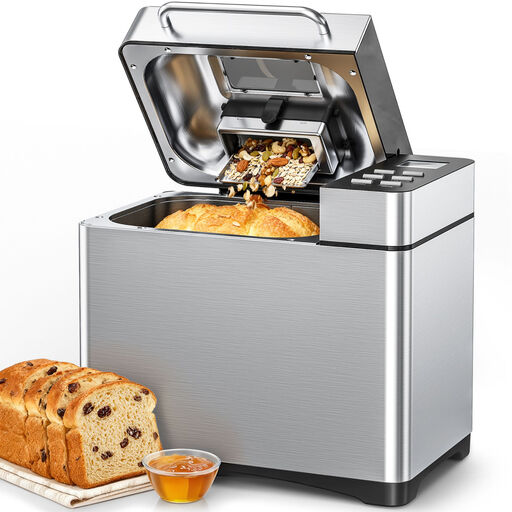
HavenWell bread maker, 19 programmes, 1 kg, silver/black
The dedicated programme is relevant if you’re making pizza dough; check the model’s manual to confirm the permitted recipe quantity.
19 programmes, three loaf sizes of 500 g, 750 g and 1,000 g, three browning settings, 15-hour delay timer, ingredient dispenser and coated pan.
View at Joybuy
 No image available
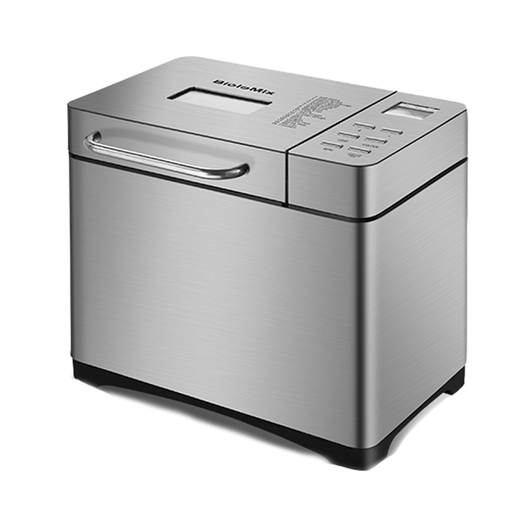
BioloMix BBM013 bread maker
If you’re considering this model for pizza dough, check first whether the manual specifies a suitable dough programme and whether it can handle enough dough for your recipe.
17 programmes, fruit and nut dispenser, 1-hour keep-warm function and 15-hour delay timer.
View at Joybuy
Frequently asked questions
Can a bread maker bake the finished pizza too?
A pizza dough programme prepares the dough; you’ll need to shape, top and bake the pizza separately. Check the cycle on the specific programme and make sure you have a suitable oven and work surface available.
What should I bear in mind after making dough in a shared kitchen?
Clean worktops and kitchen utensils after handling flour, and follow the instructions for the bread pan and kneading blade. The German Federal Institute for Risk Assessment advises against eating pizza dough or other raw dough before baking; the Verbraucherzentrale provides guidance on kitchen hygiene.
Does a gluten-free programme make a shared bread maker safe for people with coeliac disease?
No. The programme alone doesn’t show that the pan, kneading blade or work surfaces were free from gluten contact before use. If this matters in your household, follow appropriate expert guidance on preparing and cleaning food separately, rather than assuming the programme description guarantees safety.
Are a warranty and statutory rights the same when buying in Germany?
No. The Verbraucherzentrale distinguishes statutory rights against the seller if a product is faulty from an additional voluntary guarantee, which has its own terms and conditions. If you need a replacement pan or kneading blade, also check the spare-parts details for the exact model.
What should I know about the CE marking on an electrical appliance?
The EU’s Your Europe information page explains that CE marking is required for certain product groups; whether it applies to a specific appliance depends on the relevant regulations. A CE mark is the manufacturer’s declaration, not an independent quality mark.


