Shape your own rolls
If you want the machine to prepare the dough before you shape and bake the individual rolls yourself, look for a suitable dough programme. Gastroback specifically cites roll dough as an example of what it can be used for.


Choose a machine with a documented dough programme and check its permitted dough or flour quantity against your roll recipe; the stated loaf size won’t answer this question. Depending on the programme, the machine can take care of mixing and kneading, but you’ll need to shape the individual rolls yourself and bake them in the oven.
If you want the machine to prepare the dough before you shape and bake the individual rolls yourself, look for a suitable dough programme. Gastroback specifically cites roll dough as an example of what it can be used for.
If you’re baking for a picnic, compare your recipe quantity with the capacity stated for the specific model. For example, Rommelsbacher gives a maximum flour quantity for yeast dough for the BA 550.
If you want to prepare the dough while taking care of other things, allow time for shaping, baking and cooling, as well as any delay-start setting. Rommelsbacher and Tefal are among the manufacturers that provide information about timers.
A good fit if: You’re looking for a manufacturer’s specific recommendation for making roll dough.
Keep in mind: The programme prepares the dough, but it won’t shape and bake individual rolls.
A good fit if: You want to check your recipe quantity against a specific limit set by the manufacturer before buying.
Keep in mind: Rommelsbacher states that the BA 550 can handle a maximum of 500 g of flour for yeast dough; this is not the same as the selectable loaf weight.
A good fit if: You want to make other types of dough as well as roll dough; Tefal lists pizza and pasta dough for the Pain Doré PF210138.
Keep in mind: Check the instructions to see whether the programme is also suitable for your particular yeast dough recipe.
| What you need | What to check when buying | Who is this important to? |
|---|---|---|
| A suitable dough programme | Check whether the model kneads or proves dough, and whether the programme ends before the baking stage. | If I want to shape and bake individual rolls myself, I need a programme that prepares suitable dough. Around 36% of consumers put having a suitable dough programme first. |
| Dough quantity per cycle | Compare the flour quantity and the total dough mixture with the capacity stated for the specific model. | If I’m baking for a larger picnic group, I want to know whether my recipe will fit into one cycle. Around 29% of consumers prioritise a suitable batch size. |
| Preparing dough to a schedule | Check whether the delay-start setting applies to the dough programme you’ve chosen, and allow time for shaping and baking. | If I want to prepare the dough while taking care of other things, I also need to leave time for the steps that follow. Around 21% of consumers put planning their time first. |
| Cleaning and spare parts | Read the care instructions and check whether the baking pan and kneading paddle are available separately for the model. | If you want to clean the pan and kneading paddle regularly and use the machine for longer, care and spare parts matter too. Around 14% of consumers give these factors the greatest weight. |
The selectable loaf size and the permitted quantity for yeast dough are two different figures. Rommelsbacher states that the BA 550 can handle a maximum of 500 g of flour for yeast dough.
Check your complete recipe against the capacity information and instructions for the specific model.
If one cycle is too small for the quantity you need, you may have to prepare the dough in additional batches.
A dough programme won’t produce shaped, baked individual rolls. You’ll also need to allow time for the steps that follow.
Work backwards from when you want the rolls to be ready and check whether the delay-start setting is available for that specific dough programme.
The fact that a pan can be removed doesn’t tell you how it should be cleaned.
Follow the care instructions for the baking pan and kneading paddle on your chosen model.
The Design Brotbackautomat Advanced 42823 is an option if you’re looking for a manufacturer’s recommendation for roll dough.
The BA 550 may be worth considering if you want to plan your dough using a flour quantity specified for the model.
The Pain Doré PF210138 is worth considering if you want to make other types of dough as well as roll dough.
The Backmeister Bernd 68120 is another option if you’re looking for a machine with different dough programmes and a removable pan.
These bread makers are product options to consider for picnic roll dough. For each model, check whether it has a suitable dough programme and states a capacity that will handle your recipe.
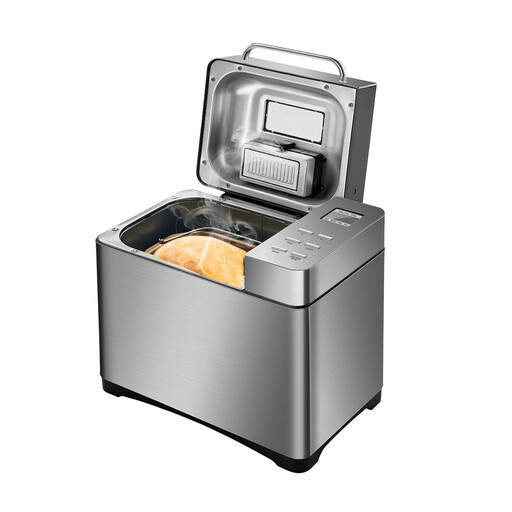 No image available
If you want to schedule when the machine starts, check whether it has a dough programme suitable for your roll recipe.
Listed in the product name: 650 W, 19 programmes, 3 browning levels, 3 loaf sizes, a 15-hour timer, 1-hour keep-warm function and a capacity of 2,2 lbs.
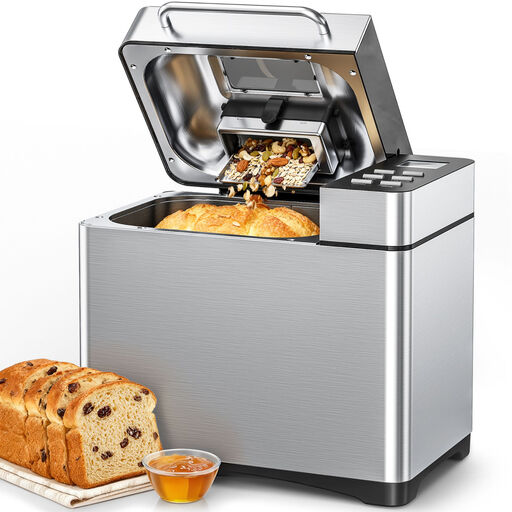 No image available
If you want the machine to prepare the dough, check whether its kneading function is suitable for your yeast dough recipe and what quantity it can handle per cycle.
Listed in the product name: automatic ingredient dispenser, 3 loaf sizes, 3 browning levels and a 15-hour timer.
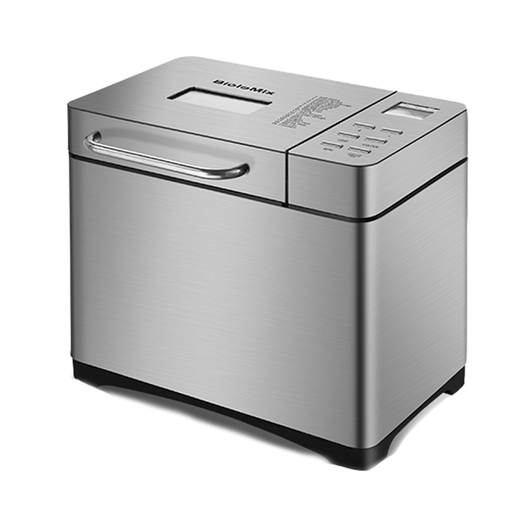 No image available
Before buying, check the instructions to see whether the machine has a dough programme suitable for your picnic roll recipe.
Listed in the product name: 17 smart menus, double-tube baking, smart fruit and nut dispenser, 1-hour keep-warm function and a 15-hour delay-start timer.
No. The dough and kneading programmes mentioned prepare the dough. You’ll need to divide and shape the individual rolls yourself, then bake them separately; a loaf size doesn’t tell you how many finished rolls you’ll get.
No. The Rommelsbacher BA 550 has selectable loaf sizes of 700 and 900 g; separately, Rommelsbacher specifies a maximum of 500 g of flour for yeast dough. For other models, check the relevant capacity information and instructions.
Clean the pan and kneading paddle according to the instructions for your model and check whether suitable spare parts are available. In Germany, statutory warranty rights for faulty goods are the seller’s responsibility; the Verbraucherzentrale distinguishes these from a voluntary manufacturer’s guarantee.
Parts that come into contact with food must meet the requirements for food contact materials. Mains-powered appliances within the relevant voltage range must also meet electrical safety and CE requirements. This describes the applicable requirements but doesn’t confirm that any specific model complies with them.
Keep perishable ingredients properly chilled until they’re ready to eat. The German Federal Institute for Risk Assessment warns of risks when food isn’t kept sufficiently cool during transport or storage; the machine’s dough function doesn’t change this.