What should you look for when buying?
First, work out how much bread you actually eat. Then check that the baking programme and timing fit your weekday routine.
The percentages below relate to consumers’ main consideration when choosing a bread maker for packed lunches.
| Main consideration |
What to check before buying |
Who is it particularly relevant to? |
| Planning your baking |
Check the timer, your preferred bread programme and the programme duration in the instructions. |
If I want to fit baking into a weekday, I need a suitable schedule and must allow time for the bread to cool before slicing. Around 33% of consumers put planning the timing first. |
| Choosing the right loaf size |
Compare the available loaf sizes with your recipe and how much you eat; freeze any surplus slices in portions if needed. |
If I only need a few lunch portions, I don’t want to bake an unnecessarily large loaf. Around 25% of consumers prioritise a suitable loaf size. |
| Planning for sandwich slices |
Check the toast or white bread programme, baking tin and recipe; if you need a particular slice shape, compare the tin dimensions. |
If my bread needs to fit in a particular lunchbox, the shape of the slices matters to me as much as the stated bread weight. Around 25% of consumers focus first on slices suitable for sandwiches. |
| Cleaning and effort |
Consider removable parts, cleaning instructions, access to spare parts, and the cost of ingredients and electricity. |
If I use the machine regularly, cleaning should fit into my routine and the ongoing effort should be manageable. Around 17% of consumers put this first. |
Joybuy offers for planning your bread baking
These offers are for consumers who want to plan their baking in advance and use automatic dispensing for fruit or nuts. Also check that the bread programme and loaf size suit the bread you want to make for packed lunches.
 No image available
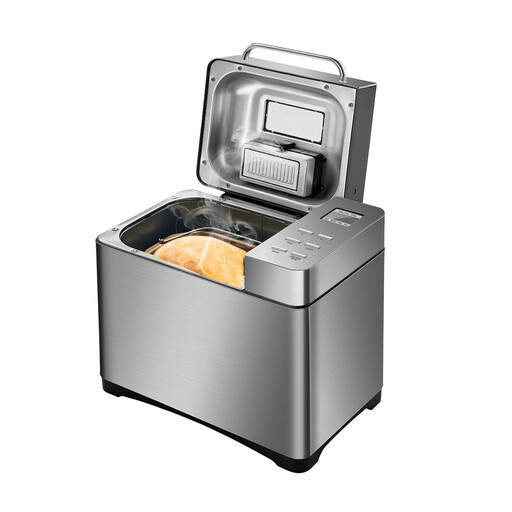
Bread maker, 19 programmes, 3 loaf sizes
Suited to planned baking, with automatic dispensing for fruit and nuts.
19 programmes; 3 crust settings; 3 loaf sizes; 15-hour timer; 1-hour keep-warm function; capacity 2.2 lbs; 650 W.
View at Joybuy
 No image available
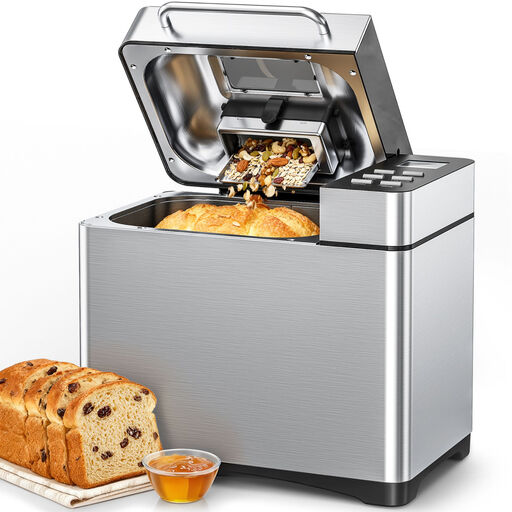
HavenWell bread maker, 19 programmes, 1 kg
An option if you want to choose the loaf size and plan your baking in advance.
19 programmes; 3 sizes; 3 crust settings; 15-hour timer; automatic ingredient dispenser; stainless steel; 1 kg.
View at Joybuy
 No image available
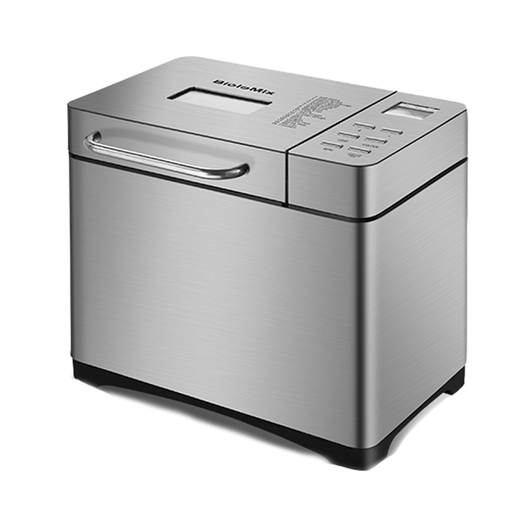
BioloMix BBM013, 17 programmes
A good fit if you want to set a start time and automatically add fruit or nuts.
17 programmes; 15-hour delay start; automatic fruit and nut dispensing; 1-hour keep-warm function.
View at Joybuy
Frequently asked questions about bread makers for packed lunches
Does the stated loaf weight guarantee suitable sandwich slices?
No. It tells you the available loaf size, not the shape of the slices. Compare the baking tin and specific toast or white bread recipes with your lunchbox.
How should I store a loaf for several weekdays?
You can freeze any surplus bread in portions, as the Verbraucherzentrale recommends. It also advises storing bread at room temperature in a dry, dark place. If you see any mould, throw away the whole loaf.
Does a filled packed lunch with perishable ingredients need to be kept cool?
Perishable ingredients need to be kept at the required temperature until they’re eaten. The German Federal Institute for Risk Assessment warns that inadequate temperatures during transport and storage can allow harmful bacteria to multiply. The right way to handle your food will depend on the filling and how it’s transported.
What should I do if an appliance bought online is faulty or I want to return it?
If a product is faulty, your statutory rights are against the seller and are separate from any voluntary guarantee. For online purchases, consumers generally have the right to cancel within 14 days of receiving the goods. The Verbraucherzentrale explains that you must notify the seller that you’re cancelling.
What labelling should I check on a new mains-powered appliance for use in Germany?
Products covered by the relevant EU rules must carry a CE mark. The European Union’s Your Europe website explains that this is required only for products covered by EU legislation that specifically requires it. Check the labelling and safety documents for the specific product you’re considering.


