Small-loaf bakers
If you want to bake smaller loaves for picnics and everyday use, look for machines that are specifically designed for a small loaf size. Panasonic Germany lists a capacity of around 400 g for the SD-PN100.


If you regularly bake small loaves, check the stated loaf size: according to Panasonic Germany, the Panasonic SD-PN100 is designed for loaves of around 400 g, while several models with multiple size options start at around 500 g. Larger machines may also suit the occasional picnic loaf, provided the recipe and dough quantity are suitable. Check the timer, counter space and time needed for the loaf to cool and be packed, rather than focusing solely on the number of programmes.
If you want to bake smaller loaves for picnics and everyday use, look for machines that are specifically designed for a small loaf size. Panasonic Germany lists a capacity of around 400 g for the SD-PN100.
If you need your loaf to be ready by a set departure time, plan the start time, programme and time needed to remove and cool the loaf together. The delay-start times mentioned are based on information from Panasonic Germany, Tefal Germany and Rommelsbacher.
If you occasionally bake small loaves but usually make larger batches, a choice of loaf sizes may matter more than having the smallest possible machine. Unold AG and Tefal Germany list sizes starting at around 500 g for the models considered here.
A good fit if: You usually bake small quantities, even when you’re not making a picnic loaf, and have a suitable spot for the machine.
The trade-off: According to Panasonic Germany, the Panasonic SD-PN100 is designed for loaves of around 400 g. This gives you less flexibility for larger gatherings.
A good fit if: You want to bake a smaller loaf for a picnic but make larger quantities on other days.
The trade-off: The Unold and Tefal models mentioned start at around 500 g, according to their German product pages. Adjust your recipe to suit this quantity.
A good fit if: You want to use the Rommelsbacher BA 550 for larger loaves too, and only bake smaller loaves occasionally.
The trade-off: Its standard sizes are 700 and 900 g. Rommelsbacher says there must be enough dough in the tin for it to knead properly when making smaller quantities. For very small quantities, the manufacturer recommends the ‘Short’ programme.
The information on loaf sizes and timers is based on details from Panasonic Germany, Unold AG, Tefal Germany and Rommelsbacher. Advice on bread and storage is from the Federal Centre for Nutrition.
| Priority | What to check when buying | Who is this important to? |
|---|---|---|
| Suitable loaf size | Compare the stated loaf size with the amount of dough in your recipe. The SD-PN100 is designed for around 400 g; the Unold and Tefal models with multiple size options mentioned here start at around 500 g. | If I only need a little bread for a picnic, I don’t want to estimate the quantity based on the machine’s size alone. Around 36% of consumers say getting the right loaf size is their main priority. |
| Ready before you leave | Check the timer and the duration of your chosen recipe, and allow extra time to remove and cool the loaf. A delay-start function alone won’t tell you when the loaf will be ready to take with you. | When I have a set departure time, I want to fit the baking and preparation reliably into my schedule. Around 29% of consumers share this scheduling priority. |
| Transport and storage | Consider the type of bread, how long it will be in transit and how it will be packed. The Federal Centre for Nutrition notes that heat and moisture can encourage bread to spoil. | I want to know how to transport and store my loaf until the picnic without losing the crust I’m looking for. Around 21% of consumers prioritise keeping bread fresh and transporting it safely. |
| Everyday use | Compare the space available with the loaf sizes you need and the programmes you’ll actually use. Panasonic Germany gives the SD-PN100’s dimensions as 255 × 307 × 290 mm. | If I’m going to use the machine regularly after the picnic too, I want its size and features to suit the quantities I usually bake. Around 14% of consumers focus on everyday use. |
A machine’s dimensions and its stated loaf size are two different things. The Rommelsbacher BA 550 has standard selectable sizes of 700 and 900 g; according to the manufacturer, smaller quantities are only possible under certain conditions.
Check the loaf size and recipe quantity for the exact model, along with its kneading requirements, rather than relying on the word ‘compact’ alone.
A delay-start function schedules when baking begins, but not the time needed to remove, cool and pack the loaf. The Federal Centre for Nutrition also notes that heat and high humidity can make bread spoil more quickly.
Work backwards from your departure time and allow for the programme you’ve chosen as well as the time needed after baking.
The machines considered here offer different additional programmes, but first make sure the loaf size and timing suit your needs.
Choose extra features based on whether you’ll also make the recipes they’re designed for in everyday life.
The SD-PN100 is an option for small loaves of around 400 g.
The Backmeister Bernd 68120 combines a smaller selectable loaf size with larger quantities for everyday use.
The models considered here, Pain Doré PF2101 and Pain & Délices PF240E, offer selectable sizes starting at 500 g.
The BA 550 is a larger alternative if you only need small loaves occasionally.
This selection is for anyone looking for a bread maker for picnics and everyday use, with features such as a delay-start function or a choice of loaf sizes.
 No image available
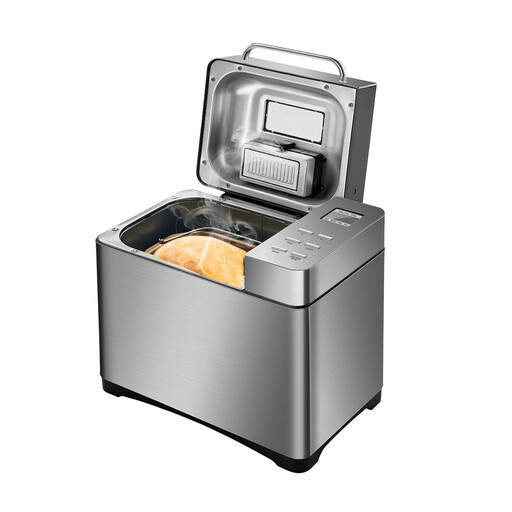
The stated delay-start function can help you plan a baking cycle for a picnic.
19 programmes; 3 browning settings; 3 loaf sizes; 15-hour timer; 1-hour keep-warm function; non-stick baking tin; capacity: 2.2 lbs.
 No image available
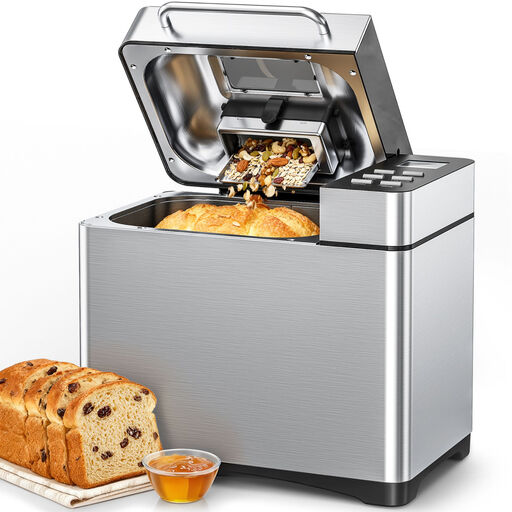
The stated delay-start function and choice of loaf sizes may be useful for baking different quantities and planning a picnic loaf.
19 programmes; 3 loaf sizes; 3 browning settings; 15-hour timer; automatic ingredient dispenser; stainless steel finish.
 No image available
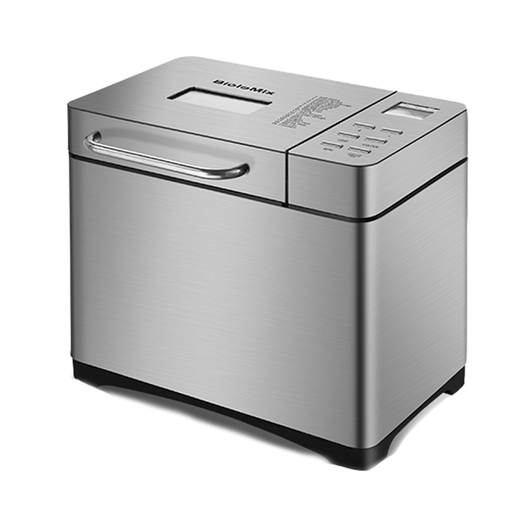
The stated 15-hour delay-start function can help you plan a baking cycle for a set time.
17 programmes; automatic dispenser for fruit and nuts; dual-tube baking system; 1-hour keep-warm function; 15-hour delay-start function.
According to Rommelsbacher’s manufacturer FAQ, this is possible as long as there’s enough dough in the tin for the machine to knead it properly. The manufacturer recommends the ‘Short’ programme for very small quantities; 400 g is not a standard selectable size.
Choose your packaging based on the crust and how long the bread needs to be stored. The Federal Centre for Nutrition recommends a paper bag from a bakery to keep the crust crisp; heat and moisture increase the risk of spoilage. Any mouldy bread must be thrown away in its entirety.
No. According to the European Commission, the CE mark is the manufacturer’s declaration that the product meets the relevant EU product requirements. It is not a comparative assessment of baking quality.
No. According to information from the Federal Ministry for the Environment, old electrical and electronic equipment must be taken to an authorised collection point or given to a retailer or other operator required to take it back. Check the local options for returning it.