Which option suits which shopper

Smaller households with an irregular need for lunch

If you don’t eat bread or rolls every day, it’s worth checking the pack size and storage requirements. Buying individual rolls avoids having a stockpile, while frozen rolls let you take out just the number you need. The Verbraucherzentrale recommends freezing bread and rolls in portions as needed.

People who deliberately choose wholemeal

If wholemeal is important for your lunch plans, look for the specific wholemeal label rather than relying on a dark colour or the words ‘multigrain’. Then compare the nutritional information and ingredients of the specific products.

People who need to check allergens

For packaged rolls, the ingredients and allergen information on the pack are what matter. For bakery goods sold loose, you can check or ask for the allergen information. Check each variety individually, even if it looks similar to a type of roll you already know.

What to look for when buying

First decide how many portions you actually need and whether you have access to an oven or freezer space. Then compare the product descriptions, ingredients and nutritional information for the rolls or bread you’re considering.

Criteria What to check Who it matters to
Portion size and leftovers Compare the number of rolls or amount of bread with the portions you’ve planned for lunch; for larger packs, check how they should be stored and whether you have space to freeze them. If I only eat bread on certain days, I don’t want an opened multipack left over. For around 42% of consumers, portion size is a key consideration when buying.
Wholemeal and nutritional information Look for the term ‘wholemeal’ and compare fibre and salt per 100 g and per portion. For my lunch, it matters which type of grain the product contains and what its nutritional values are; colour alone doesn’t tell me that. Around 33% of consumers put this comparison first.
Preparation and where to shop Check whether you have access to an oven, the baking instructions and the time needed; if you need one portion straight away, consider buying a single roll. If I’m eating on the go or can’t use an oven, I need a roll or bread that doesn’t need baking. This immediate need is the deciding factor for around 25% of consumers.

Common buying mistakes

  • Assuming ‘dark’ or ‘multigrain’ means wholemeal

    Colour, seeds on the surface and the term ‘multigrain’ don’t tell you whether a roll is labelled as wholemeal. The German Nutrition Society recommends looking specifically for the term ‘wholemeal’.

    Check the product description, then compare the ingredients and nutritional information for the specific options.

  • Buying more rolls than you need for your next lunches

    A larger pack won’t solve the portion-size problem if rolls are left over before you get a chance to use them. Half a loaf also needs to match how much you’ll actually eat.

    Plan how many portions you’ll need before your next shop, then choose between buying individual rolls, a suitable pack or a frozen supply you can use portion by portion.

  • Guessing allergens from the name of a type of roll

    For varieties containing grains or seeds, you can’t work out the full allergen information from the name alone. For example, Kamps lists cereals containing gluten and sesame for one of its multigrain rolls in its regional range.

    For packaged goods, read the information on the current pack. For loose goods, ask for the allergen information for the exact variety you’ve chosen.

  • Buying part-baked rolls without a suitable way to prepare them

    Part-baked rolls are only practical for lunch straight away if you have access to the oven they need and the preparation time fits your day.

    Check the instructions on the pack before buying. If you don’t have access to an oven, a ready-baked individual roll or bread may be a better option.

Brands and places to shop for guidance

REWE

REWE lists a range of part-baked rolls online, including products described as wholemeal and frozen options.

  • You can compare details such as pack weight and storage format on individual product pages.
  • Check the product information and availability for your location before shopping.

EDEKA

EDEKA lists both wheat rolls for baking at home and multigrain varieties online, with details for each product.

  • One EDEKA product example is a pack of six breakfast rolls for baking at home.
  • EDEKA notes that products may not be available in every store and that online information may differ from the packaging.

Lidl

Lidl sells freshly baked goods and also stocks some part-baked roll products under the Grafschafter brand.

  • If you’re looking for a ready-baked roll for the same day, you can check the freshly baked range in store.
  • Check the range and the details for the specific variety in store.

ALDI

ALDI Nord lists packs of four for one of its organic part-baked roll offers.

  • A pack of four gives you a useful comparison if six rolls would be too many for your planned use.
  • This specific offer is available for a limited time and does not represent the full range at ALDI Nord and ALDI SÜD.

Kamps

Kamps lists individual bakery rolls in a regional delivery range, including multigrain and pumpkin seed rolls.

  • Buying individually works well if you only need one portion that’s ready to eat straight away.
  • The range shown is for Krefeld; check the selection and allergen information for your branch and chosen variety.

Der Meisterbäcker

Der Meisterbäcker is a regional bakery alternative for buying individual rolls or bread instead of packaged part-baked goods.

  • The bakery describes a range of bread and roll varieties on its website.
  • Before shopping, check that there’s a branch you can get to and look up details of the product you want.

Suitable Joybuy products

This frozen product could suit you if you’d like to keep rolls in the freezer and take out individual ones for future lunches, and you have freezer space and an oven. If you’re choosing based on wholemeal ingredients or specific nutritional values, check the details for the product itself.
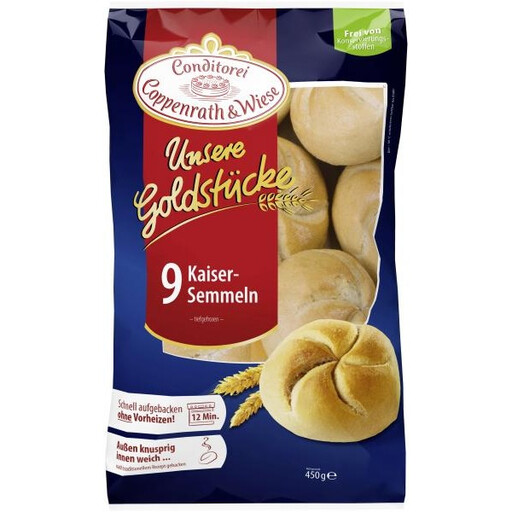
Coppenrath & Wiese Our Gold Pieces Kaiser rolls, 9 pieces, 450 g

Coppenrath & Wiese Our Gold Pieces Kaiser rolls, 9 pieces, 450 g

A handy supply of rolls you can take out one at a time, if you have freezer space and an oven.

The pack contains nine Kaiser rolls, weighing 450 g in total. Follow the preparation instructions before eating, and check the pack if wholemeal labelling, nutritional values or allergens are important to your choice.

View at Joybuy

Frequently asked questions

Is a multigrain roll automatically a wholemeal roll?

No. ‘Multigrain’ and ‘wholemeal’ don’t mean the same thing, so if you want to buy wholemeal, look specifically for that description. The German Nutrition Society recommends not judging a roll by its colour alone.

How long do part-baked rolls take in the oven?

Baking time varies by product. EDEKA gives a baking time of eight to ten minutes for its breakfast rolls; for other rolls, follow the instructions on the pack you’ve bought.

What should I do with bread or rolls I won’t eat straight away?

Freezing bread and rolls in portions is one way to save them for a future lunch. The Verbraucherzentrale recommends thawing only the amount you need; for part-baked products, also follow the storage and preparation instructions on the pack.

Where can I find allergen information for bakery rolls?

In Germany, allergen information must also be available for rolls sold loose. Ask the bakery to show you the information for the specific variety or tell you what it is; for packaged goods, check the current pack.

Is the online information enough to choose part-baked rolls?

Online information is useful for narrowing down your options, but it doesn’t replace checking the pack you buy. EDEKA specifically notes that information on its product pages may differ from the packaging. The pack itself is particularly important for details about ingredients, allergens and preparation.