There’s no one-size-fits-all thickness that makes a slice of bread roll suitable for baby-led weaning. First, it’s important to establish whether your baby is ready for complementary foods; a sample meal plan from the Federal Institute of Public Health includes bread and bread rolls as part of the transition to family foods towards the end of the first year. Check the ingredients, allergens and salt information for the specific product. If you’re offering only solid complementary foods, the Healthy Start Network recommends seeking individual advice from your paediatric practice.
Who is this relevant to?
Parents just starting complementary feeding
You’d like to offer finger foods, but first need to work out whether your baby is ready for complementary foods. A thick slice doesn’t replace that assessment. If you’re offering only solid complementary foods, the Healthy Start Network recommends seeking individual advice from your paediatric practice.
Families moving towards family foods
You’re thinking about how bread or bread rolls can fit into a meal. A sample meal plan from the Federal Institute of Public Health includes them as part of the transition to family foods towards the end of the first year.
Parents checking specific ingredients
For you, the details of the individual bread roll matter: its ingredients, allergens, possible traces and salt content. For loose products, make sure you have this information before buying.
What should you look for when choosing?
When choosing bread rolls for baby-led weaning, your baby’s readiness for complementary foods matters more than the thickness of the slice. Next, consider the roll’s place in the meal and the information provided for the specific product.
| What matters |
What to check when buying |
Who it matters most to |
| Readiness for complementary foods, not slice thickness |
Take your baby’s readiness cues and the planned approach to complementary feeding into account. A slice described as thickly cut is no guarantee of safety. |
Before offering finger foods, I want to know whether my baby is ready, rather than relying on the shape of a bread roll. Around 42% of consumers would consider readiness for complementary foods their top concern. |
| Its place in the meal |
Consider the bread roll as part of your overall meal plan. The Federal Institute of Public Health’s sample meal plan includes bread or bread rolls during the transition to family foods towards the end of the first year. |
As we move towards family foods, I’d like to offer a bread roll as part of a meal without treating it as the whole complementary-feeding plan. For around 33% of consumers, this would be their top consideration. |
| Ingredients, salt and allergens |
Read the label for the specific product, including salt per 100 g and any precautionary allergen statements. For loose products, ask about allergen information before buying. |
If ingredients or allergens are important to my choice, I need information about the exact bread roll I’m buying. Around 25% of consumers would put this product check first. |
Common mistakes when choosing
-
Assuming “thickly cut” means safer
Slice thickness alone doesn’t tell you whether a bread roll is suitable for your baby’s development or the eating situation.
Start by checking your baby’s readiness for complementary foods. If you’re offering only solid complementary foods, the Healthy Start Network recommends seeking individual advice from your paediatric practice.
-
Planning for the bread roll to make up a whole complementary-feeding meal
According to the Healthy Start Network, with baby-led weaning, nutrient intake also depends on which foods are offered and what your baby actually eats. A bread roll alone can’t answer that question.
Think of it as a possible part of a meal at the right stage of development, not a substitute for planning your baby’s overall complementary diet.
-
Assuming all rolls from a brand are the same
Ingredients, salt information and precautionary allergen statements apply to individual products. EDEKA notes that information on a product page may differ from the packaging.
Check the current packaging or, for loose products, ask for information about the bread roll being sold.
-
Serving part-baked rolls straight from the oven
For its ja! Sonntagsbrötchen example, REWE advises letting the rolls cool after baking before eating them.
Follow the preparation instructions for the product you’ve bought and let it cool before serving.
Allow extra time for baking and cooling.
Brands as examples of product information
REWE
The ja! Sonntagsbrötchen example shows which details you can compare before buying a specific packaged part-baked bread roll.
- For this product, REWE lists the ingredients, possible traces, preparation instructions and 1 g of salt per 100 g.
- The information and preparation instructions apply to this product, not to every bread roll sold by REWE.
EDEKA
The product information for GUT&GÜNSTIG Toscana Brötchen gives you an overview of this product’s ingredients and labelling.
- For this product, EDEKA lists, among other details, cereals containing gluten, possible traces and 1.34 g of salt per 100 g.
- EDEKA notes that availability varies by store and that the information on the packaging may differ from the product page.
ALDI SÜD
With a changing product range, start by checking the label on the specific bread roll on offer.
- For questions about individual products, ALDI SÜD advises contacting the supplier named on the packaging.
- A general online ingredients list for a changing range can’t be relied on for a specific bread roll.
Bread rolls at Joybuy
This hot dog bun could be considered as a product to check for the transition to family foods. However, its name says nothing about a suitable slice thickness or whether it’s right for an individual baby.
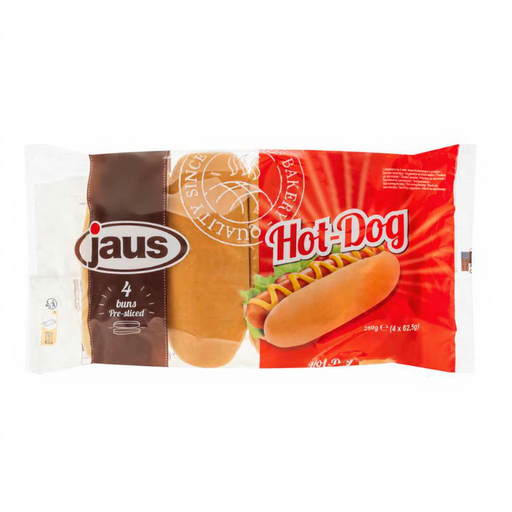 Image unavailable
Jaus Hot Dog Buns 4x250g
Choose this bread roll for a meal during the transition to family foods only after considering your baby’s readiness for complementary foods and the rest of the meal.
Check the ingredients, salt and allergens on the specific pack, as well as the roll’s actual shape and texture before serving.
View at Joybuy
Frequently asked questions
When is a bread roll suitable for baby-led weaning?
Don’t choose a bread roll based only on your baby’s age or its shape: readiness for complementary foods comes first. A sample meal plan from the Federal Institute of Public Health includes bread and bread rolls during the transition to family foods towards the end of the first year. If you’re offering only solid complementary foods, the Healthy Start Network recommends seeking individual advice from your paediatric practice.
Is a thick slice of bread roll always more suitable?
Thickness alone can’t tell you whether a bread roll is generally suitable or safe for baby-led weaning. Instead, consider your baby’s readiness for complementary foods, the specific eating situation and the roll’s place in the overall range of foods you offer.
Where can I find information about cereals containing gluten in loose bread rolls?
In Germany, ask for allergen information about the specific loose bread roll before buying it. Cereals containing gluten are listed in Annex II of the EU Food Information Regulation. Section 4 of Germany’s Food Information Implementing Regulation also gives a sign on or near the food as one way to provide this information.
What should I check on packaged part-baked rolls?
Check the ingredients list, salt per 100 g, declared allergens and any precautionary allergen statements on the specific pack. Also follow the baking and cooling instructions. Information about a different bread roll or on an old product page is no substitute for checking the current packaging.


