People living alone who want to avoid leftovers
If you only eat bread rolls occasionally, you can buy one or check before purchasing whether a pack can be used a few rolls at a time. The key is knowing what you’ll do with the rest.


If you’re buying bread rolls for individual meals, first decide whether you want any left over afterwards. Fresh rolls bought individually avoid leaving you with an opened pack, while stocking up only makes sense if you can store the extras appropriately. Pay particular attention to the instructions for chilled bake-at-home dough after opening: the Knack&Back product listed by REWE is intended to be used all at once once opened.
If you only eat bread rolls occasionally, you can buy one or check before purchasing whether a pack can be used a few rolls at a time. The key is knowing what you’ll do with the rest.
Bake-at-home rolls can make a warm accompaniment to an individual meal, provided you have a suitable appliance and the preparation time, storage and instructions after opening fit your routine.
If you don’t want to shop for every meal, consider rolls that can be frozen. The consumer advice centre explains how to freeze bread and rolls and defrost them as needed; always follow the storage instructions for the specific product.
First decide how many rolls you need for each meal, then choose between a fresh individual roll, a pack for several meals in the near future or a supply that can be stored.
| Criteria | What to check | Who it matters to |
|---|---|---|
| Leftovers and portions | Number of rolls, total weight and storage instructions after opening. | If I only eat a bread roll now and then, I don’t want to be left with extras that I have to use up without a plan. For around 50 % of consumers, managing quantities is the main priority. |
| Preparation | Whether the product is ready to eat or needs an oven or another appliance, and the timings on the pack. | For an individual meal, I want to know whether I can eat straight away or need to allow time for baking. This is the main concern for around 30 % of consumers. |
| Ingredients and labelling | Ingredients, allergen information and nutritional values per 100 g, as well as the amount you actually eat. | If I want to avoid certain ingredients or check the nutritional values of my portion, I don’t rely on the product name alone. Around 20 % of consumers put these checks first. |
Having a small portion at each meal won’t prevent waste if you don’t use the rest of the pack in time. According to GfK data cited by Germany’s Federal Ministry of Agriculture, Food and Regional Identity, bread and baked goods accounted for 13 % of avoidable food waste in German households in 2020.
Compare the number of rolls with the meals you have planned and, before stocking up, check whether you can freeze the specific product.
The Knack&Back Sunday rolls listed by REWE must be stored at +2 °C to +7 °C, must not be frozen and should all be used at once after opening. These conditions don’t automatically apply to other bake-at-home products.
Read the storage and opening instructions before planning to use a pack for several separate meals.
Descriptions such as ‘vegan’, ‘protein’ or ‘wholemeal’ are no substitute for checking the ingredients and allergen information. Nor does a description tell you how much an individual roll weighs.
For packaged products, check the specific labelling. For unpackaged rolls, ask what product information is available.
The consumer advice centre generally advises against storing bread in the fridge, as it dries out and goes stale more quickly there. It notes an exception in very warm, humid weather, particularly for white bread, to help prevent mould.
As a rule, store fresh rolls at room temperature in a dry, dark place. If you want to keep some for later, check whether freezing is suitable for that particular product.
REWE lists a range of bake-at-home rolls, including multipacks and chilled dough products.
EDEKA24 lists products including EDEKA Herzstücke stone-baked rolls in a pack of 4.
ALDI SÜD offers various roll and baguette formats, including wheat rolls and toast rolls.
In March 2025, Lidl described its in-store bakery range as varying from store to store.
Der Meisterbäcker describes its regional range in Hesse as bread and roll specialities made fresh every day.
The packs below contain Kaiser rolls or sandwich buns for several meals. As well as checking the number of rolls, make sure the preparation method and storage instructions for any leftovers suit your needs.
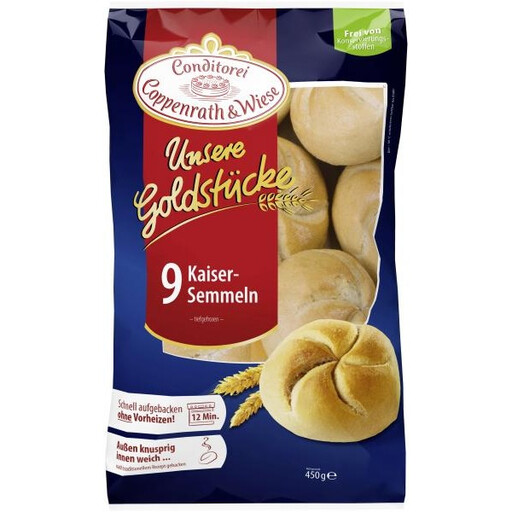 Image unavailable
The pack of 9 Kaiser rolls could suit a small stock if you’re planning to eat rolls over several meals. Check the preparation instructions and how to handle any rolls left over.
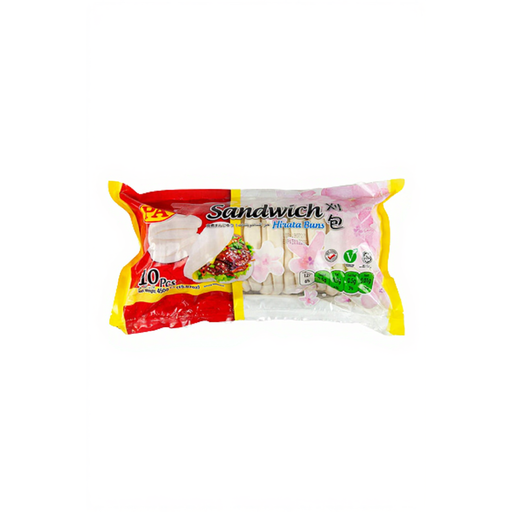 Image unavailable
The 10 sandwich buns are a handy format for planning individual sandwich meals, rather than a substitute for traditional Kaiser rolls. Note that they need to be steamed, and check how to store them after opening.
Buy as many as you need for the meal, or plan in advance how you’ll use the rest. With a multipack, the number of rolls and the storage instructions matter more than assuming you’ll be able to use every roll in the same way later.
It depends on the product. The Knack&Back Sunday rolls listed by REWE should be stored at +2 °C to +7 °C, must not be frozen and should all be used at once after opening. For other bake-at-home dough, check the instructions on its packaging.
For fresh bread and rolls, the consumer advice centre recommends storing them at room temperature in a dry, dark place. Freezing and defrosting only what you need are also options. For packaged products, follow any different storage and opening instructions.
Check the information for the specific bread roll, especially its ingredients and allergens. Information for unpackaged products may be provided differently from what you see on a pack. A description such as ‘vegan’ is no substitute for checking for allergenic ingredients.