Home workers comparing prices
If you regularly buy bread rolls for lunch, it’s worth comparing pack sizes and numbers of rolls against the price per kilogram. You should also consider how much you’ll use before your next shop.


When you’re on a tight lunch budget, the price per roll isn’t the only thing that matters. For packaged bread rolls, compare the price per kilogram and buy an amount you’ll actually use. Fresh rolls are a good choice when you want to eat without waiting for them to bake. Part-baked rolls can be planned into several breaks, but they take time and you’ll need a suitable oven. Ingredients and allergen information may also affect your choice.
If you regularly buy bread rolls for lunch, it’s worth comparing pack sizes and numbers of rolls against the price per kilogram. You should also consider how much you’ll use before your next shop.
When your break is short, it makes a difference whether you can eat the rolls straight away or need to bake them first. That’s why preparation time should be part of your buying decision.
If you’re looking specifically for wholemeal rolls or need to avoid certain allergens, check the information for the specific product rather than relying on its colour or name.
First, work out how many rolls you need for your lunch breaks and whether you’ll have time to bake them. Then you can compare pack sizes and ingredients to find what suits your plans.
| What to consider | What to check when buying | Who it matters most to |
|---|---|---|
| Quantity and price per kilogram | For packaged rolls, compare the weight and price per kilogram, and take into account how many rolls you need. | If I only use a few rolls, a large pack won’t necessarily help, even if the price per kilogram is low. Around 36% of consumers put the cost of the amount they’ll actually use first. |
| Break time | Compare rolls that are ready to eat with the preparation time and equipment needed for part-baked rolls. | I don’t want to preheat the oven and wait for rolls during a short lunch break. For around 29% of consumers, the time available is the main consideration. |
| Wholemeal and nutritional information | Check the product description and ingredients; for packaged rolls, also look at the nutritional information. | If I’m specifically looking to buy wholemeal rolls, a dark colour isn’t enough to tell me they’re wholemeal. Around 21% of consumers prioritise this choice of type and nutritional value. |
| Allergens | For packaged rolls, read the ingredients and allergen information. For loose rolls, check or ask for allergen information at the point of sale. | If I need to avoid a particular allergen, I make my decision based on the information for the specific product, not its name. For around 14% of consumers, this is their top consideration when buying. |
Different pack weights can make comparisons difficult. For packaged rolls, the price per kilogram gives you a consistent basis for comparison. But a large pack is only worthwhile for your lunch if you’ll use it.
Compare the price per kilogram, weight and number of rolls, then choose an amount that suits your planned lunches.
Keeping a supply of part-baked rolls doesn’t automatically save time at lunch. Preparation depends on the type of roll and the instructions on the pack.
Check the baking time, temperature and equipment you’ll need before planning to have part-baked rolls instead of ones that are ready to eat.
Colour and descriptions such as ‘seeded’ don’t, by themselves, tell you whether a roll is wholemeal.
If wholemeal matters to you, read the product description and ingredients list. Then compare the option that suits you with other rolls by quantity and price per kilogram.
In Germany, allergen information must also be available for unpackaged food, as explained by the Federal Ministry of Agriculture, Food and Home Affairs. The name of the type of roll doesn’t replace information about the specific product.
Check the allergen information at the point of sale or ask a member of staff before choosing a loose roll.
These suppliers offer different ways to shop for fresh rolls and products to keep in stock. Whether a particular type suits your budget depends on the product, quantity and where you shop.
Supermarket with fresh rolls and a range of part-baked rolls in its online selection.
Supermarket offering GUT&GÜNSTIG part-baked rolls as well as other types of rolls.
Discount supermarket with bakery products from its in-store bakery, under the ‘Our Bread’ name.
Discount supermarket with fresh rolls and part-baked products in the ALDI SÜD range.
Regional bakery in Hesse for people who want to shop locally there.
If you’re planning to stock up, these two frozen part-baked options may suit you. There are also hot dog rolls for a lunch with the appropriate filling; check the preparation instructions before buying. To make the most of your budget, compare the quantity you need and the price per kilogram shown for each option.
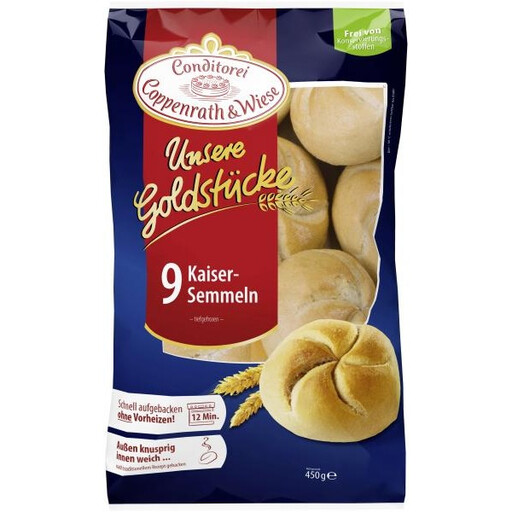 No image available
For lunches from a frozen supply, if you have time to bake them.
The pack contains 9 Kaiser rolls, weighing 450 g in total. Baking time is listed as 12–15 minutes; bake thoroughly before eating. Contains gluten from wheat and barley.
 No image available
A part-baked option labelled gluten-free, for keeping in the freezer. If you have specific dietary requirements, check the information on the pack.
Pack weight: 350 g. For a preheated oven, the instructions specify 180 °C and a baking time of 6–7 minutes; bake thoroughly before eating. Contains soya.
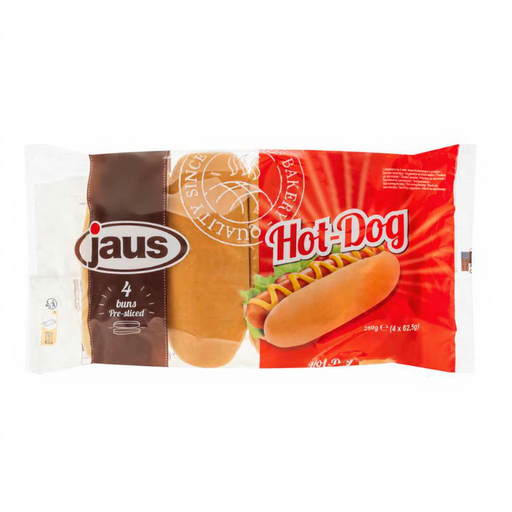 No image available
For a lunch of hot dogs or similarly filled rolls. Check the pack to see whether they need to be prepared before eating, and how to do so.
The product description lists 4 × 250 g. Contains wheat and barley; possible traces of soya, lupin, mustard and sesame are listed.
For rolls sold by weight, compare the price per kilogram and take into account how much you’ll actually use. The Verbraucherzentrale recommends using the price per kilogram to compare different pack sizes. The total price also shows you what you’ll pay for the whole pack.
In Germany, allergen information must also be available for unpackaged rolls, as explained by the Federal Ministry of Agriculture, Food and Home Affairs. Check the information at the point of sale or ask a member of staff if you need to avoid a particular allergen.
Part-baked rolls will only fit into your break if you have time for the required preheating as well as the stated baking time. Some EDEKA products list a baking time of around 8–10 minutes, while one REWE product lists 10–12 minutes. Always follow the instructions on the pack you choose.
Try to buy an amount that suits your planned lunches; according to the Verbraucherzentrale, you can freeze any extra rolls. The Verbraucherzentrale recommends keeping bread and rolls at room temperature. For packaged products, also follow the storage instructions on the pack.