Breakfast-table planners
If you’re serving sweet and savoury toppings, you’ll often want to choose several types of bread roll. It’s worth checking the range at in-store bakeries and bakeries, as well as when you can collect your rolls.


If you can shop and have breakfast on the same morning, you can choose fresh bread rolls from an in-store bakery or a bakery according to the varieties and options available. Ready-to-bake rolls make it easier to plan for a set breakfast time, but they need time in the oven. If you have specific ingredient or allergen requirements, always check the information for the individual product.
If you’re serving sweet and savoury toppings, you’ll often want to choose several types of bread roll. It’s worth checking the range at in-store bakeries and bakeries, as well as when you can collect your rolls.
If family or guests are arriving at a particular time, you can bake ready-to-bake rolls shortly before serving. The pack size, oven capacity and stated cooking time all affect your plans.
If you need to avoid certain ingredients, you’ll need information about the individual bread roll rather than general information about a brand or variety. For packaged products, check the current packaging; for loose rolls, ask the retailer for allergen information.
First, decide whether you’d like to pick up fresh rolls on the morning of your breakfast or finish baking them at home. Then you can choose the varieties and quantities you need, and check the product information to make sure they suit your table.
A good choice if: you’d like to pick up your rolls that morning and choose from the local range.
Bear in mind: varieties and collection options depend on the branch and time of day.
A good choice if: you’d like to time the baking so the rolls are ready when breakfast starts.
Bear in mind: you’ll need a suitable oven and time to prepare them according to the pack instructions.
| Criteria | What to check before buying | Who it matters most to |
|---|---|---|
| Variety and choice | Which types of bread roll are available locally and when you can collect them. | If I’m serving sweet and savoury toppings, I’d like to offer several varieties. Around 40 % of consumers prioritise variety when making this choice. |
| Serving time | For ready-to-bake rolls, check the cooking instructions and whether the quantity you need will fit in the oven at the same time. | If guests are arriving at a set time, I want the rolls to be ready in time. For around 30 % of consumers, being able to plan ahead is the priority. |
| Ingredients and allergens | For packaged products, check the ingredients, labelled allergens and ‘may contain’ information; for loose rolls, ask the retailer for allergen information. | If I need to avoid certain ingredients, I need clear information about the specific bread roll. This check takes priority for around 20 % of consumers. |
| Quantity needed | Compare the number of rolls and pack weight with the number of people you’re planning for. | For a larger group, I want to plan for enough rolls without having too many left over. Around 10 % of consumers focus mainly on getting the right quantity. |
A marketing name on its own tells you nothing about the specific variety, ingredients or production of a bread roll.
Choose according to what matters for your breakfast, then check the product name and ingredient information.
The time and temperature depend on the product you’ve bought and its cooking instructions. General oven advice is no substitute for this information.
Read the pack instructions before planning your breakfast, and remember to allow time for preheating.
A bread roll labelled gluten-free may still contain other relevant ingredients or carry ‘may contain’ warnings. For example, a product described by EDEKA as gluten- and wheat-free lists possible traces of soya and sesame.
Check all the information relevant to you on the current packaging. For loose rolls, ask for allergen information.
The information below describes specific ranges and production details provided by each retailer or bakery. When buying, what matters is which bread rolls are available at a branch you can get to.
An in-store bakery for shoppers who’d like to choose bread rolls alongside the rest of their breakfast shopping.
In-store bakery and packaged ready-to-bake products to suit different breakfast routines.
An in-store bakery for shoppers who’d like to choose from a range of baked goods while shopping.
Packaged bread roll varieties for shoppers who want to check the quantity and product information before baking.
A bakery range for shoppers who’d like to choose individual seeded or multigrain options.
A regional bakery in Hesse for shoppers who value clearly described dough-making methods and ingredient origins.
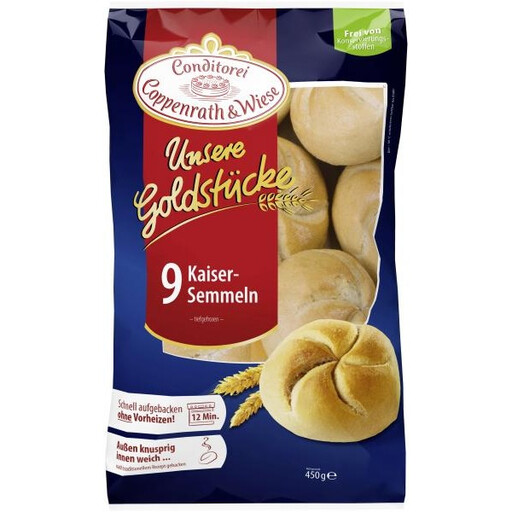
These Kaiser rolls could suit a weekend breakfast if you’re planning on a pack of nine and can allow time to prepare them before serving.
 No image available
A pack of nine Kaiser rolls can help you plan the quantity you need for breakfast. Before serving, check the cooking instructions and the ingredients and allergen information on the pack.
What matters is the variety you want, when you plan to serve it and the information for the specific product—not the word ‘premium’. If you’re shopping on the morning of your breakfast, check what’s available locally. For ready-to-bake rolls, plan around the pack size and cooking instructions.
Follow the instructions on the pack you’ve bought. EDEKA recommends 8–10 minutes at 180–200 °C fan or 200–220 °C conventional heat for its GUT&GÜNSTIG breakfast rolls. These instructions do not automatically apply to other products.
Ask the retailer for allergen information about the specific bread roll. The Verbraucherzentrale explains that in Germany, sellers must also provide information about the 14 most common allergens for loose products. The name shown at the counter alone is not enough to check whether a product meets your requirements.
No. The label ‘gluten-free’ says nothing about all the other allergens. A bakery roll described by EDEKA as gluten- and wheat-free carries a warning about possible traces of soya and sesame. Always check the current label for the specific product.