Budget-conscious weekly shoppers
You’re looking for everyday rolls and want to buy only as many as you’ll eat soon or can store sensibly. For an immediate meal, fresh individual rolls from the in-store bakery are one option.


For a budget-conscious weekly shop, fresh individual rolls are a good choice if you’ll eat them soon. If you only need a few at a time over several days, bake-off or frozen rolls can be a better option, provided you have enough storage space and a suitable oven. The key is how much of your shop you’ll actually use.
You’re looking for everyday rolls and want to buy only as many as you’ll eat soon or can store sensibly. For an immediate meal, fresh individual rolls from the in-store bakery are one option.
You don’t need the same number of rolls every day. Multipacks of bake-off rolls or frozen rolls can work well if you can prepare individual portions according to the pack instructions and have enough room to store them.
You’re looking for spelt, seeded or gluten-free rolls. Check the ingredients and allergen information on the specific product: a variety name alone doesn’t tell you everything about what’s in it.
For your weekly shop, first work out how many rolls you want to eat, and when, and where you’ll store the rest. Then check the specific pack for any special ingredient requirements.
| What matters to you | What to check when buying | Who it matters to |
|---|---|---|
| A quantity that suits your budget | Compare individual rolls and packs of the same type by number of rolls and weight; plan for what you’ll actually need. | I want to stick to my shopping budget without throwing away rolls at the end of the week. For around 42 % of consumers, shopping within budget is a priority. |
| Portions throughout the week | Check the storage instructions and pack size, and whether you can take out individual rolls; if you’re buying bake-off rolls, make sure you have a suitable oven. | Some days I need several rolls, and other days none at all – I want my supplies to fit around my breakfast plans. Around 33 % of consumers prioritise flexible portions. |
| Ingredients and allergens | Check the grains, ingredients, declared allergens and possible traces listed on the specific pack. | If I’m looking for a particular variety or need to avoid certain ingredients, the information on the pack matters more than the variety name. For around 25 % of consumers, these requirements come first. |
A bigger pack isn’t much help for your weekly shop if some of the rolls go stale before you get a chance to eat them.
Before you buy, think about how many you’ll eat soon and which you’d like to store or freeze for later in the week.
Ready-baked rolls can lose quality if they’re stored for too long. Verbraucherzentrale recommends keeping bread and rolls at room temperature in a dry, dark place, and says freezing is an option for storing them for longer.
Buy fresh rolls to eat soon and freeze any suitable extras in good time.
Storage requirements and baking instructions vary from product to product. EDEKA clearly labels its GUT&GÜNSTIG Sunday rolls, made from dough, as not suitable for eating raw.
Before buying, check that you can store them properly and cook them thoroughly according to the pack instructions.
If you have specific dietary requirements, neither the term ‘multigrain’ nor a single product feature is enough. For example, EDEKA notes that its gluten-free baker’s rolls may contain traces of soya and sesame.
If you have allergies or other strict ingredient requirements, read the information on the specific pack.
A discount retailer with fresh rolls from its in-store bakery and packaged options; ALDI Nord and ALDI SÜD stock different ranges.
A supermarket with different types of rolls, including dough to bake at home and packaged bake-off rolls.
A supermarket option for packaged rolls to bake at home.
A discount retailer with in-store bakery products under the name ‘Unser Brot’.
A bakery chain offering individual rolls to eat soon.
A regional bakery example for consumers looking for specific grain or seed varieties.
These two frozen options could work if you want rolls you can portion out, provided you have a freezer and an oven. For a budget-conscious weekly shop, it’s also worth checking whether the pack size suits your needs.
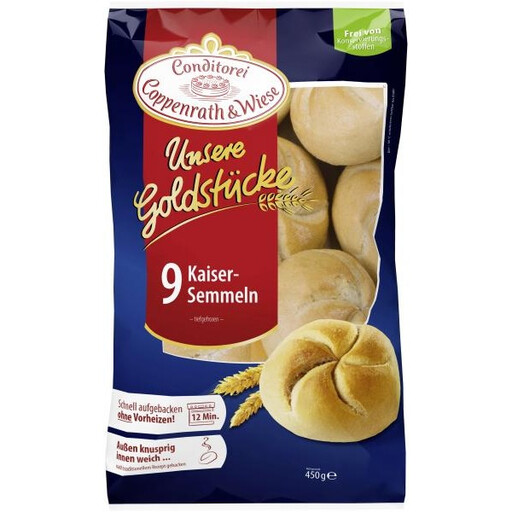 No image available
For keeping in the freezer and taking out individual rolls when you need them, ready to bake in the oven.
The pack contains 9 frozen Kaiser rolls, weighing 450 g in total. Follow the pack instructions for storage and preparation.
 No image available
For anyone who wants to bake multigrain rolls as needed from a stock kept in the freezer.
The pack weighs 300 g. Check the number of rolls and the ingredients, storage and preparation instructions on the specific pack.
Start by planning how many rolls you’ll need over the next few days, and consider what you can store for later. When comparing similar products, check the number of rolls and pack weight; a larger pack only makes sense if you’ll use what’s inside.
Keep them at room temperature in a dry, dark place, or freeze them if you want to store them for longer. Verbraucherzentrale notes that bread and rolls usually go stale more quickly in the fridge.
No. EDEKA clearly states that this roll dough isn’t suitable for eating raw and must be cooked through before you eat it. Follow the pack instructions for other products.
No. The ingredients and allergen information on the specific pack are what matter. For example, according to the product information, EDEKA’s rolls labelled gluten-free may contain traces of soya and sesame.