First, check whether your existing four-star freezer compartment has enough room for freshly sliced bread packed in portions. As the German Federal Centre for Nutrition explains, a four-star compartment is suitable for freezing food. If there isn’t enough space, choose a separate appliance based on the capacity you need, its dimensions and its annual energy consumption in kWh. The German consumer advice centre warns that an appliance that’s too large for your needs can use electricity unnecessarily.
Who might benefit from a separate appliance?
Occasional bread freezers
If you only want to keep a few slices for future meals, start by checking whether your existing suitable freezer compartment is big enough. The German Federal Centre for Nutrition recommends freezing bread as fresh as possible and already sliced. The German consumer advice centre also advises choosing an appliance size that matches your actual needs.
Households short on freezer space
If your existing compartment is full but you have little room for another appliance, a compact freezer could provide extra space for portioned bread. The German Federal Centre for Nutrition and Klarstein highlight useful considerations, including portion sizes and compact designs.
Households storing a mix of foods
If you regularly freeze bread and other foods, weigh up capacity, storage layout and the stated annual energy consumption together. The German consumer advice centre and Beko both identify appliance size and interior layout as important factors when buying.
What should you look for when buying?
| What matters |
What to look for when buying |
Who is it particularly relevant to? |
| Avoiding an unnecessary second appliance |
Check the available space and whether your existing compartment is suitable for freezing food (four-star rated). The German Federal Centre for Nutrition explains that this rating distinguishes freezing food from simply storing it. |
If I’m only freezing a few slices, I want to know whether my existing compartment is big enough before running another appliance permanently. Around 36% of consumers are primarily concerned with whether they need a separate appliance at all. |
| Keeping individual portions within easy reach |
Check that the interior layout and compartments suit the dimensions of your portioned packages. The German Federal Centre for Nutrition recommends freezer-safe packaging and freezing food in portions. |
If we eat at different times, I want to be able to find and take out individual slices easily. Around 29% of consumers prioritise access to individual portions. |
| Taking annual energy consumption into account |
Compare appliances with a suitable capacity by their kWh per year, and check the current EU energy label. The German consumer advice centre warns against buying an unnecessarily large appliance, while the European Commission explains that household fridges and freezers are rated from A to G. |
If an appliance runs all the time, I want to consider its stated energy consumption alongside the capacity I need. Around 21% of consumers focus primarily on electricity consumption. |
| Considering defrosting requirements |
Check the specific model to see whether it has NoFrost, reduces ice build-up or needs manual defrosting. Beko describes MinFrost as reducing ice build-up; Liebherr lists NoFrost for the FNdi 1624. |
If I regularly store bread and other food, I want to know how much defrosting the particular appliance will require. Around 14% of consumers prioritise easy defrosting. |
Common buying and usage mistakes
-
Buying a separate or large appliance too quickly for just a few slices of bread
Your existing suitable compartment may be enough for small quantities. The German consumer advice centre points out that freezers that are larger than necessary can use electricity unnecessarily.
First check the available capacity in your existing four-star compartment. Then compare only appliances with a suitable capacity and a stated annual energy consumption.
A separate freezer uses electricity all the time.
-
Assuming MinFrost is the same as NoFrost
Beko describes MinFrost on the FSE1074N as reducing ice build-up. Liebherr describes the FNdi 1624 as NoFrost; these terms refer to different functions.
Check the full model number and the stated defrosting method rather than assuming that similar-sounding feature names mean the same thing.
-
Comparing an older A++ rating with the current energy label
The Bomann GB 341.1 product page shows an older A++ rating. Since 1 March 2021, household fridges and freezers have used the EU label with ratings from A to G, as explained by the European Commission.
For the exact model, check the current label and compare its stated annual energy consumption in kWh.
Selected models from leading brands
These details relate to the specific models and manufacturer information mentioned, not to a brand’s entire range.
Klarstein
The Garfield Eco is a compact chest freezer for households with limited space. Klarstein lists a capacity of 33 l across two levels for the white version.
- Klarstein lists an annual energy consumption of 148 kWh and energy efficiency class E for this version.
- The manufacturer’s stated figures alone don’t prove that it’s more energy-efficient. Compare the specific model’s energy consumption and current label with those of appliances of a similar size.
Beko
The FSE1074N is an under-counter freezer for storing more than you could fit in a mini freezer.
- Beko lists a freezer capacity of 95 l and a width of 54 cm for this model.
- According to the manufacturer, MinFrost reduces ice build-up, but it isn’t the same as NoFrost. Before freezing fresh food, check that the exact version of the appliance is suitable for this purpose.
Exquisit
The GB505-040E is a compact model for spaces where room is limited.
- For the product version shown, Exquisit lists dimensions of 44 × 51 × 47,5 cm and a four-star compartment.
- If the exact capacity is important to your decision, check the product specification sheet for the specific version.
Liebherr
The FNdi 1624 is an under-counter freezer for storing more food, and for buyers who care about how the appliance defrosts.
- Liebherr lists a capacity of 92 l, dimensions of 85 × 60 × 60,7 cm and NoFrost for this model.
- Make sure you have enough room for the appliance, and check its annual energy consumption separately.
Bomann
The GB 341.1 is a small chest freezer that needs to be defrosted manually.
- Bomann lists a capacity of 31 l, a four-star compartment and annual energy consumption of 147 kWh.
- The older A++ class also shown is no longer a current EU rating. Use the current A-to-G label as a basis for comparison.
Freezers at Joybuy
The models below range from compact freezers for small extra quantities to larger appliances for storing a mix of foods. If a model isn’t listed as suitable for freezing fresh slices of bread (four-star rated), check this before using it for that purpose.
 No image available
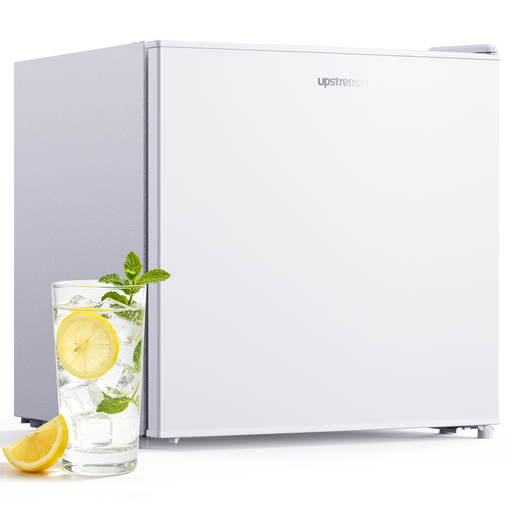
Upstreman UF35 White, 35 l
A compact option for small additional quantities; the product title describes it as a four-star mini freezer.
35 l; removable interior box; energy efficiency class E; 41 dB; reversible door. Stated dimensions: 47,5 × 44,2 × 48,8 cm.
View at Joybuy
 No image available
COMFEE' RCU40WH2(E), 31 l, white
A compact option for small extra quantities; the title describes it as a four-star freezer.
31 l; freezes up to 2 kg in 24 hours; 147 kWh per year; energy efficiency class E; reversible door and adjustable feet.
View at Joybuy
 No image available
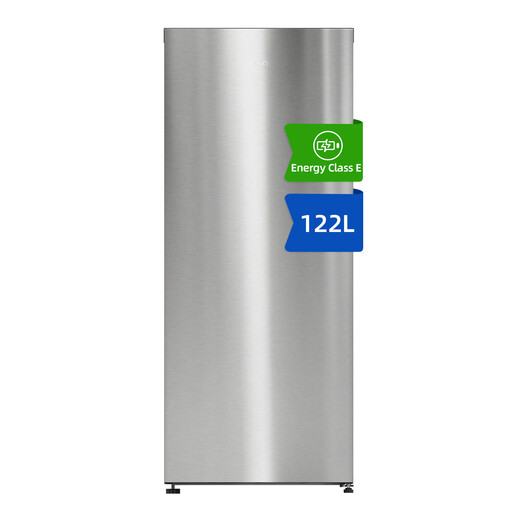
CHiQ JR122WSD, 122 l
A larger option if you want to store other foods alongside bread and are looking for NoFrost as a feature.
122 l; four-star rating; NoFrost and Multi-Airflow; energy efficiency class E; 39 dB. Stated width: 47,5 cm. The title also mentions a switchable cooling mode.
View at Joybuy
 No image available
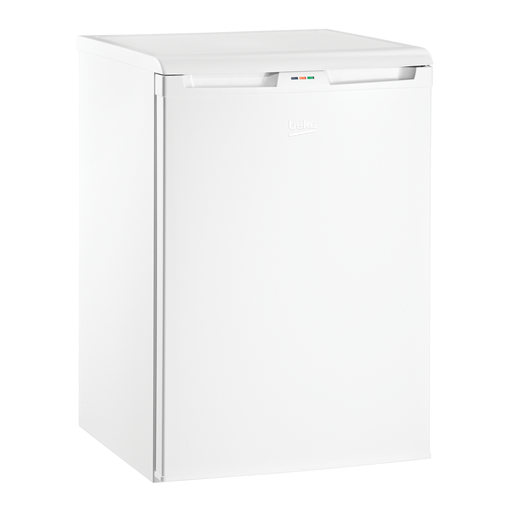
Beko FSE1074N, 95 l
An under-counter freezer for extra supplies that you can keep sorted separately. Check that the exact version is suitable for freezing fresh bread (four-star rated) before using it for this purpose.
95 l freezer capacity; two drawers and a compartment with a transparent flap; MinFrost reduces ice build-up, according to Beko; energy efficiency class E; 37 dB. Dimensions: 54 × 59 × 84 cm.
View at Joybuy
 No image available
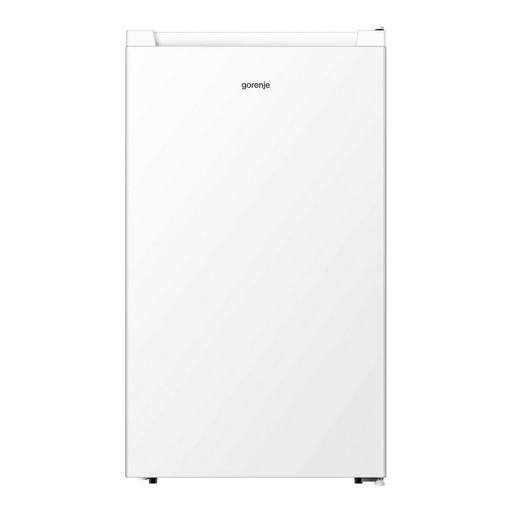
Gorenje F39EPW4
An under-counter option if you need more freezer space than a mini freezer offers and are happy to defrost it manually.
61 l; four-star compartment; freezing capacity of 3 kg per 24 hours; manual defrosting. Stated dimensions: 842 × 475 × 448 mm; reversible door; energy efficiency class E.
View at Joybuy
Frequently asked questions
Can I freeze fresh slices of bread in any freezer compartment?
No. The German Federal Centre for Nutrition distinguishes between storing frozen food and the actual freezing process. A four-star compartment is suitable for freezing food. Check the rating of your existing compartment before freezing fresh bread in it.
How should I prepare bread for meals at different times?
Freeze the bread as fresh as possible and already sliced. The German Federal Centre for Nutrition recommends using freezer-safe packaging sized for individual portions. Label the portions so you can take out just the amount you need. The German Federal Centre for Nutrition also says that slices can be toasted from frozen; knock off any ice crystals first.
Which energy label details should I compare when choosing a freezer?
Compare the current EU label for the exact model and its stated annual energy consumption in kWh. The European Commission rates household fridges and freezers from A to G. The German consumer advice centre also recommends choosing an appliance size that matches your actual needs.
What are the rules in Germany for energy labels and disposing of an old freezer?
Household fridges and freezers covered by the rules use the EU label, with ratings from A to G. Electrical appliances must not go in household rubbish. The German Environment Agency lists local collection points and says you can return a large old appliance free of charge when buying a new one of the same type, including when you buy online and have it delivered.


