For bread recipes that use less than a gram of yeast, a scale with a documented fine increment is a better starting point. For bowls and larger quantities of dough, tare, platform size and capacity matter more. In a shared kitchen, the cleaning instructions for the scale and its removable parts should also fit in with how everyone uses the space. However, a display that shows 0.1 g increments alone does not prove how accurately a specific 0.5 g portion will be measured.
Which scales suit different needs
Bread bakers using small amounts of yeast
If your recipe calls for less than a gram of yeast, check the scale’s increments in the relevant weighing range, along with its minimum load and stated measurement deviation. A recipe from brotdoc uses 0.5 g of fresh yeast.
People using a shared kitchen
When several people use the same scale, it’s important to know how each part can be cleaned. Check whether the instructions only allow a removable bowl or spoon to be washed, or whether the whole scale can be cleaned.
Bread bakers using large bowls
If you weigh ingredients directly into a bowl, the tare function, weighing platform and capacity should suit the bowl and the quantity of ingredients. For very small amounts of yeast, you may also need a scale with finer increments.
What to look for when buying
Start with the smallest amount of yeast in your recipe. Then check how the scale can be cleaned for shared use, and finally make sure the bowl, capacity and storage requirements suit your baking routine.
| What matters |
What to check before buying |
Who it matters most to |
| Small amounts of yeast |
Compare the increments in the relevant weighing range and check the stated minimum load and measurement deviation. A display that shows 0.1 g increments does not guarantee accuracy for a specific portion. |
If my recipe calls for less than a gram of yeast, I want a suitable display increment and clear information for such a light load. Around 33% of consumers mainly want to weigh small amounts of yeast. |
| Cleaning for shared use |
Check the care instructions for each part separately: a removable spoon or bowl may have different cleaning requirements from the scale itself. |
If several people use the same scale, I want to know whether only a removable part or the whole scale can be washed with water. Around 27% of consumers prioritise cleaning for shared use. |
| Bowl, tare and capacity |
Check the tare function, usable weighing platform and maximum capacity against the combined weight of the bowl and ingredients. A high capacity does not automatically mean fine increments for weighing yeast. |
If I weigh flour and other ingredients into a bowl, I need enough capacity and a suitable platform. Around 20% of consumers mainly focus on bowls and larger quantities of dough. |
| Storage and ease of use |
Measure the space available and check the display, controls and how the scale can be stored. |
If several people share the scale and kitchen storage is limited, I want one that’s easy to put away and straightforward to use. Around 20% of consumers give this priority. |
Avoiding buying pitfalls
-
Assuming a 0.1 g display guarantees accuracy
For the Beurer KS 36, the stated increment depends on the weighing range. The display alone doesn’t tell you how much a specific small amount of yeast might differ from the actual weight.
Check the increment for the load you’ll be weighing, as well as the stated minimum load and measurement deviation.
-
Assuming a high capacity makes a scale suitable for small amounts of yeast
According to the manufacturer, the Soehnle Page Profi 200 has a capacity of 15 kg and 1 g increments. A documented bread recipe calls for 0.5 g of fresh yeast, which won’t show as a separate increment on this scale.
Decide separately whether you need one scale for yeast and another for bowls or dough.
For very small quantities in recipes, you may need an additional precision scale.
-
Assuming cleaning approval for one part applies to the whole scale
According to the manufacturer, the removable spoon on the Soehnle Cooking Star is dishwasher-safe; the scale itself should not be exposed to moisture.
Read the care instructions for the scale and accessories separately, and agree on how to clean it after use in a shared kitchen.
Key brands at a glance
Beurer
The KS 36 is a slim precision scale for weighing small quantities of ingredients separately.
- According to Beurer, increments are 0.1 g below 500 g; the maximum capacity is 2 kg. The weighing platform measures 11.5 × 8.0 cm.
- Above 500 g, the increments become larger. The manufacturer’s information does not establish independently measured accuracy for a specific small amount of yeast.
Soehnle
The Cooking Star, Page Aqua Proof and Page Profi 200 models are designed for different needs: small portions, washing the whole scale or using large bowls.
- According to the manufacturer, the Cooking Star has a removable, dishwasher-safe spoon, 0.1 g increments and a maximum capacity of 500 g. The manufacturer says the Page Aqua Proof can be washed in a dishwasher or under running water.
- The Page Profi 200 has a capacity of up to 15 kg and displays 1 g increments. These features apply only to the model named; for the Cooking Star, dishwasher approval applies to the spoon, not the scale.
WMF
According to the manufacturer, the black digital kitchen scale is designed for bowls and everyday baking ingredients.
- WMF lists a maximum capacity of 5 kg, 1 g increments and a tare function.
- The instructions say to clean the scale with a damp cloth; it should not be immersed or put in the dishwasher. With 1 g increments, a 0.5 g amount won’t have its own display increment.
Joybuy products for bowls and baking ingredients
This selection includes digital scales for bowls and larger quantities of baking ingredients, as well as one model whose product name specifies finer increments. For small amounts of yeast, also check whether the scale is suitable for the specific load.
 No image available
Digital kitchen scale with stainless steel platform
For bowls and larger quantities of baking ingredients when a standard kitchen scale will do.
The product name specifies 1 g increments, a maximum capacity of 5,000 g, a tare function and a stainless steel platform.
View at Joybuy
 No image available
Digital scale with removable bowl
For anyone who wants to weigh ingredients directly into a removable bowl.
The removable bowl is the design specified in the product name; before buying, check that its size suits the containers you need to use.
View at Joybuy
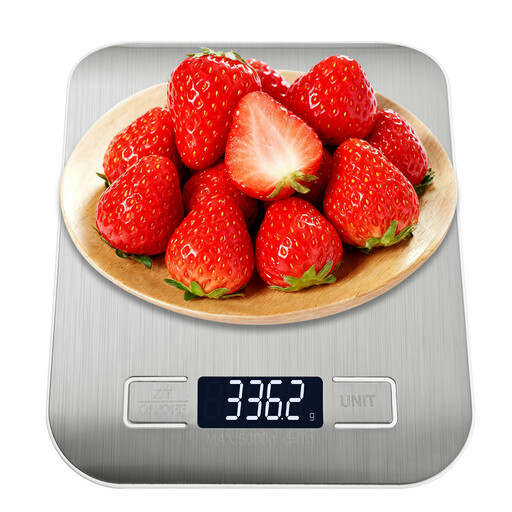 No image available
Vivreal CFC-03White kitchen scale
For larger quantities of baking ingredients if you’re looking for a digital scale with a stainless steel platform.
The product name specifies a maximum capacity of 5 kg, 1 g increments, several selectable units and a white stainless steel platform.
According to the care instructions, clean with a dry or slightly damp cloth and avoid water.
View at Joybuy
 No image available
TIMEMORE Black Mirror Basic 2 pour-over scale
For small portions if you’re looking for a model whose product name specifies finer increments.
The product name specifies 0.1 g increments, a maximum capacity of 2,000 g, a timer and a flow-rate function. The stated increment does not establish the measurement deviation for a specific amount of yeast.
According to the product information, clean with a damp cloth and do not immerse in water.
View at Joybuy
 No image available
Digital kitchen scale with tare function
For bowls and larger quantities of ingredients when a tare function is important.
The product name specifies a maximum capacity of 5 kg and a tare function. Check that the weighing platform is suitable for your container.
View at Joybuy
Frequently asked questions
Are 1 g increments enough for every bread recipe?
No. A recipe from brotdoc calls for 0.5 g of fresh yeast, and a scale with 1 g increments won’t show this as a separate increment. If you’re considering a precision scale, also check the stated minimum load and measurement deviation rather than assuming that the increments guarantee accuracy.
How do I weigh yeast in a container?
Place the scale on a firm, level surface, put a suitable empty container on it and tare the scale before adding the yeast. For the KS 36, Beurer also recommends calibrating it before first use and checking it later with the supplied weight.
Can I put a scale in the dishwasher after it’s been used by others?
Only if the instructions allow it for that specific part. According to the manufacturer, the removable spoon on the Soehnle Cooking Star is dishwasher-safe, but the scale itself is not; the manufacturer says the whole Page Aqua Proof can go in the dishwasher. The WMF instructions do not recommend this for the digital scale described there.
What should I know about faults and accessories?
Your statutory rights against the seller and a voluntary guarantee are not the same thing. Before buying, also check the battery type and what’s included: the WMF instructions specify two CR2032 batteries, while Beurer lists four AAA batteries for the KS 36.
How should I dispose of a faulty scale and its batteries in Germany?
The German Environment Agency advises against putting old electrical appliances in household waste. Removable batteries should be taken to a battery collection point separately; old appliances can be taken to recycling centres and suitable retailer take-back points, among other options.


