A mini chopper may be enough for small amounts of breadcrumbs. If you also regularly want to chop, slice or grate other ingredients, a food processor could be a better choice. The key is the amount of bread per batch specified in the manual: the bowl capacity doesn’t tell you how much bread you can safely process. Kenwood recommends using bread that’s a little stale rather than very fresh, and warns against overfilling a mini chopper.
Which appliance is right for you?
Cooking class organiser preparing several portions
If you’re preparing breadcrumbs for several people, check the permitted amount of bread per batch and whether you want the appliance to handle other prep tasks too. Kenwood suggests a mini chopper as an option for small quantities, but warns against overfilling it.
Occasional cook making very small quantities
A compact mini chopper could suit small quantities, as long as its manual allows for the portion of bread you plan to process. Kenwood describes the Easy Chop CHP61.100WH as an appliance for small quantities.
Versatile cooking class organiser
If you want to chop, slice or grate other ingredients as well as bread, compare the tools included with the specific models from Kenwood, KitchenAid and Braun.
What should you look for when buying?
First, work out how much bread you need to process per batch. Then compare the model’s manual and blade attachment, as well as the space and cleaning requirements, with the other jobs you want the appliance to handle.
Mini chopper
A good fit if: you only need small amounts of breadcrumbs and the manual allows you to process your portion of bread.
Consider: larger quantities for a cooking class may take several batches; Kenwood warns against overfilling.
Food processor with a blade attachment
A good fit if: you regularly want to chop, slice or grate ingredients as well as make breadcrumbs, and need the tools included for those tasks.
Consider: larger appliances and extra attachments take up space and need cleaning; the bowl capacity doesn’t confirm a maximum amount of bread.
Blender you already own
A good fit if: you don’t want to buy another appliance for this task and your blender’s manual says it can process bread. Kenwood also recommends using a blender in its general breadcrumbs FAQ.
Consider: this general recommendation doesn’t mean every blender model is suitable; according to Kenwood, very fresh bread can clog the appliance.
| What matters to you |
What to check before buying |
Who this matters most to |
| Portion size |
Compare the amount you need per batch with the bread fill limit and blade attachment specified in the manual for the exact model. |
If I’m preparing food for several people in a cooking class, I want to know the permitted amount per batch and plan the steps involved. Around 33% of consumers put portion size first. |
| Processing bread |
Check that the model’s manual covers bread and the blade attachment you plan to use; first assess the crumb texture you want with a small permitted portion. |
If processing a particular type or state of bread matters to me, I want to follow the guidance for my exact model. Around 25% of consumers prioritise bread processing and their preferred crumb texture. |
| Other food preparation tasks |
Check the full model number and what’s included; distinguish between the blade attachment and the slicing and grating discs. |
If I also want to chop, slice or grate ingredients after the class, I only want to factor in accessories I’ll actually use. Around 25% of consumers put other uses first. |
| Space and cleaning |
Compare the appliance’s dimensions, accessory storage and cleaning instructions for the parts you’ll actually use. |
If my worktop or cupboard space is limited, I want to be able to store the appliance and accessories easily and gauge the clean-up involved after the class. Around 17% of consumers pay particular attention to space and cleaning. |
Avoid common buying mistakes
-
Assuming bowl capacity is the same as the permitted amount of bread
A capacity figure describes the bowl, not the amount of bread you’re allowed to put in it. When planning for a cooking class, a lower permitted quantity may mean processing several batches.
Check the instructions and fill limit for the specific model against the amount you plan to process per batch.
Several batches can add to your preparation time.
-
Choosing a large food processor just for the occasional small quantity
If you mainly make small amounts of breadcrumbs, you may not use the extra features, while the appliance and accessories still take up space and need cleaning.
Choose based on the portion you usually prepare and whether you’ll use the extra tools regularly.
Allow space to store the appliance and time to clean the parts you actually use.
-
Confusing stale bread with mouldy bread
According to Kenwood, bread that’s a little stale works well for making breadcrumbs. Visible mould is different and can pose a health risk; the German Federal Institute for Risk Assessment warns that food can contain harmful mould toxins.
Only use bread that’s still safe to eat, and throw away any bread with visible mould.
A guide to suitable brands
Kenwood
The Easy Chop CHP61.100WH and MultiPro XL Weigh+ FDM72.990SS offer different appliance sizes and additional food preparation features.
- According to Kenwood, the Easy Chop has a 500 ml bowl and two speeds; the MultiPro XL Weigh+ has a 3.0 l bowl, a blade attachment and other accessories.
- Bowl capacities don’t confirm the permitted amount of bread. Kenwood warns against overfilling small choppers.
KitchenAid
The 5KFP0719EBM food processor combines a 1.7 l bowl with tools for several food preparation tasks.
- According to KitchenAid, it comes with a multipurpose blade, slicing and grating discs, and a pulse function; accessories can be stored in the bowl.
- The stated bowl capacity doesn’t confirm a permitted bread fill limit.
Braun
The PurEase FP3131WH is an option if you want to slice, grate and blend as well as chop.
- According to Braun, it comes with a chopping blade and a slicing and grating attachment; the bowl has a total capacity of 2.1 l.
- The separately stated liquid capacity of 1.2 l doesn’t tell you how much bread you can process.
Joybuy products at a glance
The selection below ranges from manual choppers to food processors with a blade attachment and extra food preparation features. Before using any model for breadcrumbs, check that its manual covers the amount of bread you plan to process.
 No image available
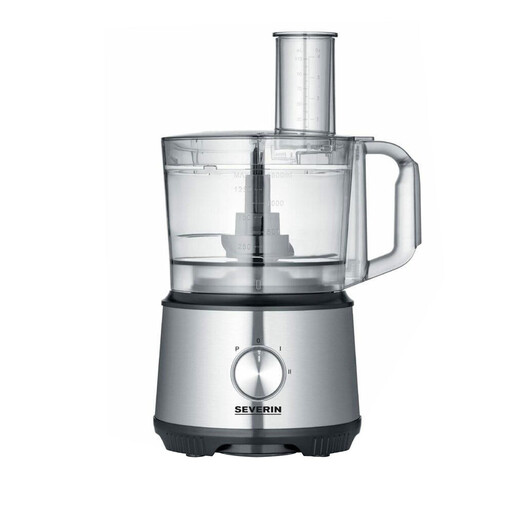
Severin KM 3892
For cooking class preparation involving several chopping tasks, the listed tools go beyond chopping alone.
A 1.5 l bowl and grating, slicing and grinding functions are listed; an emulsifying disc is also included.
The bowl capacity doesn’t confirm a permitted bread fill limit.
View at Joybuy
 No image available
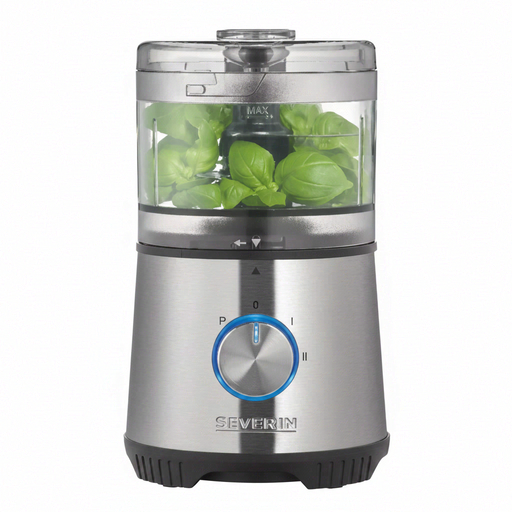
Severin Food Processor KM 3865
For controlled chopping, a blade and several control options are listed.
Specifications include 400 W, two speeds, a pulse function and a four-level stainless steel blade.
Removable parts are described as dishwasher-safe; check the manual for the parts you use. This doesn’t specify a bread fill limit.
View at Joybuy
 No image available
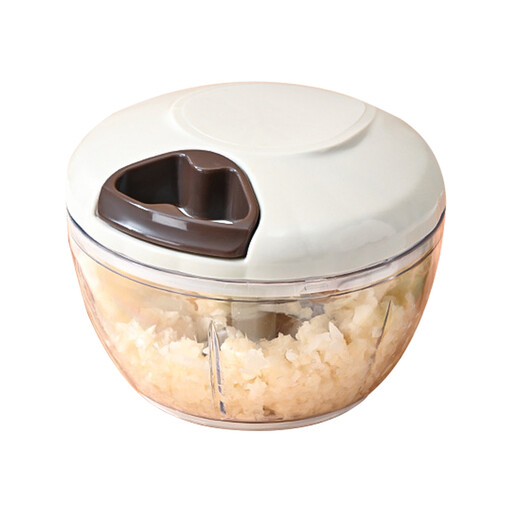
Huacan manual chopper, 500 ml
Manual operation may be useful for small chopping tasks; check the manual before using it for bread.
The bowl is listed as 500 ml; stainless steel blades and a pull-cord mechanism are described. Listed uses include chopping and puréeing.
The bowl size doesn’t confirm a permitted amount of bread.
View at Joybuy
 No image available
IAGREEA MS-25JM08, 350 W
If you want to use different bowls for different preparation tasks, this model comes with three stackable stainless steel bowls.
The stated bowl sizes are 2.5 l, 2.2 l and 1.8 l; two speeds, pulse control and stainless steel blades are also listed.
A pulse cycle of up to 30 seconds is specified. The bowl sizes don’t confirm a permitted bread fill limit.
View at Joybuy
 No image available
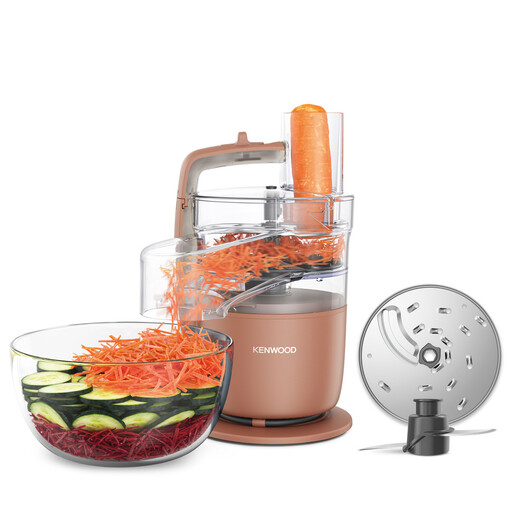
Kenwood MultiPro Go FDP22130RD, Clay Red
A blade attachment and reversible slicing and grating disc are listed for chopping and other food preparation tasks.
According to the product details, this model has a pulse function and one-touch operation; compact storage and a cord storage compartment are also mentioned.
The stated working capacity for dry ingredients is 0.75 l. This doesn’t confirm a permitted amount of bread.
View at Joybuy
Frequently asked questions
Do I need to buy a large food processor for my cooking class?
No, not just because you’re running a cooking class. Work out the amount you need per batch and check the bread fill limit for the specific appliance. Kenwood suggests a mini chopper for small quantities and also recommends a blender in its general breadcrumbs FAQ.
Can I use very fresh bread?
According to Kenwood, bread that’s a little stale is easier to process; very fresh bread can clog the appliance. Also follow the instructions and limits for your specific model.
How should I clean the appliance after the class?
Check the manual to see which parts of your model are removable and dishwasher-safe. Kenwood describes the Easy Chop’s parts as dishwasher-safe; Braun says the FP3131WH has removable blades for easier cleaning. This doesn’t automatically apply to every part or to other models.
Can I use mouldy bread to make breadcrumbs?
No. The German Federal Institute for Risk Assessment warns that food, including bread, can contain harmful mould toxins. Throw away any bread with visible mould and don’t use it for your class.


