Hosts preparing several portions
If you’re making breadcrumbs for a shared meal, check the appliance’s actual capacity for dry ingredients and the maximum fill level for that specific model.


A mini chopper may be a good choice for the occasional small batch of breadcrumbs. For several portions and other food-preparation tasks, a food processor with a suitable blade and a bowl with enough usable capacity offers greater versatility. What matters is whether the appliance is designed to process bread, how much you can add per batch and how easy it is to clean – not just the bowl’s stated capacity.
If you’re making breadcrumbs for a shared meal, check the appliance’s actual capacity for dry ingredients and the maximum fill level for that specific model.
For small quantities and limited storage space, a compact chopper may be more practical than an appliance with lots of attachments. Check the manual to make sure it’s suitable for processing bread.
If you regularly want to chop, slice or grate ingredients as well as process bread, compare the functions and accessories offered by food processors, and factor in how much cleaning they’ll require.
A good choice if: You’re preparing small quantities and have limited worktop or storage space.
Things to consider: You may need to process several batches to make enough for everyone. The manual must also confirm that the appliance can process bread.
A good choice if: You’d like a larger work bowl and other functions, such as chopping, slicing or grating.
Things to consider: Extra accessories need storage space and may mean more cleaning. Bowl size alone doesn’t tell you how much bread you can process.
A good choice if: You already own a blender and its manual says it can process bread.
Things to consider: Kenwood recommends using slightly stale bread for breadcrumbs and warns that fresh bread can clog a blender.
| Priority | What to check before you buy | Who is this particularly important to? |
|---|---|---|
| Processing bread and controlling texture | Check that the manual says the appliance can process bread and that the blade and controls allow you to work in short, controlled bursts. | If I want to control the texture of my breadcrumbs, I care more about whether the appliance is specifically designed to process bread than whether it’s generally described as a chopper. Bread suitability is the top priority for around 36% of consumers. |
| Quantity per batch | Compare the usable capacity for dry ingredients and observe the fill limits; the stated capacity doesn’t automatically tell you how much bread you can process into breadcrumbs. | When I’m cooking for several guests, I want to have a good idea of how many batches I’ll need. Around 29% of consumers prioritise the quantity they can process per batch. |
| Cleaning | Check the details for the exact model to see which parts are dishwasher-safe and how to clean the blade and lid. | After cooking, I want to keep cleaning straightforward and know which parts can go in the dishwasher. Easy cleaning is the top priority for around 21% of consumers. |
| Space and extra functions | Compare the appliance dimensions and check whether the included slicing or grating accessories will be useful for the tasks you do regularly. | If storage space is limited, I need to decide whether the extra functions justify the room they take up. Around 14% of consumers prioritise compact versatility. |
Manufacturers may list the bowl size separately from its usable capacity for dry ingredients. With a small chopper, you may need to process several batches to make enough for everyone.
Check the manual for the specific model to find the fill limit for bread or dry ingredients.
Processing several batches can make meal preparation take longer.
Extra slicing and grating functions are only useful if you’ll actually use them. More accessories need more storage space and may mean more parts to clean.
First decide which tasks you regularly do besides making breadcrumbs, then compare the accessories included with each model.
The Federal Centre for Nutrition recommends throwing away an entire loaf if it has any mould on it.
Only use bread that hasn’t spoiled, and process slightly stale pieces according to your appliance’s manual.
Bosch lists the MultiTalent 3 MCM3501M as a compact food processor with a 2.3-l bowl and a range of accessories.
The range includes the compact MultiPro Go FDP23.140GR, as well as smaller choppers for preparing small quantities.
Braun offers the PurEase FP 3233 SI food processor and the smaller MultiPractic 3 CH 3011 chopper, among other appliances.
Philips describes the Viva Collection HR7530/10 as suitable for a range of food-preparation tasks, including chopping and grinding.
The range includes smaller choppers and food processors in a variety of sizes.
This selection includes compact choppers and a versatile food processor. Before use, check the manual for the specific model to see whether it can process bread.
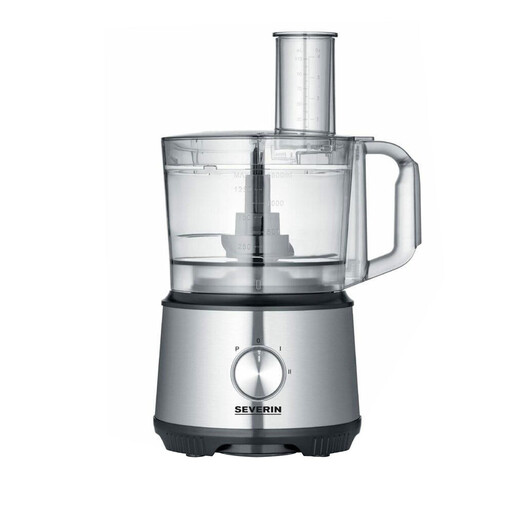 No image available
Only consider it for making breadcrumbs if the model’s manual says it can process bread.
The product details list a 1.5-l bowl and dishwasher-safe parts.
It’s described as having chopping and grinding functions, as well as other accessories.
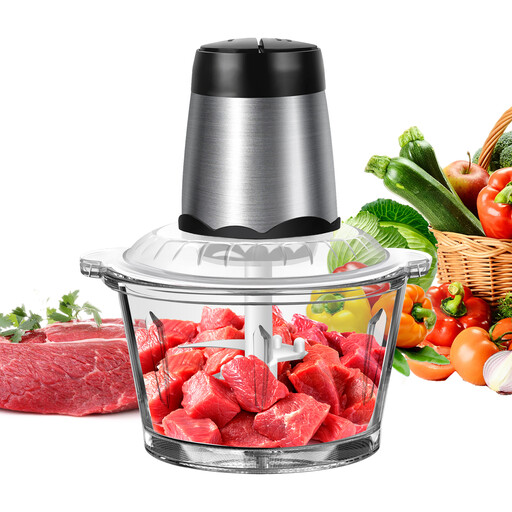 No image available
Only consider it for making breadcrumbs if the manual says it can process bread. For several portions, the usable capacity is what matters.
The product details list a 2-l glass bowl, stainless-steel blades, two speeds and a pulse function.
Removable parts are described as dishwasher-safe.
 No image available
Only use it for making breadcrumbs if the manual says it can process bread. Also observe the stated limit for pulse cycles.
The product details list three stainless-steel bowls with capacities of 2.5 l, 2.2 l and 1.8 l, as well as two speeds.
Pulse operation is limited to up to 30 seconds per cycle.
 No image available
Only consider it for making breadcrumbs if the manual says it can process bread. Bear in mind the different bowl sizes when planning portions.
The product details list two glass bowls with capacities of 2 l and 0.6 l, two speeds and a three-layer blade system.
The product description says the bowls and lids are not heat-resistant or suitable for microwave use.
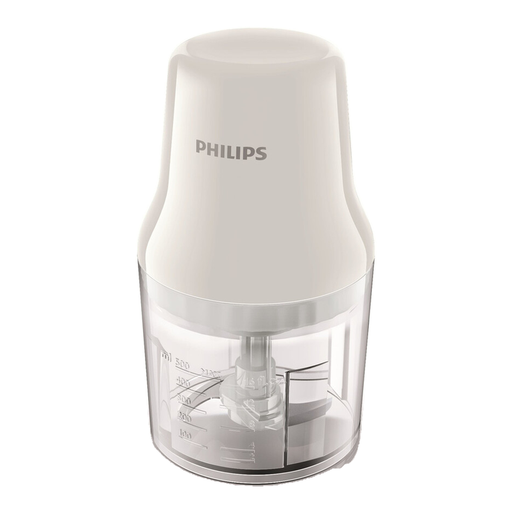 No image available
Only use it for making breadcrumbs if the model’s manual says it can process bread.
The product details list a 0.7-l bowl, a stainless-steel blade and push-button operation.
Removable parts are described as dishwasher-safe.
Kenwood recommends using slightly stale bread for breadcrumbs, as fresh bread can clog a blender, according to the manufacturer. Check your appliance’s manual and process suitable pieces in batches. Bread with any mould on it must not be used; the Federal Centre for Nutrition recommends throwing away the entire affected loaf.
No, it depends on the specific model and part. Bosch describes the MCM3501M accessories as dishwasher-safe, while Kenwood lists the relevant parts for the FDP23.140GR individually. Check the manual rather than assuming the same applies to other appliances or the motor unit.
Your statutory rights are against the seller; a manufacturer’s guarantee is an additional voluntary service. If there’s a fault, repair or replacement may initially be available as a remedy. Online purchases are also generally covered by a 14-day cancellation right, but the conditions differ from those for faulty goods. The Verbraucherzentrale explains both sets of rules.
Parts intended to come into contact with food must meet the relevant requirements. For electrical appliances covered by CE marking rules, the manufacturer uses the CE mark to declare conformity. It isn’t an independent quality mark and doesn’t prove that a model will process breadcrumbs the way you want.