Weekly meal preppers
You want to turn leftover bread into crumbs and also chop, slice or grate ingredients after your food shop. The key is choosing the right tools and a bowl that suits the portions you usually prepare.


A mini chopper may be enough for the occasional small batch of breadcrumbs, although Kenwood advises against overfilling it. If you regularly want to chop, slice or grate other ingredients after your weekly shop, a food processor with the right attachments may be a better choice. Kenwood says slightly stale bread is easier to process than very fresh bread. Any mouldy bread should be thrown away in its entirety, as recommended by the Federal Centre for Nutrition.
You want to turn leftover bread into crumbs and also chop, slice or grate ingredients after your food shop. The key is choosing the right tools and a bowl that suits the portions you usually prepare.
You mainly need small quantities of breadcrumbs and don’t want a larger appliance than necessary. Check the permitted fill level and avoid overfilling the bowl.
You’re weighing up extra features against worktop space, storage and cleaning. Consider whether the appliance, bowl and accessories will fit comfortably in your kitchen.
First, think about how much you usually need to chop and whether the appliance will regularly be used for other kitchen tasks.
A good fit if: you mainly want to make small batches of crumbs and do a few other chopping tasks. Kenwood recommends a mini chopper for small quantities and advises against overfilling it.
The trade-off: Check the permitted fill level for the specific model; you may need to process your usual portion in several batches.
A good fit if: you regularly chop, slice or grate other ingredients as well as processing leftover bread, and will actually use the relevant attachments.
The trade-off: Extra features take up space. The bowl capacity alone doesn’t tell you how much bread you can process or what sort of crumb you’ll get.
A good fit if: you already own a blender or another appliance whose instructions cover the task you have in mind.
The trade-off: Kenwood also recommends a blender for making crumbs, but be sure to follow the operating instructions and limits for your specific appliance.
| What you need | What to check before buying | Who this matters most to |
|---|---|---|
| Turning bread into crumbs | Check whether the instructions cover bread and your usual portion size. Pay attention to the blade and permitted fill level. | If I usually process a small portion, I want to know whether the appliance is suitable. Around 36 % of consumers say making crumbs is their main priority. |
| Preparing other ingredients | Check that the specific model includes the blades and discs you need. Allow space to store the accessories. | If I want to chop, slice or grate ingredients after shopping, the right tools matter. Around 29 % of consumers prioritise versatile food preparation. |
| Cleaning and hygiene | Check the model’s instructions to see which parts are removable and dishwasher-safe. Follow the cleaning guidance when switching between ingredients. | If I use the appliance regularly, I want to be able to clean its parts properly and plan for changing between ingredients. Around 21 % of consumers prioritise cleaning and hygienic food handling. |
| Worktop space and storage | Measure the space available, including room for the bowl and attachments. Balance a compact design against the portion size you need. | If my kitchen has limited storage, I want to be able to put the appliance and its accessories away easily. Around 14 % of consumers make compact storage their main priority. |
The capacity doesn’t automatically tell you how much bread the appliance is allowed to process according to its instructions. Kenwood warns against overfilling small choppers.
Compare your usual portion with the permitted fill level stated for the specific model.
You may need to process larger portions in several batches.
Mould can spread through bread without being visible everywhere. The German Federal Institute for Risk Assessment notes that cooking or baking does not make mould toxins harmless.
Don’t use mouldy bread; throw away the entire affected loaf. The Federal Centre for Nutrition recommends this too.
A slicing or grating attachment isn’t automatically a standalone appliance with a bowl and chopping blade.
Check the main appliance, blade, bowl and items included separately in the specific listing.
An attachment may also require a compatible main appliance.
Kenwood offers MultiPro food processors and Easy Chop mini choppers for a range of tasks and kitchen sizes.
Bosch offers the compact MultiTalent 3 and MultiTalent 8 food processor ranges.
KitchenAid offers mini choppers and larger food processors to suit different portion sizes and space requirements.
The Viva Collection HR7530/10 is an example of a compact food processor with an S-blade and a slicing and grating disc.
The WMF KÜCHENminis chopper, with a 0.3 l bowl, is a space-saving option for small chopping tasks.
The products below range from small choppers to a food processor. Compare the bowl sizes and features listed with your usual portion and other kitchen tasks. The instructions for the specific model are the best guide to whether it’s suitable for the quantity of crumbs you plan to make.
 No image available
If you want to use different-sized bowls for various chopping tasks, check whether this set is right for your portions.
Three stackable stainless steel bowls with capacities of 2.5 l, 2.2 l and 1.8 l; two speed settings.
 No image available
If you switch between smaller and larger quantities when chopping, the two bowl sizes may be worth considering.
Two glass bowls with capacities of 0.6 l and 2 l; listed as dishwasher-safe in the product information.
 No image available
If you’re considering a set with a small chopper and other handheld appliances, check that the included parts suit the tasks you have in mind.
500 ml chopper and 500 ml beaker; normal and turbo modes. The product information lists removable, dishwasher-safe accessories.
 No image available
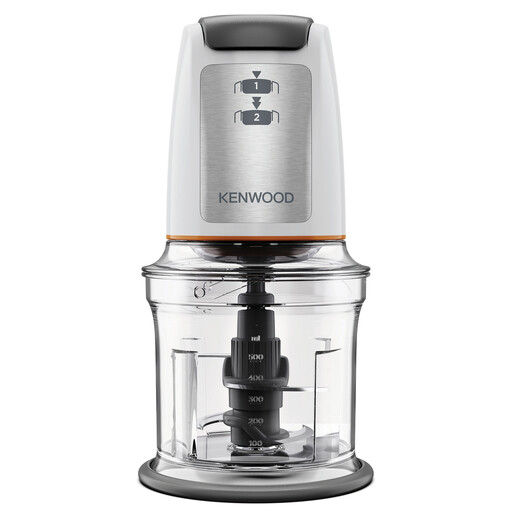
If you mainly want to process small quantities, compare the bowl size with your usual portion. Kenwood’s general advice on making crumbs applies to small quantities and warns against overfilling.
0.5 l bowl, two speed settings and 500 W. Check the instructions for this model to see whether it can handle the quantity of bread you plan to process.
 No image available
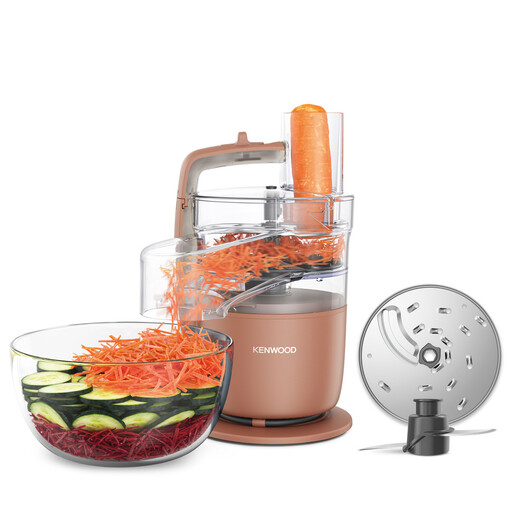
If you regularly prepare other ingredients as well as chopping, check whether the items included cover the tasks you need to do.
1.3 l bowl and 650 W. Kenwood lists different models and specifications across the MultiPro range, so check the details of the specific set.
Kenwood says slightly stale bread is easier to process than very fresh bread. Very fresh bread may clog the appliance, so Kenwood advises. Also check the instructions for your model.
No. The Federal Centre for Nutrition recommends throwing away the entire affected loaf, as mould can spread without being visible. Bread that has gone dry and hard but is free from mould can be used to make breadcrumbs.
The German Federal Institute for Risk Assessment recommends avoiding the transfer of germs between raw and other foods, and using separate utensils for raw food and for cooked food or food eaten without further heating. Check the instructions for your specific model to find out which parts are dishwasher-safe.
For faulty goods, your statutory rights are against the seller; any additional guarantee is voluntary. Online purchases generally come with a 14-day right to cancel, which you must notify the retailer about. The German consumer advice centre explains these rights separately.
No. The EU describes CE marking as the manufacturer’s declaration that the product complies with the relevant EU product rules. It is not an EU-wide certification or a test of crumb-making performance. The German Federal Network Agency lists the marking, manufacturer information and German-language instructions as things to check when buying electrical household appliances.