Who are the different approaches best suited to?

Photographers shooting from above

If you mainly want to show the whole breakfast bowl along with some of the table, choose an angle of view that suits your shooting distance and the space above the table. In its food photography advice, Canon Germany highlights the difference between wide shots and macro close-ups.

Food bloggers shooting by a window

If you take photos in changing daylight, you’ll want to control shadows, exposure and colours. FUJIFILM X Germany recommends using natural light near a window for food photography.

Fans of ingredient close-ups

If you want berries, grains or other textures to appear larger in the frame, the lens’s close-focusing ability matters. Canon Germany, Nikon Germany and FUJIFILM X Germany each list different magnification ratios for their respective macro lenses.

What should you look for when buying?

Criteria What to check when buying Who is it important to?
Getting the whole bowl in the frame Check the angle of view at your actual shooting distance; a standard zoom lets you change your framing. If you want to show the bowl from above along with some of the table, the angle of view needs to suit the space you have above it. That’s why around 31% of consumers put the whole bowl and the right framing first.
Window light and colours Look for white balance, exposure compensation and aperture control. Side light from a window or a bright surface can help you shape the light. When window light changes, you’ll want to control shadows and colours without losing focus across the whole bowl. That’s why around 25% of consumers prioritise lighting and colour reproduction.
Close-up ingredient shots Check the magnification ratio and the clear space in front of the front element for the specific lens. If you want individual berries or grains to appear large as standalone subjects, close focusing and working distance matter. Around 19% of consumers put close-ups of ingredients and textures first.
Effort and the complete setup Compare your existing setup with the actual kit contents, and only factor in the lenses and accessories you need. If you want to photograph your bowl without buying unnecessary new equipment, start by checking what you already own and what’s included in the kit. Around 25% of consumers prioritise the effort and cost of the complete shooting setup.

Common buying mistakes

  • Assuming a high camera resolution means good macro capability

    How large small ingredients appear in the frame also depends on the lens and its maximum magnification ratio.

    Before buying, decide whether you’ll mainly photograph whole bowls or take standalone close-ups, and check exactly which lens is included.

  • Choosing the widest aperture for every bowl shot

    A wide aperture can reduce the depth of field across ingredients at different distances.

    Set the aperture to suit the area you want in focus. If there’s not much light from the window, you can also try moving the bowl or using a bright surface to reflect light onto it.

  • Assuming a camera body and a kit are the same offer

    A camera body doesn’t automatically include the lens supplied with a similarly named kit, and documented kits may come with different lenses.

    Before deciding, compare the full model and kit names, what’s included in the box and the lens mount.

Camera brands to consider

Canon

The EOS R50 with an RF-S standard zoom is an option for changing your framing; the RF 35mm F1.8 MACRO IS STM is a separate choice for closer details.

  • Canon Germany lists a vari-angle screen and an APS-C sensor for the EOS R50.
  • According to Canon Germany, the RF 35mm lens has a maximum magnification ratio of 1:2, not 1:1. Because of the APS-C angle of view, check how much space you have above the table beforehand.

Nikon

The Z50II kit with a 16–50 mm lens is designed for wide shots; the NIKKOR Z DX MC 35mm f/1.7 is a separate option for close-up details.

  • Nikon Germany lists a tilting and swivelling screen for the Z50II.
  • According to Nikon Germany, the DX macro lens has a maximum magnification ratio of 1:1.5 on a DX sensor. The stated full-frame equivalent does not mean an actual 1:1 magnification ratio on this sensor; the kit zoom is not the macro lens mentioned here.

Fujifilm

The X-S20 is a camera body option for photography with adjustable colour reproduction; the XF30mmF2.8 R LM WR Macro is a separate lens for close-ups.

  • FUJIFILM X Germany gives a magnification ratio of 1:1 for the XF30 mm lens and lists in-body image stabilisation for the X-S20.
  • The manufacturer’s image stabilisation figure applies under the specific test conditions stated, and doesn’t automatically apply to every lens combination. Consider the camera body and lens together.

Sony

The α6400 is an E-mount APS-C camera body. A standard zoom is worth considering for bowls, while the separate E 30 mm F3,5 Macro is designed for small details.

  • Sony Germany lists a tilting screen for the α6400 and a 1:1 magnification ratio for the E 30 mm macro lens.
  • The macro lens’s maximum aperture of F3.5 is something to consider in lower light. This doesn’t imply a blanket quality comparison with lenses of other designs.

Joybuy products related to the topic

Joybuy product options related to photographing breakfast bowls with a camera.
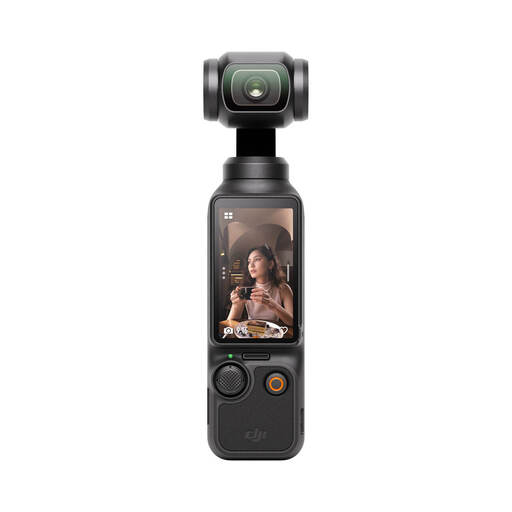
DJI Osmo Pocket 3 with swivelling touchscreen

DJI Osmo Pocket 3, 1-inch CMOS sensor

The swivelling touchscreen can help you check your framing at the table.

The product name specifies a 1-inch CMOS sensor and a swivelling 2-inch touchscreen.

View at Joybuy
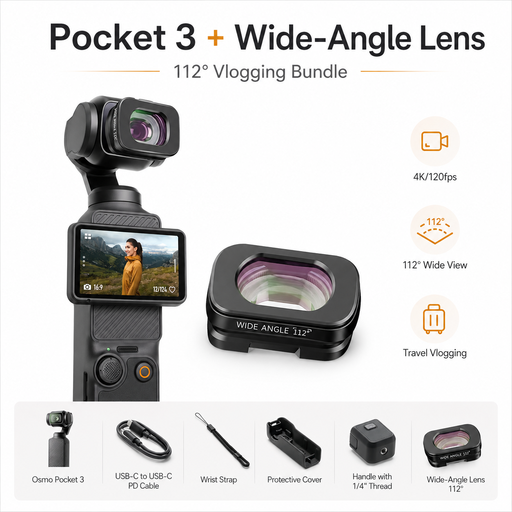
DJI Osmo Pocket 3 with ULANZI F35 wide-angle lens

DJI Osmo Pocket 3 with ULANZI F35 112° wide-angle lens

This bundle is an option if you want to include more of the table around the bowl in your shot.

The product name specifies a magnetically attached wide-angle lens with an angle of view of around 112°.

View at Joybuy

Frequently asked questions

Do I need a macro lens to photograph a whole breakfast bowl?

Not necessarily. To photograph the whole bowl and its surroundings, the first thing to consider is whether the angle of view suits your available shooting distance. A macro lens is particularly useful for small ingredients and textures. If you’re using a kit zoom, check how close it can focus while giving you the framing you want.

What can I do about harsh shadows or a bowl that looks too dark by the window?

Move the bowl or change the direction of the light, and use a bright surface to reflect light onto it if needed. If a bright background makes the food look too dark, you can adjust the exposure compensation; Sony Germany recommends moving towards “+” if food looks too dark. Also check the white balance before judging the colours.

How can I avoid unnecessary extra costs when buying a mirrorless camera?

Check exactly what’s included in the kit before buying another lens. The EOS R50 kit listed by Canon Germany includes an RF-S 18–45 mm lens; the Nikon Z50II kit listed by Nikon Germany includes a 16–50 mm lens. The macro lenses mentioned here are separate products. Also check that the lens mount is compatible.

What rights do I have in Germany when buying online or if a product is faulty?

For a typical online purchase by a consumer, you generally have a 14-day right to cancel, starting from the day you receive the goods. If an item is faulty, your statutory rights are against the seller and are separate from any voluntary guarantee. The Verbraucherzentrale states that new goods are generally covered for two years from delivery; check the terms of your specific purchase.

What should I bear in mind if people appear in my bowl photo?

If people can be recognised in a photo you publish, their consent is generally relevant under § 22 KunstUrhG. This provision concerns images of people, so check separately before publishing a photo in which anyone is recognisable.