People short on time who prioritise fibre
You want to know how much fibre is in a measured portion, and you can pack muesli or flakes into a container the night before. You may also want to take yoghurt, milk or a drink to have with it.


If fibre is your priority when choosing a quick breakfast, start by comparing the figures per 100 g and for the portion you’ll actually take with you. The Seitenbacher mueslis listed here provide more fibre per 100 g than the Cini Minis we’ve looked at; a protein version focuses on something different. Also check sugar, ingredients, allergens and whether the preparation works for you when you’re on the go.
You want to know how much fibre is in a measured portion, and you can pack muesli or flakes into a container the night before. You may also want to take yoghurt, milk or a drink to have with it.
You enjoy sweet cinnamon cereal, but want to use the nutritional information to work out how much fibre your portion provides. A wholegrain claim alone won’t answer that question.
You’re comparing a protein version with classic cereal for a breakfast on the go. As well as protein, you’re interested in fibre, sugar and the ingredients in the specific pack.
For breakfast on the go, the figure per 100 g isn’t the only thing that matters. The amount you pack and how you prepare it also need to fit your morning.
A good fit if: You’re prioritising fibre and can prepare a portion with a container and a suitable liquid.
The trade-off: The Seitenbacher varieties listed have different sugar levels; check the ingredients and allergens for each one separately.
A good fit if: Cinnamon flavour and easy portioning matter more to you than the higher fibre content of the mueslis considered here.
The trade-off: Nestlé lists 6.4 g of fibre and 24 g of sugar per 100 g for classic Cini Minis.
A good fit if: You want to compare protein levels within the Cini Minis range.
The trade-off: Nestlé says the protein version contains more protein than the classic one, while both are listed as containing 6.4 g of fibre per 100 g.
| Criteria | What to check when buying | Who it matters to |
|---|---|---|
| Fibre | Compare the nutritional information per 100 g, then work out the amount in your actual portion. | If I want my breakfast to provide fibre above all, I want to know what’s in the amount I’ve packed. For around 42% of consumers, this is their top priority. |
| Sugar and protein | Compare sugar, protein and fibre using the same serving basis; a protein or wholegrain claim is no substitute for checking the figures. | I want to weigh up the extra protein against sugar and fibre, rather than decide based on the front of the pack. Around 33% of consumers make this nutritional trade-off their main consideration. |
| Taking it with you and preparation | Check the portion information and whether you’ll need a container and, if applicable, yoghurt, milk or a drink. | In the morning, I want to be able to grab a portion that’s already prepared, without having to weigh it out first. For around 25% of consumers, ease of taking it with them is the most important consideration. |
The classic Cini Minis listed by Nestlé contain wholemeal wheat flour and provide 6.4 g of fibre per 100 g. The two Seitenbacher mueslis considered here are listed as containing 11 and 12 g per 100 g.
Compare the fibre figures, then check the amount in your portion, rather than relying on a claim on the front of the pack.
Seitenbacher lists 9 g of sugar per 100 g for its Muesli Fibre & Fruit, compared with 20 g per 100 g for The Toasted Source of Fibre #477. The fibre figure alone won’t show you this difference.
For the varieties you’re considering, check the sugar and fibre figures side by side.
An individually wrapped bar is a different format to take with you than muesli or cereal in a container. Its packaging tells you nothing about how much fibre a portion contains.
If you’d rather take a bar than muesli, check its own nutritional information per 100 g and per bar.
The mueslis and cereals considered here contain different types of grain and other ingredients. Nestlé also notes that old and new versions may be on sale at the same time when recipes change.
If there are ingredients you need to avoid, check the ingredients list and allergen information on the exact pack you’re buying.
Two Seitenbacher mueslis provide specific nutritional information to help you compare a prepared portion.
The information for classic and protein-enriched Cini Minis lets you compare products within the cereal range.
Nestlé’s cinnamon cereal range is worth considering when comparing flavour preferences, protein and fibre.
Kellogg's describes its Special K flakes as a product made with whole wheat, barley and rice.
familia describes itself as a Swiss muesli and organic brand, and is another option to consider when comparing individual mueslis.
This selection includes oats, muesli and breakfast cereal that you can compare for a prepared portion or a quick morning meal. Oats aren’t ready-to-eat individual portions, so before you buy, think about how you’ll take them with you and eat them.
 No image available
If you want to prepare your own breakfast portion, you could make these oats part of your morning routine. Compare the nutritional information on the pack with the amount you’ve packed, and remember to take a container and something suitable to have with them.
 No image available
These fine oats are an option if you want to prepare a portion the night before. Check the nutritional information for your portion size and, if you’re taking it with you, remember to pack a container and any other ingredients you’ll need.
 No image available
These coarse oats are worth considering if you want to portion out your own serving. Before buying, check the pack size and use the nutritional information on the pack to guide your portion.
 No image available
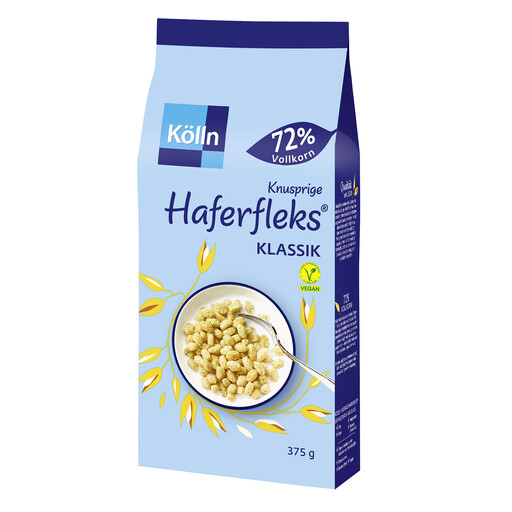
If you’re looking for breakfast cereal rather than flakes, you can compare these oat pillows with your usual portion. Check the fibre and sugar figures side by side, and look at the specific pack for any ingredients you need to avoid.
 No image available
This is another option if you want to portion out muesli in advance. The name isn’t a substitute for checking the nutritional information: in particular, check the fibre and sugar in your portion, as well as the ingredients if there are foods you need to avoid.
Start with the fibre figure per 100 g, then check how much fibre is in the portion you’ll actually eat. Also read the information on sugar, protein and ingredients. The German Nutrition Society recommends at least 30 g of fibre a day for adults; this is a daily guideline, not a target for one breakfast portion.
As well as your portion, take a suitable container and something to eat it with or drink, such as yoghurt or a drink. That way, you won’t have to work out in the morning how you’re going to eat the dry mixture while you’re out.
No. Always check the ingredients list and allergen information on the specific pack you’re buying. Nestlé says the Cini Minis considered here contain wheat; they may also contain milk and nuts. If the recipe changes, packs in shops may differ.