
Lieferung heute & morgen

Qualitätsgarantie

Willkommens-Angebote freischalten: KOSTENLOSE Lieferung | Bis zu 80 % RABATT | Kostenlose 30-Tage-JoyPlus-Testphase
App herunterladen
Breastfeeding essentials go far beyond breast pads. Depending on your routine, a nursing pillow, nursing cover, suitable nursing chair or additional products for breastfeeding mothers may come in handy. But your choice shouldn’t be based on marketing claims, colours or large pack sizes alone. What matters is the material, fit, ease of cleaning and intended use.
When it comes to breast pads, a thinner design may seem more practical at first. But what matters is whether the pad absorbs enough, stays securely in your bra and fits snugly around the edges. A poorly fitting pad may slip or leak sooner, even if it’s thin.
So look at the shape, fastening, absorbent core and how often it needs changing. Absorbency claims come from product descriptions and may not reflect every everyday situation.
A nursing cover that can also be used as a scarf, sunshade or lightweight blanket is versatile. But that doesn’t remove the need to check it’s safe. When using it near a baby, make sure their breathing is unobstructed at all times. Never leave a nursing cover unattended over your baby’s face or body.
The same applies to nursing pillows: a raised edge or strap may help with positioning, but it doesn’t make the pillow suitable for sleeping. Different requirements apply when it comes to sleep.
A pack of disposable breast pads may bring down the cost per pad. Before buying, though, make sure the material, shape and adhesive strips suit your clothing and skin. If you have sensitive skin, it’s worth starting with a smaller quantity, if available. Stop using the product if you notice redness, itching or irritation.
For disposable breast pads, important features include an absorbent core, even distribution and a secure backing. Change pads regularly to help keep moisture away from your skin. Dispose of used pads in your household waste, not down the toilet.
According to the product information, TENA Invisible Normal Absorption Nursing Pads feature a close-fitting DRY Zone, odour neutralisation and soft side edges. The surface is made, among other materials, from polypropylene, polyethylene, polyester and viscose, according to the manufacturer. Before buying, check the packaging for the size, shelf life and instructions for use.
For nursing covers and pillow covers, ease of care is important in everyday use. A 100% cotton nursing cover that’s machine washable at 40 °C may be more practical for frequent use than a delicate fabric that needs special care. Oeko-Tex Standard 100 certification applies to the specific textiles labelled as certified, so check the product itself for details.
When choosing a nursing pillow, consider the cover, filling, dimensions and cleaning instructions. A removable cover makes care easier. Don’t assume the inner pillow can be soaked in water if the instructions only recommend spot cleaning.
Place a nursing chair on a stable, level surface. Check the weight limit, seat height, armrests, backrest and stability. A rocking chair won’t necessarily suit every body size or feeding position.
Adjust the nursing pillow strap so it fits properly. Use the pillow under direct supervision to support feeding. It isn’t suitable as an unattended sleep surface.
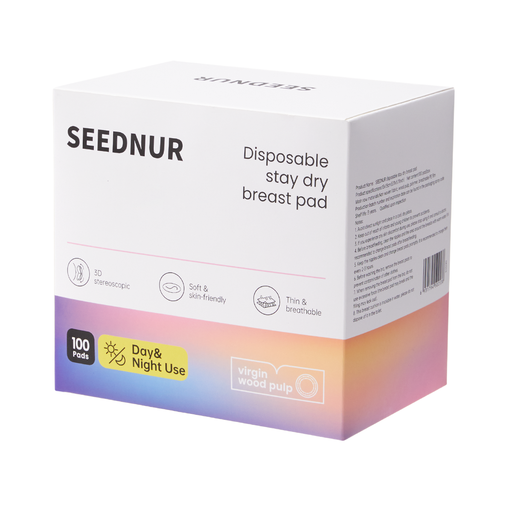
Why it suits this profile: This large pack is designed for regular use and is ideal if you want to keep disposable breast pads handy at home and when you’re out and about.
The product description mentions an ultra-thin design, two adhesive strips and an ergonomic 3D shape. Even so, check that the fit works with your bra before buying regularly.
100 individually wrapped pads; listed as 1 mm thin, with a breathable surface.
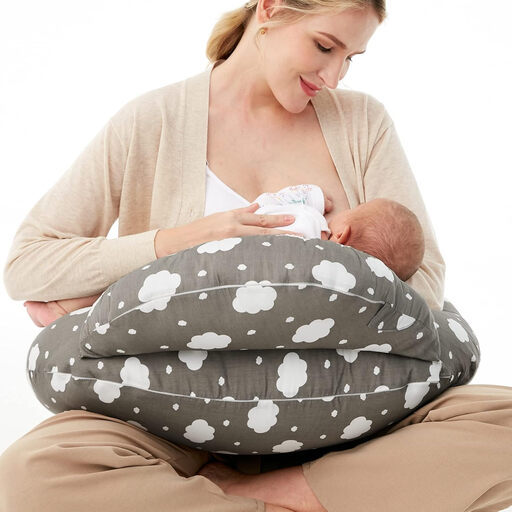
Why it suits this profile: This model has a removable cotton cover, an adjustable waist strap and a U-shape designed for breastfeeding or bottle-feeding.
You can compare the dimensions of approximately 60 × 71 × 16 cm and the strap with your height and seating position before buying. According to the instructions, the inner pillow should only be spot cleaned.
Removable cover made from 100% cotton; polyester filling and adjustable waist strap, according to the product description.
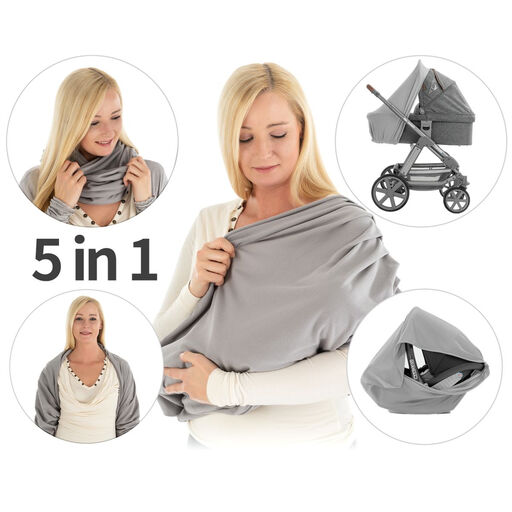
Why it suits this profile: This cover is designed for breastfeeding on the go and, according to the product description, can also be used as a scarf, lightweight blanket or sunshade.
The gathered shoulder is intended to improve the fit, according to the description. Whenever you use the cover, still check that it doesn’t cover your baby’s mouth or nose.
100% cotton; circumference approximately 156 cm; machine washable at 40 °C, according to the product information.

Why it suits this profile: This chair is designed for anyone looking to create a dedicated spot in the nursery for breastfeeding, bottle-feeding or reading.
The stated weight limit of 113 kg and assembly instructions give you specific points to check. Inspect all connections before use.
Steel frame, beechwood runners, padded seat and dimensions of approximately 95 × 72 × 93 cm, according to the product description.
We’ve put together a complete, regularly updated list of products that meet these strict selection criteria and fully comply with the safety regulations in force in the EU.
Individually wrapped disposable breast pads are handy when you’re out and about, as they’re easy to carry hygienically and dispose of after use. Look for adhesive strips, a good fit and sufficient absorbency. Change the pad as soon as it becomes damp.
How long a nursing pillow lasts depends on its materials, construction, care and how often you use it. Replace it or stop using it if the seams, cover, filling or strap are damaged. Whatever the occasion, never leave your baby unattended on the pillow.
Depending on your needs, basic breastfeeding essentials may include breast pads, a nursing pillow, a nursing cover, suitable care products and a washable mat. A nursing chair or dedicated nursing light are optional extras. The key is to choose products that genuinely make everyday life easier and can be used safely and hygienically.