
Lieferung heute & morgen

Qualitätsgarantie

Willkommens-Angebote freischalten: KOSTENLOSE Lieferung | Bis zu 80 % RABATT | Kostenlose 30-Tage-JoyPlus-Testphase
App herunterladen
Breast milk storage bags are designed to keep expressed milk hygienically, compactly and clearly labelled. In practice, however, problems are often caused not by the quantity of milk, but by unsuitable bags: the seam starts to give way, the closure does not seal completely or the label becomes almost impossible to read after freezing.
That is why it is worth looking at specific product features before buying, rather than relying on general advertising claims. The most important points are material specifications, capacity, closure type, labelling area and suitability for freezing.
Breast milk storage bags with temperature indicators can provide guidance through a colour change. However, this is not a precise measurement. The indicator may be affected by the surroundings, the warming method and the position of the strip. Before feeding, the milk’s temperature should also be checked carefully.
A breast milk storage bag can only be sealed in a leak-proof manner if the closure is fully closed and the filling limit is observed. Overfilling can cause problems when freezing, as liquids expand. Milk residue in the sealing seam can also prevent both zips from interlocking properly.
Breast milk storage bags with 220 ml, 250 ml or 180 ml capacities are suitable for different everyday situations. A bag that is too large may not be filled completely, while a bag that is too small may require several units for larger portions. The usual amount of expressed milk is therefore more important when choosing than the stated maximum capacity.
If you are looking for BPA-free breast milk storage bags, check that the material is explicitly stated. The available product information lists BPA-free plastics for several models; some products are also described as BPS-free. This information should be clearly shown on the product page or packaging.
“Food-safe” and “BPA-free” are different specifications. If you prefer both properties, look specifically for both indications. For products that come into direct contact with breast milk, you should also follow the manufacturer’s instructions regarding single use, storage and warming.
A double closure with two press-lock strips can provide an additional sealing line. What matters most is that the bag is undamaged and has been sealed along the entire opening. A stand-up base makes filling and storing the bag upright in the fridge easier. When freezing, however, storing bags flat can save space and make them easier to defrost later.
The following features are also useful:
A 180 ml breast milk storage bag is suitable for smaller to medium-sized portions. A 220 ml breast milk storage bag offers a little more spare capacity, while a 250 ml breast milk storage bag may be useful for larger portions or building up a supply. The printed maximum fill line should not be exceeded.
For frequent use, pack size affects ongoing costs. Smaller packs are suitable for trying a product or occasional use. Larger packs reduce the need to reorder, but tie up more money and should only be chosen if the bags are needed regularly.
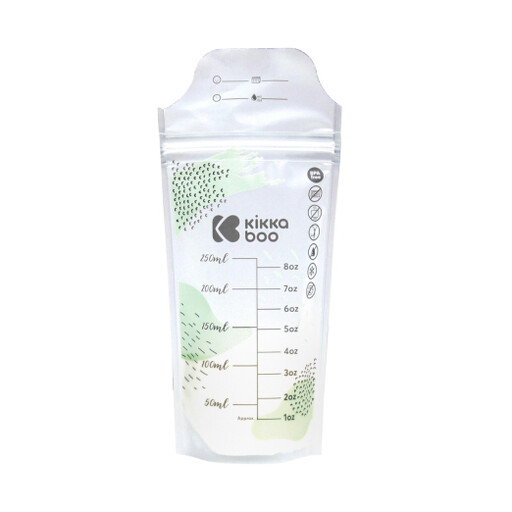
Why this product suits this profile: The pack of 25 bags is suitable for getting started or for households that first want to see how often they express and freeze milk. The capacity is 250 ml.
The labelling area helps you record the date and quantity. The double zip and stated suitability for the fridge and freezer address common storage problems.
BPA-free plastic, 250 ml capacity, double closure and labelling area.
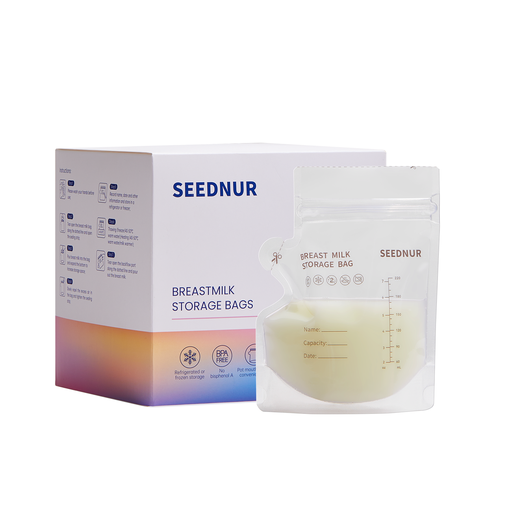
Why this product suits this profile: The large pack of 120 bags is designed for regular use. According to the product description, this model has a capacity of 220 ml and a temperature indicator.
The double closure, labelling area and pouring aid reduce the risk of mix-ups and spills. The temperature indicator provides guidance, but does not replace an additional temperature check.
120 pieces, 220 ml, pre-sterilised according to the product information, BPA- and BPS-free, and designed for freezing.
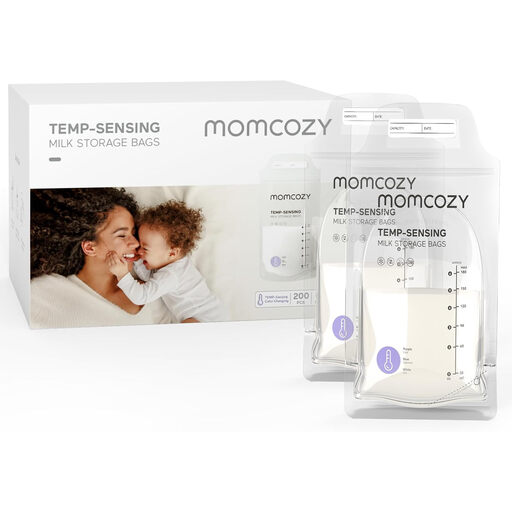
Why this product suits this profile: The large pack of 200 pieces is aimed at households with regular requirements. According to the product description, the bags hold approximately 180 ml and feature a temperature-sensitive colour strip.
The separate filling and pouring solution, together with the marked tear-off corner, supports controlled transferring. The stated maximum quantity of 180 ml should be observed.
200 pieces, BPA-free material according to the product information, temperature strip, double closure and labelling area.
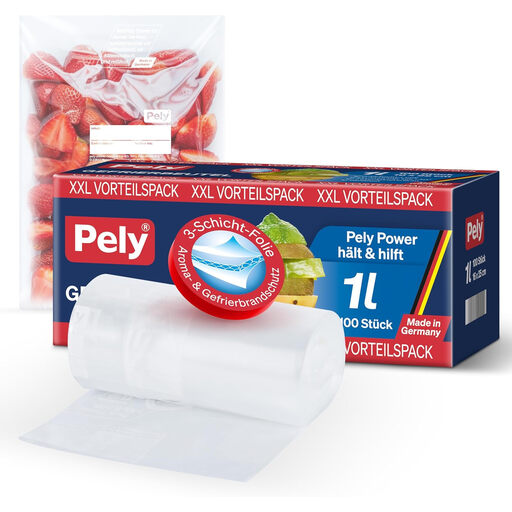
Why this product suits this profile: These resealable freezer bags are intended for food portions, frozen food supplies and general household tasks, not specifically for breast milk.
Clearly separating the intended uses prevents incorrect application: for breast milk, bags specifically designed for this purpose should be used. This model is intended for general freezer tasks.
100 pieces, 1 litre capacity, three-layer film according to the product description and a writable field.
We have put together a complete, regularly updated list of products that fully meet these strict selection criteria and the safety regulations applicable in the EU.
Before filling the bag, make sure your hands, work surface and pumping equipment are clean. Then follow these steps:
Empty bags should be kept out of reach of babies and children because of the risk of suffocation. Damaged or leaking bags should no longer be used.
Disposable bags are intended for single use only. The specific best-before or expiry date for the unused pack is printed on the packaging. For the storage period of frozen breast milk, follow the recommendations of the relevant medical or public health authorities, as well as the individual advice of your midwife or paediatrician.
For breast milk, you should use bags specifically designed for this purpose. General-purpose freezer bags may be suitable for food, but they are not a substitute for a designated breast milk storage bag. Before buying, check the labelling area, suitable capacity, closure and material specifications.
A temperature indicator is an optional guide. It can be useful when warming milk, but it does not replace checking the milk’s temperature. If you would rather not use one, you can choose a BPA-free breast milk storage bag with a double closure, scale and labelling area.