
Lieferung heute & morgen

Qualitätsgarantie

Willkommens-Angebote freischalten: KOSTENLOSE Lieferung | Bis zu 80 % RABATT | Kostenlose 30-Tage-JoyPlus-Testphase
App herunterladen
For many, a rich, aromatic coffee brewed in a classic espresso maker is the epitome of Italian coffee culture. Also known as a moka pot or stovetop pot, this method promises an intense flavour experience without the expense and complexity of a large portafilter machine. However, the selection process is fraught with pitfalls that can easily lead to a regrettable purchase. Before you decide on a model, you should be aware of the most common problems to avoid disappointment.
A widespread issue is incompatibility with your stovetop. A visually appealing Italian coffee maker made of aluminium is purchased, only to discover it doesn't work on the induction hob at home. Another point is the often-misunderstood size specification. The "3-cup" designation refers to small espresso cups (approx. 30–50 ml), not the standard coffee mugs common in many countries, resulting in an unexpectedly small amount of coffee.
This guide will help you navigate these and other hurdles to find a model that precisely matches your needs and your kitchen setup.
To find the right espresso maker, don't be swayed by marketing promises. Instead, focus on objective, technical parameters. Three factors are of central importance.
The material affects not only durability and maintenance but also compatibility with your stovetop.
The most critical technical check before buying is compatibility with your type of stovetop. While gas and electric hobs work with almost all models, induction hobs require a magnetisable base.
The capacity of espresso makers is given in cups, which often leads to confusion. Here, one "cup" corresponds to an Italian espresso cup with a volume of about 30 to 50 millilitres.
Therefore, measure your needs not in cups, but in the desired total volume in millilitres to find the right size.
Based on these objective criteria, we have compiled a few models for different user profiles.
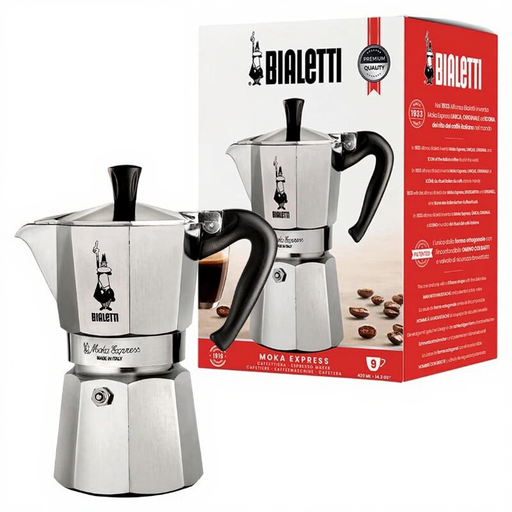
Why This Fits Their Persona: Ideal for purists seeking the authentic, time-tested coffee experience proven since 1933. The octagonal design is not only iconic but, according to Bialetti, also serves to provide optimal heat distribution on gas and electric stoves.
This model is explicitly designated for gas, electric, and ceramic hobs. By understanding the cup size (approx. 130 ml), expectations for the coffee volume are correctly met.
Made from an aluminium alloy for excellent heat conduction. The patented safety valve is an established mark of quality.
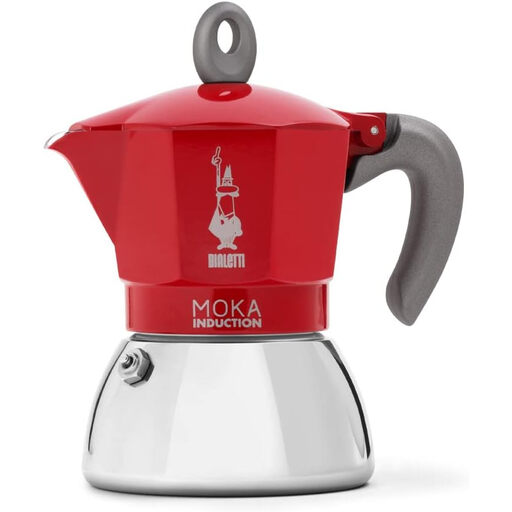
Why This Fits Their Persona: This pot was designed for users who appreciate the classic moka design but have a modern kitchen with an induction hob. It bridges tradition with modern technical requirements.
The bi-layer construction, with a stainless steel boiler and an aluminium upper chamber, solves the compatibility problem out of the box. No separate adapter plate is needed.
Combines the benefits of both materials: a stainless steel base for induction capability and durability, with an aluminium top for traditional heat distribution.
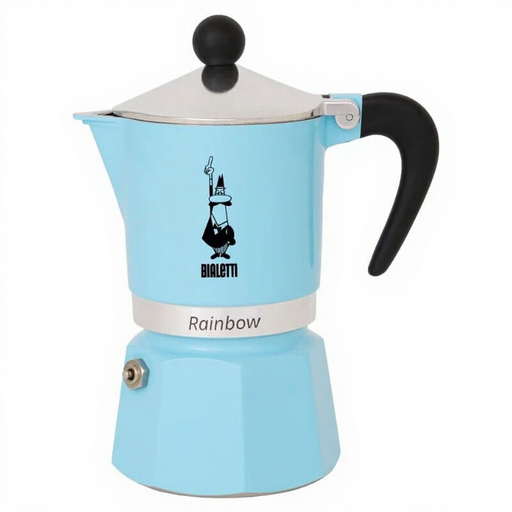
Why This Fits Their Persona: For coffee drinkers who want to enhance their kitchen with a splash of colour. This pot is a functional design object, perfect for a single morning espresso or as an eye-catching statement piece.
The user consciously chooses this model for its aesthetics and is fully aware of its material properties (aluminium, not for induction) and its small size (one espresso cup).
Offers the proven functionality of the Moka Express model in a wide range of colours. Made from a food-grade aluminium alloy.
We have compiled a complete, real-time list of products that fully meet these strict selection criteria and German safety regulations.
The cleaning method depends on the material. Aluminium models, like the classic Bialetti espresso maker, should only be rinsed with warm water after cooling and dried with a cloth. Detergent or cleaning in a dishwasher can attack the protective patina and damage the material. Stainless steel espresso makers are easier to care for and often dishwasher-safe, but always check the manufacturer's instructions.
A bitter taste can have several causes. A common source of error is excessive heat or too long a brewing time. Remove the pot from the stove as soon as the characteristic gurgling sound begins and the coffee has risen into the upper chamber. Other reasons can be coffee grounds that are too fine (a grind size between espresso and filter coffee is recommended) or tamping the grounds down in the filter basket, which should be avoided.
No, a conventional espresso maker made of aluminium will not work on an induction hob because aluminium is not magnetic. To use an aluminium pot on an induction stove, you either need a special adapter plate made of ferromagnetic material or you can opt directly for an induction-compatible model with a stainless steel base. When buying, look for the explicit "suitable for induction" label.