Detail-focused photographers
If you want to capture the wing patterns of resting butterflies, consider magnification and focusing distance together. Canon Academy recommends using a fast shutter speed to help reduce motion blur.


If you want to photograph subjects at varying distances without changing lenses, a bridge camera could be a good fit – but check how close it can focus at each zoom setting. For fine details and more flexibility over your shooting distance, a mirrorless camera with a suitable macro lens is a more targeted choice. Factor the camera body, lens, compatibility and extra weight into your decision.
If you want to capture the wing patterns of resting butterflies, consider magnification and focusing distance together. Canon Academy recommends using a fast shutter speed to help reduce motion blur.
If you want to switch between nearby flowers and more distant wildlife on a walk in the park, check how close the camera can focus at each zoom setting. Panasonic Deutschland specifies different focusing ranges at the wide-angle and telephoto ends for the DC-FZ82D.
When butterflies are fluttering or flowers are blowing in the wind, focusing controls and fast shutter speeds matter too. Canon Academy recommends fast shutter speeds to help reduce motion blur; a high frame rate alone does not guarantee a sharp shot.
First decide whether you’d rather have a camera that lets you switch between different subject distances without changing lenses, or a dedicated macro lens for close-up photography.
| Buying priority | What to check | Who it matters most to |
|---|---|---|
| Details from a distance | Compare the magnification ratio, focusing distance at your chosen focal length and the actual working distance in front of the lens. Canon Deutschland specifies a 1.4:1 magnification ratio and a minimum focusing distance of approximately 0.26 m for the RF 100mm F2.8 L Macro IS USM. | If I want to capture the wing patterns of stationary butterflies while keeping my distance, I’ll consider magnification and focusing distance together. Consumers whose main priority is capturing detail while maintaining a reasonable shooting distance are likely to account for around 33%. |
| Sharp photos of moving subjects | Check the focusing controls, burst shooting and options for using fast shutter speeds for the way you plan to use the camera. Canon Deutschland says the EOS R10 can shoot at up to 15 frames/s with its mechanical shutter; this is not a success rate for sharp photos. | If animals are fluttering or flowers are swaying in the wind, I want to account for movement when taking a photo rather than relying on stabilisation alone. Consumers who prioritise sharp photos of moving subjects are likely to account for around 27%. |
| Easy to carry | Compare the weight of the complete kit. OM SYSTEM lists the OM-5 Mark II at 418 g including battery and memory card; according to the manufacturer, the separately available 90 mm lens weighs approximately 453 g. | On a walk in the park, I want to switch easily between nearby and more distant subjects without having to change lenses. Consumers who prioritise ease of carrying and avoiding lens changes are likely to account for around 20%. |
| Total cost and system expansion | Put together a complete kit that includes the camera body, a compatible lens and any accessories you need. Don’t assume a kit lens is equivalent to a dedicated macro lens without checking its specifications. | If I want to start with a usable kit and expand it later, I’ll factor in the right lens from the outset. Consumers whose main priorities are total cost and expanding their system are likely to account for around 20%. |
For the Panasonic DC-FZ82D, Panasonic Deutschland specifies a focusing range from 1 cm at the wide-angle end; at the telephoto end, the stated range starts at 150 cm.
Compare the focusing range at the focal length you actually plan to use for photographing butterflies.
A suitable lens is needed for the macro shots covered here, so the body’s weight alone doesn’t tell you how much the complete kit weighs.
Compare complete, compatible kits rather than a bare camera body with a ready-to-use camera with a fixed zoom lens.
Stabilisation can compensate for camera shake, but it won’t stop a fluttering butterfly or a flower moving in the wind.
Choose a suitable shutter speed for moving subjects, and consider stabilisation only within its intended role.
The DC-FZ82D is a bridge camera for anyone looking for zoom and close-up capabilities in one device.
The EOS R10 can be paired with the separately available RF 100mm F2.8 L Macro IS USM for dedicated close-up photography.
The OM-5 Mark II can be paired with the separately available M.Zuiko Digital ED 90mm F3.5 Macro IS PRO for close-up photography.
The α6700 with E-mount can be paired with the FE 90mm F2.8 Macro G OSS for close-up photography.
The Z50II is a DX-format Z-series camera body; the separately available NIKKOR Z MC 105 mm 1:2,8 VR S is one macro option to consider.
Joybuy products related to cameras and photography equipment; check whether each model suits your butterfly photography needs.
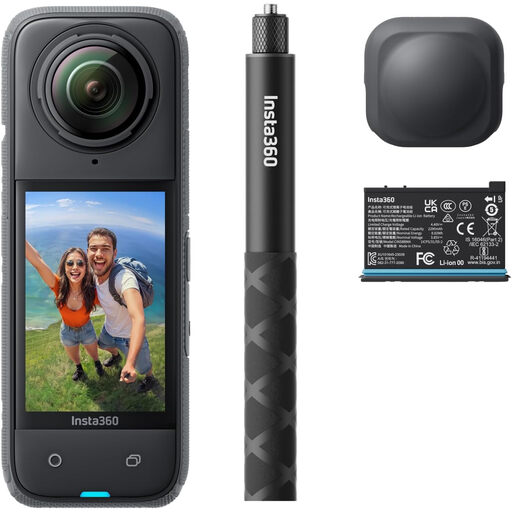 No image available
Designed for 360° photography; if you want to capture butterfly details up close, check the camera’s photo and focusing features carefully.
The product name specifies a weight of 165 g and an 8K 360° camera.
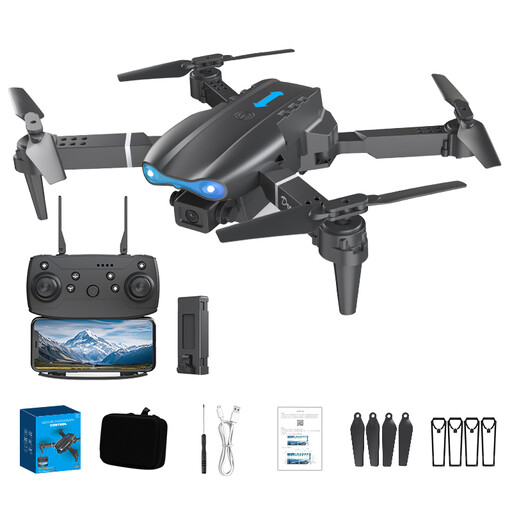 No image available
Described as a foldable drone with a camera for outdoor photography; note the advice not to fly it in densely populated areas.
No. Check the zoom setting and maximum magnification ratio too. For the Panasonic DC-FZ82D, Panasonic Deutschland specifies a focusing range from 1 cm at the wide-angle end and from 150 cm at the telephoto end. With a mirrorless camera, close-up capability depends largely on the lens attached.
Stabilisation can compensate for camera shake, but it can’t stop an animal from moving. Canon Academy recommends using a fast shutter speed to help reduce motion blur.
Not necessarily. According to Canon Deutschland, a kit lens can be enough to start taking close-ups of larger insects. If small details are your main priority, compare your current lens’s specifications with those of a compatible macro lens.
Check the battery, memory card and lens combination you have attached. Weather protection varies by model: OM SYSTEM specifies IP53 for the OM-5 Mark II, but that doesn’t mean other cameras or attached lenses offer the same protection.
Photograph them without interfering, and don’t deliberately disturb wildlife. The Federal Ministry for the Environment describes varying restrictions on handling and disturbing protected species; additional rules about paths or areas depend on the park. Follow its signs.