Photographing distant subjects
You want to zoom in on a distant animal or a detail on the opposite bank. Compare the optical telephoto range, rather than relying on a digital zoom figure alone.


If you want to switch between waterside scenery and distant subjects without changing lenses, consider a bridge camera with optical zoom. If you’d like to choose different lenses later, a mirrorless camera kit could be a good fit – just check that it actually includes a telephoto zoom lens. The key factors are the focal length range, the weight of your complete kit and how easy it is to handle on the water.
You want to zoom in on a distant animal or a detail on the opposite bank. Compare the optical telephoto range, rather than relying on a digital zoom figure alone.
You want to capture both the waterways as a whole and individual distant subjects on the same trip. Look at the wide-angle range, and check whether the telephoto lens you need is actually included in the kit.
You want to handle or change as little equipment as possible while you’re out and about. Also plan how to carry your kit safely, and check the rules for the waterway you’re travelling along.
A good fit if: You want to switch quickly between landscapes and distant details from the same spot, without changing lenses.
The trade-off: The built-in zoom can’t be swapped for another lens. A long zoom range also doesn’t guarantee good image quality in low light.
A good fit if: You want to cover a range of compositions and choose more compatible lenses later.
The trade-off: You’ll need to carry the right lenses and may have to change them. Check exactly which lenses are included in the kit.
| What you’re looking for | What to check before buying | Who is this especially important for? |
|---|---|---|
| Bring distant details closer optically | Compare optical focal lengths on the same full-frame equivalent basis; check image stabilisation and the maximum aperture at the telephoto end. | If I want to make a distant subject look bigger in the frame, the optical telephoto range matters to me. Around 36% of consumers have this as their main priority. |
| Capture landscapes and details | Compare the wide-angle and telephoto ranges; if you’re buying a kit, check the full list of included lenses. | If I want to photograph both the waterways and a distant subject on the opposite bank during a trip, I need the right composition for each. Around 29% of consumers prioritise this combination. |
| Take photos without changing lenses | Compare the available optical range and how easy the complete mirrorless camera kit is to use. | If I want to switch between subjects from a boat without having to handle lenses, a built-in zoom is important to me. Around 21% of consumers want to avoid changing lenses. |
| Handle equipment on the water | Compare weights on the same basis; check protection from the elements and transport requirements for the camera and lens separately. | If I’m taking photos on the water, I want to be able to carry and use my complete kit safely. Around 14% of consumers give handling this equipment their highest priority. |
Focal length figures indicate the angle of view, not image quality. Panasonic lists 20–1200 mm for the FZ82D, Sony lists 24–600 mm for the RX10 V, and Nikon lists 24–3000 mm for the P1100 – all in full-frame equivalent terms. For the P1100, Nikon also distinguishes between 125x optical zoom and 250x Dynamic Fine Zoom, which is a digital extension.
For the Nikon P1100, Nikon distinguishes between 125x optical zoom and 250x Dynamic Fine Zoom, which is a digital extension. These figures don’t describe the same optical range.
When comparing cameras for distant details, compare their optical focal lengths on the same full-frame equivalent basis.
Nikon lists the Z50II standard kit separately from the kit that includes an additional 50–250 mm VR lens.
Read the full kit description and check the list of lenses actually included.
The COMPUTER BILD test reports noticeable loss of sharpness in dim light with the Nikon P1100 and Panasonic FZ82D. A long zoom range doesn’t resolve this trade-off.
Consider the lighting conditions you usually shoot in, and check which models the test’s findings apply to.
Canon’s weight figure for the EOS R50 refers to the body or to the camera with battery and memory card, not a lens. The Nikon twin-lens kit includes two lenses.
Compare weights on the same basis and think about which lenses you’ll want to take on a boat trip.
Nikon offers both bridge cameras with fixed zooms and mirrorless camera kits with interchangeable lenses.
The EOS R50 twin-lens kit is a mirrorless camera option for wide views and more distant details.
The RX10 V is a bridge camera with a built-in zoom, for anyone who wants to avoid changing lenses.
The LUMIX FZ82D is a bridge camera with a built-in zoom for capturing a variety of compositions without changing lenses.
The following deals are for digital compact and action cameras for waterside views and shots taken close to the water. For distant details on the opposite bank, optical telephoto range remains a key factor in your choice.
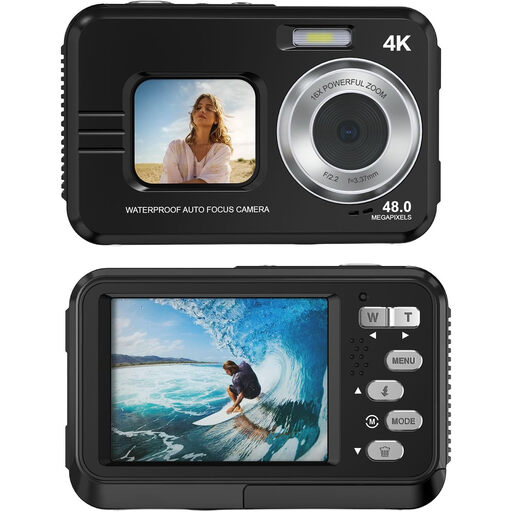 No image available
A compact option for waterside views or shots taken close to the water; the title details don’t confirm an optical telephoto range for distant subjects.
2.8-inch IPS display; dual screens; 16x digital zoom; described in the product name as waterproof to depths of up to 3.5 m.
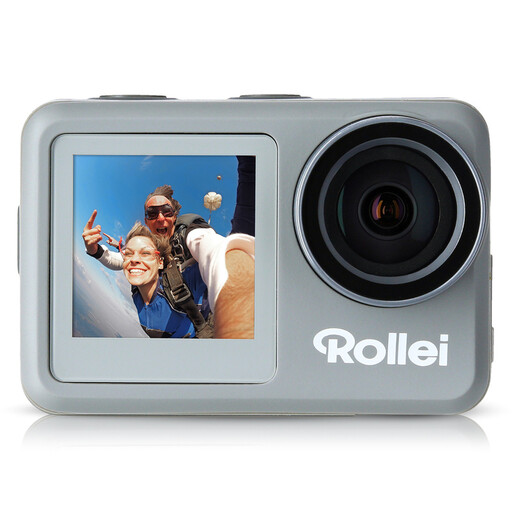 No image available
An action camera option for shots close to the water; for distant details on the opposite bank, check separately whether it offers the optical telephoto range you need.
4K video at up to 60 fps; dual screens; described in the product name as waterproof to depths of up to 10 m.
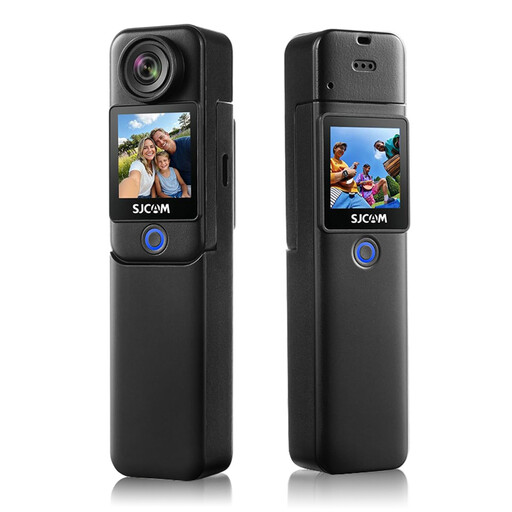 No image available
The housing may be useful for shots close to the water; this doesn’t confirm an optical telephoto range for distant subjects.
4K recording; 6-axis EIS; 154° ultra-wide angle; up to 20 MP photo resolution; described in the product name as waterproof to depths of up to 30 m with the housing.
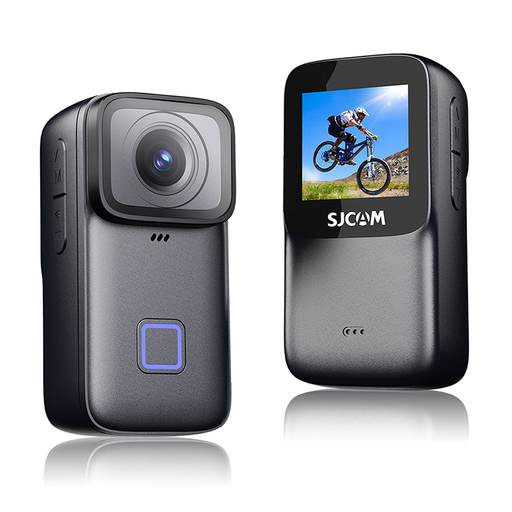 No image available
A compact action camera option for shots close to the water; check whether it suits distant details by looking at the optical angle of view you actually need.
4K recording; 6-axis EIS; 135° wide angle; up to 20 MP photo resolution; described in the product name as waterproof to depths of up to 5 m without the housing and up to 40 m with it.
Not necessarily – check exactly what’s included. Nikon lists the Z50II kit with an additional 50–250 mm VR lens separately from the 16–50 mm kit. Canon also specifically describes its R50 kit with an additional RF-S 55–210 mm lens.
Plan how to carry your complete camera and lens setup so that you don’t need to change lenses while paddling, if you want to avoid doing so. Image stabilisation doesn’t prove that equipment is water-resistant, so check the details for every item you’re taking with you.
For faulty goods, your statutory rights generally apply against the seller and are separate from any voluntary guarantee. Online purchases usually come with a 14-day right to cancel, and you must notify the seller that you’re cancelling. The Verbraucherzentrale explains the difference.
No. According to the Spreewald Biosphere Reserve administration, waterways closed off with red-and-white signs may not be navigated, even by paddle boat. This restriction applies to navigating those waterways; it isn’t a general ban on taking photos from permitted locations.
Under § 22 KunstUrhG, consent is generally required to distribute or publicly display images of people. § 23 sets out exceptions, including people who appear only as incidental details in a landscape. Whether an exception applies depends on the specific image and how it’s used.