Photographers focusing on the opposite shore
If you want to bring small buildings, rocks or other distant subjects closer, compare the telephoto focal length of the lens actually included.


A mirrorless camera kit with a suitable telephoto lens is a good choice for lake panoramas and small subjects on the opposite shore, provided you’re happy to change lenses and carry extra kit. A bridge camera is an alternative if you’d rather have a fixed lens and zoom without changing it: Nikon lists 16–50 mm and 50–250 mm VR lenses for the Z50II Twin Lens Kit, while Panasonic gives the LUMIX DC-FZ82D a 20–1200 mm full-frame equivalent range. These focal length figures alone don’t prove that the cameras deliver comparable levels of detail. A polarising filter can also reduce the very reflection you want to capture.
If you want to bring small buildings, rocks or other distant subjects closer, compare the telephoto focal length of the lens actually included.
If you want the lake and its reflection to form a single subject, choosing the right angle of view and managing reflections on the water carefully are both important.
If you’ll be carrying your kit along the lake for a long time, consider the weight of the complete setup, how many lenses you’ll need and the protection offered by the specific combination.
A good fit if: you want to capture a wide view of the lake, then switch to a telephoto lens for subjects further away on the shore.
The trade-off: Two lenses mean more to carry and a lens change; Nikon says the specified kit doesn’t include a charger.
A good fit if: you want to switch between panoramas and details that aren’t too far away without taking the lens off.
The trade-off: A single zoom won’t necessarily offer the same telephoto angle of view as a longer telephoto lens.
A good fit if: you value a built-in lens and zooming without changing lenses more than having the option to choose different lenses later.
The trade-off: Your lens choice is fixed, and a long focal length figure alone says nothing about image detail.
| What you’re looking for | What to check before buying | Who is this important for? |
|---|---|---|
| Distant details | The telephoto focal length and image stabilisation of the chosen setup; compare focal lengths on a like-for-like full-frame equivalent basis. | If I want to make small subjects on the opposite shore look bigger, the telephoto lens actually included matters to me. Around 36% of consumers focus on distant details. |
| Reflections and landscapes | The lens’s wide-angle range and, if you plan to use one, whether a polarising filter will fit; assess its effect on your subject. | If I want the lake and its reflection in the same shot, I pay attention to the framing and take care not to reduce the reflection by mistake. Around 29% of consumers prioritise compositions featuring reflections. |
| Carrying comfort and weather protection | Weight with the battery, memory card and all the lenses you plan to take; check the protection rating for the camera body and lens separately. | If I’m walking a long way around a lake, I want to be able to assess the weight and protection of the complete kit. Around 21% of consumers put carrying comfort and suitable protection ratings first. |
| A simple all-in-one setup | The exact kit name, which lenses are included and what charging accessories you’ll need. | If I want to get started without having to plan lots of accessories and lenses, I check what comes with the specific version. Around 14% of consumers prioritise a simple all-in-one setup. |
A camera body without a suitable telephoto lens, or a standard zoom on its own, won’t automatically make a distant subject look bigger in the frame.
Compare the focal lengths of the lenses actually included, and distinguish optical focal lengths from full-frame equivalent figures.
A polarising filter can suppress reflections on the water, reducing the very reflection you want to capture.
Look at your subject and decide whether you want to preserve the reflection or see further through the water’s surface.
OM SYSTEM’s figures for the OM-5 Mark II body don’t automatically describe the weight or protection of the attached lenses.
Take into account everything you’ll actually carry, and check the protection ratings of each lens you use.
The kit name alone doesn’t tell you whether everything you need to get started is included. Nikon notes that the specified Z50II Twin Lens Kit doesn’t come with a charger.
Check the full model and kit name against the list of items included.
According to Nikon, the specified Z50II Twin Lens Kit combines a standard zoom with a separate telephoto zoom.
A kit with the RF-S 18–150 mm lens is listed for the EOS R10 as a single-lens option.
The LUMIX DC-FZ82D is a bridge camera with a built-in zoom lens.
The OM-5 Mark II is a mirrorless camera option for hikes, where body weight and weather protection may be important.
Sony lists an α6700 setup with an E 18–135 mm zoom as a single-lens option.
The following products available from Joybuy include digital cameras and action cameras. The zoom figures in the product names aren’t directly comparable and don’t prove the level of detail you’ll get when photographing distant subjects on the shore.
 No image available
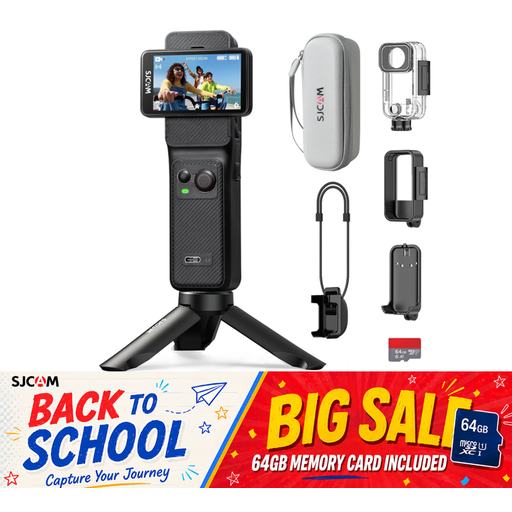
The product name mentions 4K video and two touchscreens; check whether this action camera meets your needs for landscape photography.
Listed in the product name: 6-axis stabilisation and a 7-hour battery life.
 No image available
The listed optical zoom gives you a choice of different framings; check whether its telephoto range is sufficient for the distance to your subject.
Listed in the product name: 4K video and 64 MP.
 No image available
The product name lists an 18x zoom; this alone doesn’t tell you how large a distant subject on the shore will appear in the frame.
Listed in the product name: 5K video and 80 MP.
 No image available
The listed optical zoom gives you an idea of the framing options; compare the actual focal length before relying on it for distant details.
Listed in the product name: 5K, 64 MP and two lenses.
 No image available
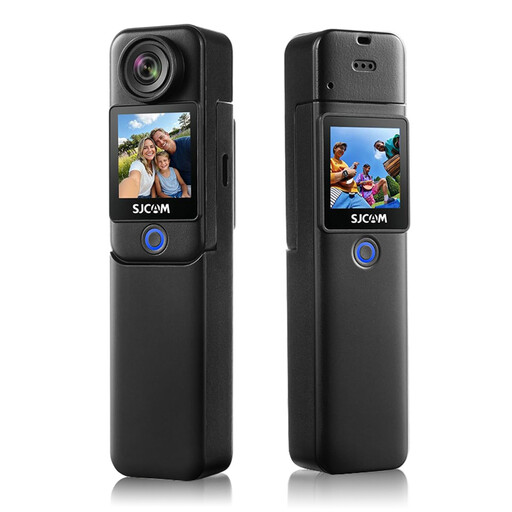
The product name describes an action camera with a touchscreen; check whether its design and listed features suit your landscape photography.
Listed in the product name: 6-axis EIS stabilisation, 20 MP photos and a waterproof case rated to 30 m.
Not necessarily: according to Canon Academy, a polarising filter can suppress reflections on water. If the reflection is your subject, check the effect before taking the photo and don’t use the filter automatically.
No. A zoom figure on its own doesn’t show how large a distant subject will look in the frame or what level of detail you can achieve. Compare the actual focal lengths, distinguish optical figures from full-frame equivalents, and check the complete camera and lens setup.
Check the full model and kit name, along with what’s included. Nikon lists two VR lenses with the specified Z50II Twin Lens Kit, but notes that a charger isn’t included.
You can’t assume that the same permission applies at every location. The Bavarian State Ministry of the Environment and Consumer Protection describes different types of protected areas, each with its own rules, so check the regulations at the specific place where you plan to take photos.
Not as a general rule. Under § 22 KunstUrhG, distributing or publicly displaying portraits generally requires consent; possible exceptions and other rights depend on the circumstances. This doesn’t automatically apply to an empty lakeside landscape.