
Lieferung heute & morgen

Qualitätsgarantie

Willkommens-Angebote freischalten: KOSTENLOSE Lieferung | Bis zu 80 % RABATT | Kostenlose 30-Tage-JoyPlus-Testphase
App herunterladen
A brightening face mask can be a practical addition to your existing skincare routine if your complexion looks tired, your skin feels dry or your skin tone appears uneven. There’s plenty of choice, from classic sheet masks and hydrogel products to rinse-off formulas containing clay or rice powder.
Marketing terms such as “whitening”, “brightening” and “radiance” don’t automatically describe a specific effect, though. What matters is the full INCI list, how you use the mask and whether the formula suits your skin.
Vitamin C, niacinamide, hyaluronic acid, collagen and arbutin are often highlighted in product descriptions. But simply mentioning an ingredient doesn’t prove that it has a particular cosmetic effect. Check that it actually appears in the ingredients list and see where it appears.
If you’re choosing a face mask for dark spots, it’s also worth remembering that cosmetic masks can leave your skin looking temporarily cared for and hydrated. They’re no substitute for daily sun protection or a dermatologist’s assessment of any unusual skin changes.
A mask may suit many skin types but still contain ingredients that some people with sensitive skin don’t tolerate well. These can include fragrance, alcohol, essential oils, certain preservatives or plant extracts.
Before using a mask for the first time, it’s a good idea to test it on a small area of skin. If you notice redness, stinging, itching or swelling, rinse the product off and stop using it.
Don’t let a sheet mask dry on your skin. Follow the time stated on the packaging, which is often between a few minutes and around 20 minutes, depending on the product. Leaving it on for longer won’t necessarily give you better results.
If your complexion looks dull or uneven, you’ll find products containing ingredients such as:
Always check the full ingredients list on the packaging, as formulas can change.
A sheet face mask comes in an individual portion and can be used without rinsing. It’s a handy option for a quick skincare routine at home or on the go. Hydrogel masks often fit closely to the skin and contain a generous amount of serum. Rinse-off masks containing clay or kaolin may be worth considering if your skin is oilier, but they aren’t primarily designed to hydrate or brighten.
Fans of Asian skincare can choose from both Korean face masks and Japanese sheet masks. However, where a product is made doesn’t prove its quality. The ingredients, wear time, pack size and directions for use matter more.
For individually packed masks, make sure the recommended frequency fits realistically into your routine. A set of five or ten masks is convenient for regular use, while a 120- or 150-gram tub can provide several applications. If you choose a jar, take particular care to remove the product hygienically and check the stated shelf life.
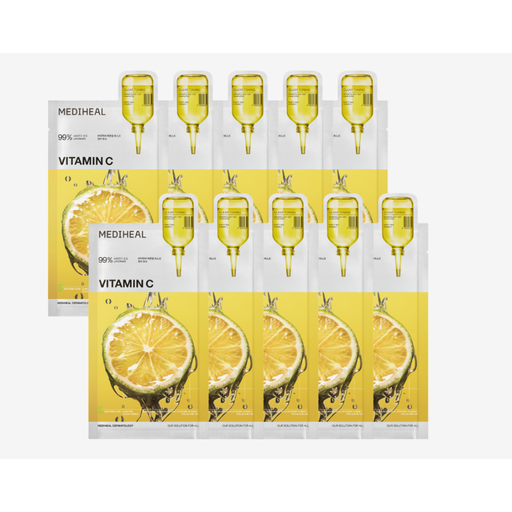
Why this product suits this profile: The set of ten makes it easy to add a vitamin C face mask to your regular skincare routine.
The product description lists vitamin C, niacinamide, arbutin and sodium hyaluronate. The recommended wear time of 15 to 20 minutes helps prevent unnecessarily long applications.
Ten individually packed sheet masks, with additional guidance on using sun protection alongside vitamin C skincare.
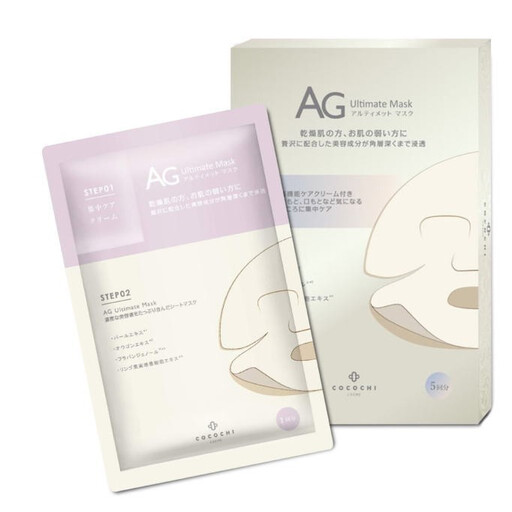
Why this product suits this profile: Its Japanese two-step routine is ideal if you prefer a structured skincare routine featuring both cream and a sheet mask.
The ingredients are listed in detail, including rose flower water, sodium hyaluronate, niacinamide and a vitamin C derivative. The pack contains five applications.
A two-step application; made in Japan; recommended wear time of around 15 minutes.
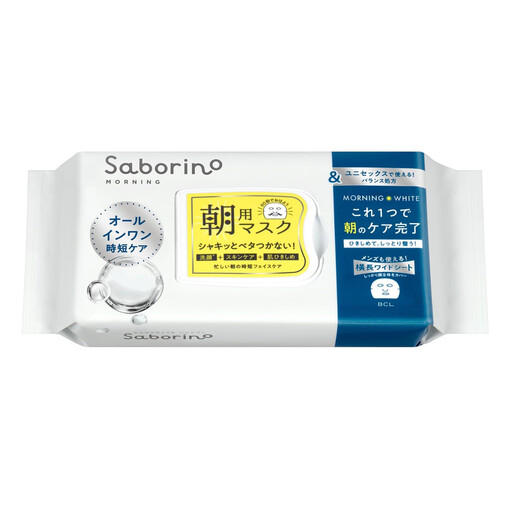
Why this product suits this profile: The tub of 32 sheet masks is designed for people who prefer a very quick skincare step in the morning.
The instructions clearly state an application time of around 60 seconds. The product information also points out that the mask isn’t a facial cleanser.
32 masks per pack; Ascorbyl Glucoside, sodium hyaluronate and glycerin, according to the stated INCI list.
We’ve put together a complete, regularly updated list of products that meet these strict selection criteria and the applicable EU safety regulations.
Dispose of the packaging as soon as you’ve opened a sheet mask. Check the product packaging for the shelf life, batch number and full INCI list before buying or using the product.
It depends on the formula. Many sheet masks are used once or several times a week, while some morning masks are designed for a quick daily routine. Always follow the manufacturer’s instructions. If you have sensitive skin, it’s sensible to start by using the mask less often.
A cosmetic mask can hydrate your skin and leave your complexion looking cared for. Dark spots can have various causes, so a mask shouldn’t be considered a treatment or a substitute for sun protection and advice from a dermatologist.
Each uses a different approach to its formula. Vitamin C products can suit routines focused on a fresh-looking complexion, while niacinamide is often combined with hydrating ingredients. What matters is the full INCI list, whether the product suits your skin and how often you want to use it.