Choose your stand mixer based first on the total weight of your brioche recipe and the dough quantity stated by the manufacturer for that exact model; bowl capacity alone isn’t enough. Bosch lists up to 1.9 kg of yeast dough for the MUM58710, while Kenwood lists up to 1.5 kg of bread dough for the Go KZM35.000GY. These are manufacturer specifications, not results from brioche testing. In a shared kitchen, you’ll also need to consider the space it takes up, where you’ll store it and how to clean its individual parts.
Who is this selection for?
Brioche bakers with a set recipe quantity
If you want to knead the entire batch at once, compare your recipe’s weight and flour quantity with the manufacturer’s limit for the exact model, rather than relying on bowl capacity or wattage alone. Bosch Hausgeräte Deutschland, Kenwood Deutschland and Severin provide dough quantities for specific models; each figure applies to the stated type of dough.
Bakers sharing worktop space
If you put the mixer away after baking, its dimensions, weight and the space needed to operate it and remove the bowl all matter. Kenwood Deutschland lists dimensions of 33.5 × 18 × 30 cm and a weight of 6.3 kg for the Go KZM35.000GY; Ankarsrum lists a weight of 13 kg for the Assistent Original variant covered here.
Housemates sharing an appliance
If several people use the same appliance, check the cleaning instructions for the bowl and removable accessories, and agree on a clear cleaning routine. The German Federal Institute for Risk Assessment recommends using separate kitchen utensils for raw, cooked and ready-to-eat foods. If someone has a known food allergy, housemates should also take precautions to prevent accidental allergen contact.
What should you look for when buying?
Prioritise the consideration that matters most in your kitchen, and always check the specifications against the exact model and your recipe.
| Priority |
What to check before buying |
Who it matters most to |
| Suitable dough quantity |
Compare your recipe’s weight and flour quantity with the type and maximum amount of dough listed for the model. |
If I want to knead the planned batch in one go, I check the specification for the model rather than looking at bowl capacity alone. Dough quantity is therefore a priority for around 33% of consumers. |
| Space and storage |
Check the dimensions, weight and clearance needed to operate the appliance before buying. |
If I need to clear the worktop after baking, I need an appliance that fits the space and can be stored away easily. This is the most important consideration for around 27% of consumers. |
| Cleaning between uses |
Check the instructions for the exact model to see how each individual part can be cleaned. |
If several people use the same machine, I look for an easy way to clean the bowl and accessories, as well as shared surfaces. Cleaning comes first for around 27% of consumers. |
| Sharing time slots |
Agree kneading times with your housemates; only compare noise levels when they have been measured under comparable conditions. |
If other people want to use the kitchen at the same time, I need to agree on when to knead rather than assume the wattage tells me how loud the machine will be. Coordinating use is the top priority for around 13% of consumers. |
Avoid common buying mistakes
-
Treating bowl capacity or wattage as the limit for brioche
Manufacturers give dough limits for specific types of dough. These figures aren’t automatically a tested maximum quantity for brioche.
Compare your recipe’s weight and flour quantity with the specification for the exact model and the type of dough stated. Don’t assume that yeast dough and bread dough figures are interchangeable.
If your planned quantity exceeds the relevant limit for the model, extra kneading cycles could mean the appliance takes up space in your shared kitchen for longer.
-
Measuring only the footprint
As well as the space it takes up, allow room to operate the appliance, remove the bowl and put the mixer away. Weight and ease of handling also matter if you’ll be storing it regularly.
Measure the space where you plan to use and store the exact model, and allow room to move around while you work.
-
Assuming the whole appliance is dishwasher-safe
The cleaning instructions may apply only to individual removable parts. They don’t automatically cover shared surfaces and hands; if anyone has a known allergy, you’ll also need to consider the risk of accidental allergen contact.
Follow the instructions for each part of the model, and agree on a cleaning routine for the bowl, accessories and worktop. If someone has a relevant food allergy, you’ll need to make additional arrangements.
Brands and model specifications at a glance
Bosch
The MUM58710 may suit buyers who want to compare their planned quantity with a clearly stated yeast dough limit.
- Bosch Hausgeräte Deutschland lists a 3.9-l bowl, up to 1.9 kg of yeast dough, a dough hook and dimensions of 282 × 280 × 271 mm for the MUM58710.
- The quantity is a manufacturer’s limit for yeast dough, not an independent brioche test or a specification that applies to every Bosch model.
Kenwood
The product ranges differ in the space they take up and the features they offer, so be sure to compare specifications for the exact model.
- Kenwood Deutschland lists dimensions of 33.5 × 18 × 30 cm and up to 1.5 kg of bread dough for the Go KZM35.000GY. For the Titanium Chef Baker KVC85.124SI, Kenwood lists an integrated scale and a maximum dough quantity of 2.18 kg.
- These specifications apply to different models and types of dough; they aren’t the result of a comparative brioche test.
Severin
The KM 3898 may suit buyers who want to weigh ingredients in the bowl and clean removable accessories according to their care instructions.
- Severin lists an integrated scale, dishwasher-safe accessories and a maximum of 1.5 kg of yeast dough for this model.
- The yeast dough limit isn’t an independently tested brioche capacity and shouldn’t be assumed to apply to other Severin models.
KitchenAid
The Artisan 5KSM175PS is aimed at buyers who want to use a dough hook, other mixing tools and two bowls in one model.
- For the model covered here, KitchenAid Deutschland lists a 4.7-l bowl and a 3-l bowl, a dough hook and a splashguard.
- Bowl capacity doesn’t tell you the verified maximum quantity of brioche dough. KitchenAid’s brioche recipe specifically calls for a 6.9-l machine, so it can’t be applied to this model.
Ankarsrum
The Assistent Original may be an option for regularly making large batches, provided space and storage aren’t major constraints.
- Ankarsrum lists a 7-l capacity and a maximum dough quantity of 5 kg for the variant covered here.
- The manufacturer lists the appliance’s weight as 13 kg. The dough quantity hasn’t been specifically tested for brioche, and the bowl design differs from models with a moving mixing attachment.
Joybuy product selection
This selection includes stand mixers with dough hooks for kneading dough. Before buying, compare your recipe’s weight with the specification for the relevant type of dough and exact model.
 No image available
Stand Mixer with 5-l Stainless Steel Bowl, 600 W
An option if you’re looking for a stainless steel bowl and a dough hook; check your recipe against the model’s dough quantity specification.
- Bowl: 5 l
- Power: 600 W
- 10 speeds
- Dough hook, mixing hook, whisk and splashguard
View at Joybuy
 No image available
Dough Mixer with 4.5-l Stainless Steel Bowl, Beige
An option if you’re looking for a 4.5-l bowl and a dough hook; check the model’s dough quantity against your recipe.
- Bowl: 4.5 l
- Power: 1300 W
- 6 speeds and pulse function
- Dough hook and splashguard
View at Joybuy
 No image available
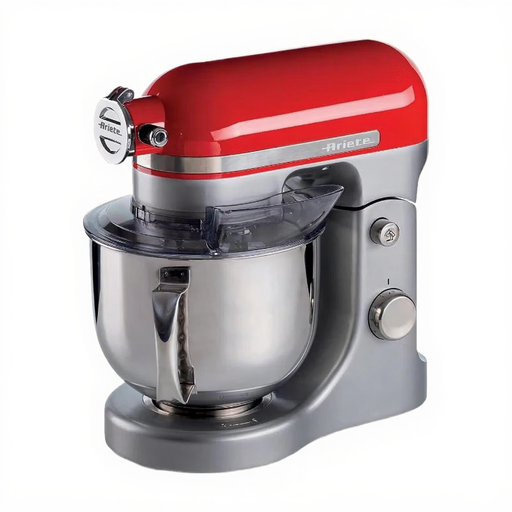
Ariete 1589 Moderna Planetaria, 5.5 l, Red
Could be a good fit if you’re looking for a larger bowl and a dough hook; check your planned dough quantity against the model’s specification.
- Bowl: 5.5 l
- Power: 1600 W
- 11 speeds
- 3 attachments for mixing, blending and whisking
- Removable splashguard
View at Joybuy
 No image available
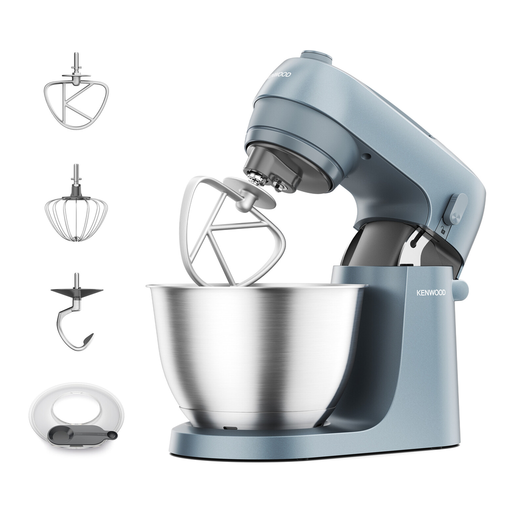
Kenwood Go KZM35000GY Stand Mixer, Blue
A compact option if you want to check the dimensions and weight against your storage space before buying. The maximum quantity stated is for bread dough, not a separate brioche limit.
- Dimensions: 33.5 × 18 × 30 cm
- Weight: 6.3 kg
- Up to 1.5 kg of bread dough
- Dough hook
View at Joybuy
 No image available
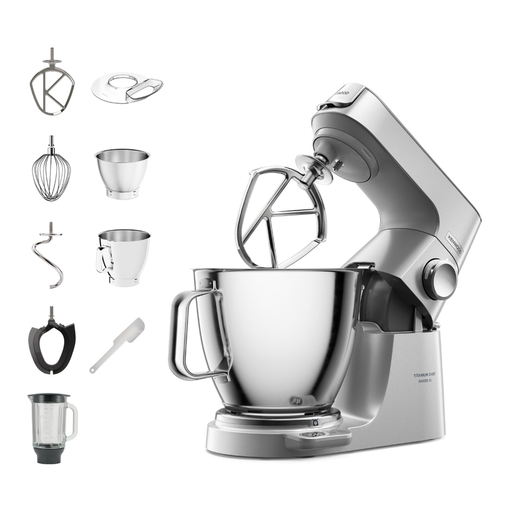
Kenwood Titanium Chef Baker XL KVL85124SI, Silver
May be worth considering if you want to weigh ingredients directly in the bowl and use a dough hook; check your planned recipe quantity against the specification for the exact model.
- Bowls: 7 l and 5 l
- Integrated scale
- Dough hook
View at Joybuy
Frequently asked questions
Is bowl capacity alone enough to tell if it’s suitable for my brioche?
No, the capacity in litres isn’t enough to help you choose. Compare your recipe’s weight and flour quantity with the type and maximum amount of dough listed for the exact model. Kenwood Deutschland lists up to 1.5 kg of bread dough for the Go KZM35.000GY; this isn’t a separate approval for making brioche.
How should I use and clean the machine in a shared kitchen?
Fit the bowl and attachment before starting, following the model’s instructions, and clean each removable part according to its care guidance. Include your hands and shared work surfaces in your cleaning routine, too. If someone has a known food allergy, you’ll need to agree on additional steps to prevent accidental allergen contact; dishwasher-safe parts alone don’t guarantee allergen-free preparation.
What’s the difference between statutory consumer rights and a guarantee in Germany?
Statutory consumer rights give you a claim against the seller if goods are faulty; a guarantee is an additional voluntary promise with its own terms. The Verbraucherzentrale advises consumers not to treat the two as the same. When you buy, check who the seller is and what terms apply to the specific machine.
Is the CE mark an independent test of brioche dough performance?
No, CE marking isn’t an independent performance test for kneading brioche dough. According to the European Commission, the manufacturer uses it to declare that the product meets the relevant EU requirements; it doesn’t assess whether the appliance is suitable for a particular recipe.


