Who would benefit from extra freezer space?

Batch-prepping households

You prepare larger quantities of broccoli together and need to fit the fresh batch alongside your other frozen food. The Federal Centre for Nutrition and the consumer advice centre both highlight portioning and choosing a freezer with enough space as important considerations.

Portion planners

You divide your stock into labelled portions for cooking, so everyone can find and take out the right amount. The Federal Centre for Nutrition recommends measuring out the amount you’ll need later and freezing it in portions.

Households short on space

You need extra freezer space but have to weigh up the appliance’s dimensions, accessibility and energy consumption against the space available. The consumer advice centre points out that an appliance that’s too large for your needs can use energy unnecessarily.

What should you look for when buying?

What matters What to look for Who is this important for?
Freezing capacity for the day’s batch Compare the weight of your planned batch with the freezing capacity in kg/24 h; check whether the compartment can freeze fresh food. If you’re freezing a larger batch of broccoli that’s been blanched together, the stated freezing capacity needs to be sufficient. Around 29% of consumers prioritise batch capacity.
Finding portions again Check for drawers or baskets, and make sure there’s enough room for the freezer containers you usually use. If you want to store labelled portions neatly for several people and take out specific ones easily, look for a layout that suits your needs. Around 29% of consumers prioritise being able to find individual portions.
Energy consumption and amount of food stored Compare the annual consumption in kWh and usable volume shown for the specific model. If you want to choose an appliance that runs continuously and suits the amount you store, factor annual consumption into your decision. Around 21% of consumers put energy consumption first.
Space and access Check the external dimensions, how the door or lid opens, and whether you can reach the compartments you need at the intended location. If space is limited, the appliance and the room needed to open it must work for everyone’s day-to-day needs. Around 21% of consumers prioritise space and access.

Avoiding buying and usage pitfalls

  • Confusing capacity in litres with freezing capacity

    Usable volume tells you how much food will fit inside; it doesn’t tell you how much fresh broccoli the appliance can freeze in a day.

    Compare the weight of your planned daily batch with the specific model’s freezing capacity in kg/24 h. Also check that the volume is sufficient for your entire stock.

  • Buying an oversized appliance just in case, for the occasional portion

    The consumer advice centre points out that an appliance that’s much larger than you need can use energy unnecessarily. However, a smaller appliance isn’t automatically more energy-efficient.

    Estimate how much food you actually store and plan to store, then compare the annual consumption of specific models.

  • Sharing a chest freezer without a portioning system

    The Federal Centre for Nutrition recommends measuring out the amounts you need and freezing them in portions. Larger frozen quantities can be harder to divide later.

    Divide the broccoli into suitable portions while preparing it, then pack and label them. Before buying, check that the baskets or compartments suit your storage system.

  • Assuming NoFrost and frost-reducing technology are the same

    Bosch describes the GSN36AIEP as a NoFrost appliance. Liebherr says that SmartFrost on the CFc 1875 Plus reduces frost build-up, but doesn’t eliminate the need to defrost completely.

    Check the defrosting technology of the exact model rather than assuming a frost-related product name means it’s maintenance-free.

Brands and model examples to help you choose

Bosch

An example of a freestanding upright freezer with drawers: GSN36AIEP.

  • Bosch lists 242 l of freezer capacity, a freezing capacity of 18,0 kg/24 h, NoFrost and 234 kWh/year for this model.
  • The stated external dimensions require 60 cm of width and 65 cm of depth. These specifications apply to this model and can’t be generalised to other Bosch appliances.

Bauknecht

An example of a chest freezer with baskets: GTE 822.

  • Bauknecht lists a capacity of 219 l, two baskets, a freezing capacity of 16,0 kg/24 h and 132 kWh/year for the GTE 822.
  • At 118 cm wide, this model needs a suitable spot. These specifications apply to this chest freezer, not to the brand as a whole.

AEG

An example of a larger chest freezer with baskets: AHB531D1LW.

  • AEG lists a capacity of 308 l, three baskets, a freezing capacity of 15 kg/24 h, 188 kWh/year and a width of 112 cm for this model.
  • A larger volume doesn’t automatically mean a higher stated freezing capacity. These figures come from the manufacturer, not an independent practical test.

Liebherr

Another chest freezer option for medium-sized stocks is the CFc 1875 Plus.

  • Liebherr lists a capacity of 192 l and external dimensions of 82 × 104 × 71 cm for this model.
  • According to Liebherr, SmartFrost reduces frost build-up but doesn’t eliminate the need to defrost completely. This doesn’t necessarily apply to other models.

Beko

The German range includes both chest freezers and freestanding upright freezers.

  • The manufacturer’s product listings include, for example, the static CF200CWN chest freezer and upright models with NoFrost.
  • Check the capacity, annual consumption and freezing capacity of each individual model.

Joybuy products

The products below include upright and chest freezers for storing portions separately or keeping larger stocks. Compare the specific model’s freezing capacity with the batch you plan to freeze in a day.
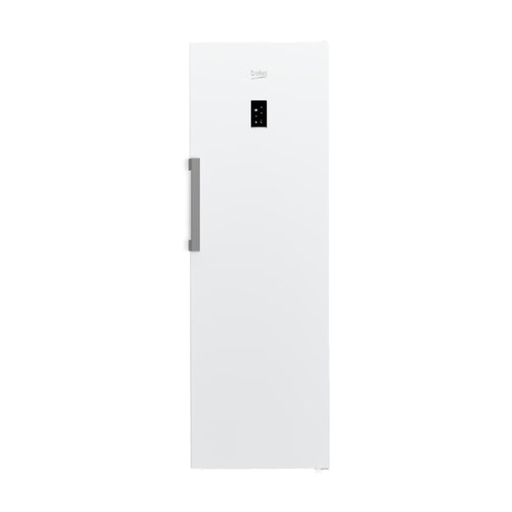
Beko B7RFNE316W upright freezer, 286 l, No Frost, energy class C

Beko B7RFNE316W, 286 l, No Frost, energy class C

This freestanding upright freezer is an option if you want to store portions separately inside the appliance.

This model is listed with a net capacity of 286 l, No Frost and energy class C. The product title also mentions a Fast-Freeze function.

Joybuy
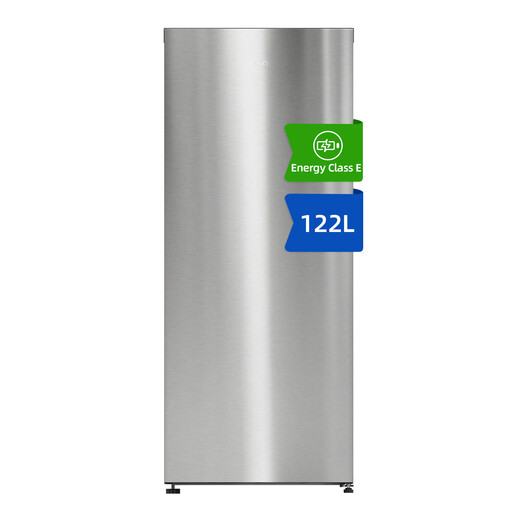
CHiQ JR122WSD upright freezer, 122 l, four-star, energy class E

CHiQ JR122WSD, 122 l, four-star, energy class E

The more compact capacity may suit you if you only need room for a limited amount of extra food.

The product title lists a capacity of 122 l, a four-star freezer compartment, No-Frost, a switchable cooling mode and energy class E.

Joybuy
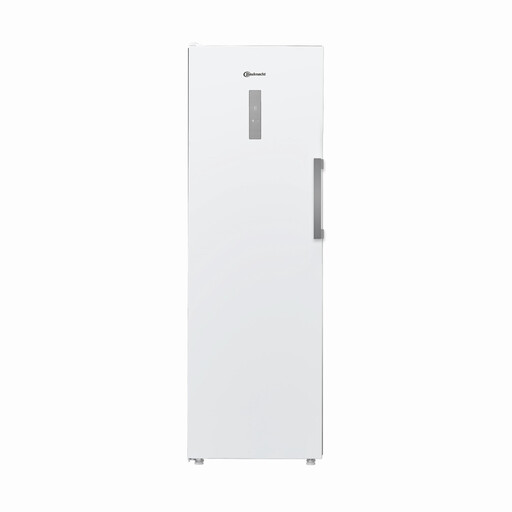
Bauknecht GKN NoFrost 18660DW upright freezer, 286 l, energy class D

Bauknecht GKN NoFrost 18660DW, 286 l, energy class D

This freestanding upright freezer is an option if you want to organise individual portions inside the appliance.

The product title lists a net capacity of 286 l and a height of 186,5 cm; its energy class is D.

Joybuy
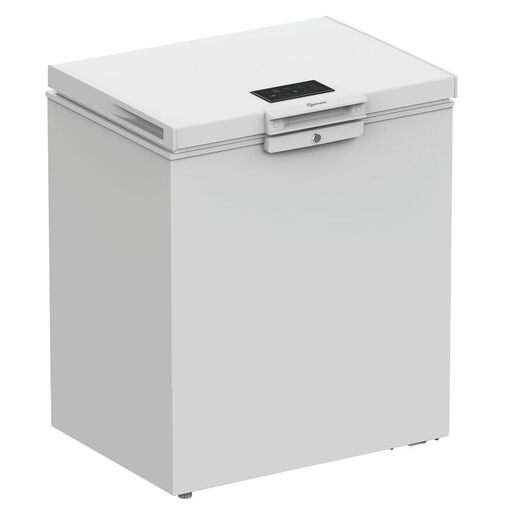
Bauknecht GTE 150MD chest freezer, 142 l, Multi Zone

Bauknecht GTE 150MD, 142 l, Multi Zone

This chest freezer may suit a smaller stock of food if you can easily access it from above where you plan to place it.

The product title lists a capacity of 142 l, Multi Zone and WinterProof down to −15 °C. A basket is included to help organise the contents.

Joybuy
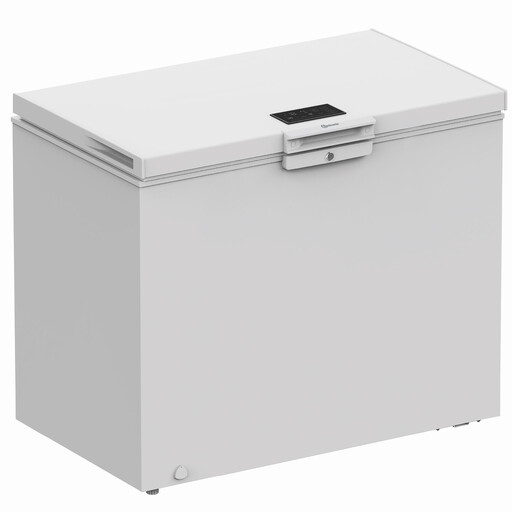
Bauknecht BGTE 250MC chest freezer, 198 l, Multi Zone

Bauknecht BGTE 250MC, 198 l, Multi Zone

This chest freezer is an option if you want to keep a shared stock organised and accessible from above.

The product title lists a capacity of 198 l, Multi Zone and WinterProof down to −15 °C. Check that its dimensions and opening clearance suit the space you have in mind.

Joybuy

Frequently asked questions

How should we prepare broccoli to freeze for everyone to share?

Wash, trim and cut the broccoli into florets. The Federal Centre for Nutrition recommends briefly blanching vegetables and then cooling them in iced water. Pack the required amounts separately, removing as much air as possible, and label each portion with its contents, quantity and date.

How should we store and use the portions?

Try not to put newly added, unfrozen food directly on top of food that’s already frozen. The Federal Centre for Nutrition recommends cooking vegetables from frozen where possible. As a general rule of thumb for fruit and vegetables, it advises using them by the next harvest season; this isn’t a guaranteed storage life for broccoli.

Which running costs can I compare before buying?

For appliances with a suitable capacity, compare the annual consumption in kWh shown on the EU energy label. The European Commission explains that label figures are calculated under standardised conditions; energy consumption at home also depends on how and where the appliance is used. To estimate the cost in euros, you’ll need your own electricity tariff.

Do old freezers need to be disposed of separately in Germany?

Yes. Germany’s Electrical and Electronic Equipment Act governs the separate collection and take-back of waste electrical and electronic equipment; an old freezer must not go in household rubbish. The return options available when you buy a new appliance depend, among other things, on the retailer and the circumstances of the purchase.

Is there an EU energy label for household freezers?

Yes, for household refrigerators and freezers covered by EU energy-labelling rules. The European Commission says the label includes information such as the efficiency class, annual electricity consumption, capacity and noise levels. It applies to the products and suppliers covered by the rules, and buyers don’t need to apply for one themselves.