
Lieferung heute & morgen

Qualitätsgarantie

Willkommens-Angebote freischalten: KOSTENLOSE Lieferung | Bis zu 80 % RABATT | Kostenlose 30-Tage-JoyPlus-Testphase
App herunterladen
Choosing the right broom might seem like a simple task. Yet, with countless materials, shapes, and advertising claims, the purchase can quickly become a challenge. An unsuitable model not only leads to frustration during cleaning but is also a waste of money. Many products don't deliver on their promises and end up unused in a corner after a short time.
As a Joybuy Product Recommendation Officer, my job is to cut through the market noise and provide you with objective, practical advice. This guide will show you the most common pitfalls when buying a broom and which crucial features you should look for to make an informed decision for your household.
Before we look at the solutions, it's important to understand the typical problems that lead to a bad buy. Many manufacturers rely on marketing buzzwords that often disappoint in practice.
To avoid these pitfalls, you should check three core parameters before buying. These determine whether a broom is suitable for your specific needs.
The heart of any broom is its bristles. The material and structure determine the sweeping performance on different surfaces.
A good handle ensures a comfortable working posture and efficient power transfer.
For specific tasks, there are specialised tools that outperform a universal broom.
Instead of making a one-size-fits-all recommendation, we have identified products that are particularly well-suited for specific user profiles and their requirements.
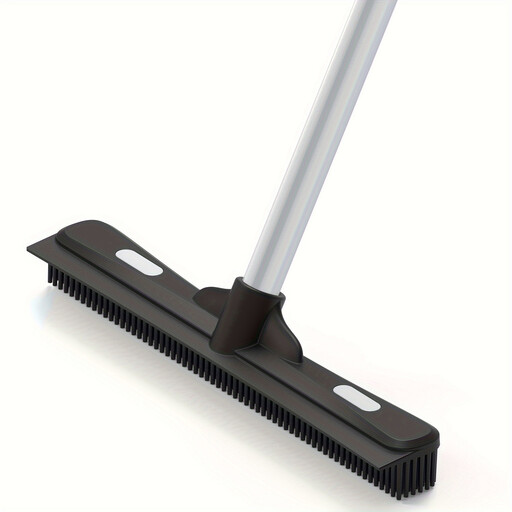
Why This Fits Their Persona: Ideal for households with dogs or cats. The rubber bristles electrostatically attract pet hair and reliably remove it from carpets, tiles, and wood floors where conventional bristles often fail.
This model avoids the pitfall of ineffective bristles by relying on the specialised material rubber, which is proven to be better for picking up hair than standard plastic.
2-in-1 function: Rubber bristles for sweeping and an integrated squeegee edge for removing liquids. The adjustable handle (84-159 cm) allows for an ergonomic working height.
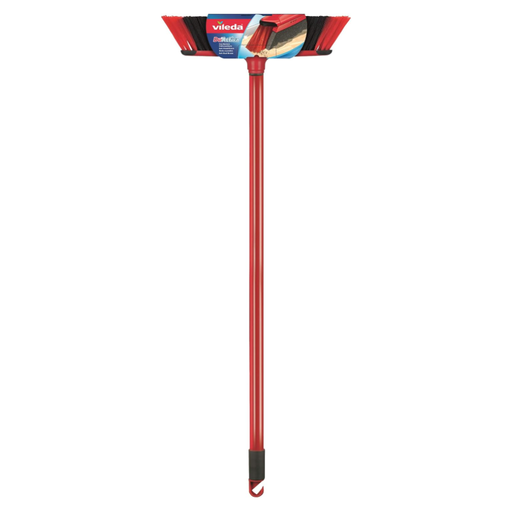
Why This Fits Their Persona: Designed for dust-free cleaning of smooth floors like parquet, laminate, and tiles. The foam blade picks up the finest dust without kicking it up—an important feature for allergy and asthma sufferers.
This product avoids the "all-in-one" myth by being clearly specialised for one task: the thorough, low-dust cleaning of hard floors. It doesn't try to work on carpet.
The dual-action technology combines firm bristles for coarse dirt and a foam edge for fine dust. Rubber bumpers on the sides protect furniture and skirting boards from scratches.
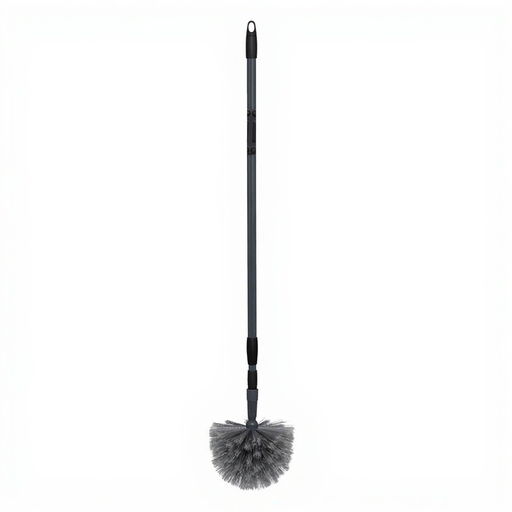
Why This Fits Their Persona: Perfect for older buildings or houses with high ceilings. This special broom is designed to remove cobwebs and dust from corners, ceiling fans, or behind radiators.
It avoids the pitfall of an unstable telescopic handle because the handle is designed for a low-force task (dusting at height), not for vigorously scrubbing floors.
The telescopic handle extends from 106 cm to 170 cm, providing a long reach. The dome-shaped brush head gets into corners and angles with ease.
We have compiled a complete, up-to-date list of products that fully meet these strict selection criteria and all relevant safety regulations.
Cleaning a rubber broom is straightforward. Simply rinse the rubber bristles under lukewarm water after use to remove hair and dirt. For heavier soiling, you can use a mild soap solution. Let the broom air dry before storing it to ensure the longevity of the material.
A good telescopic handle should have no wobble or play when locked in place. Test the mechanism: it should tighten with reasonable force and not collapse on itself, even when you apply pressure to the broom head. Models with a solid screw thread or a robust click-lock system are often more reliable than simple clamp mechanisms.
Yes, a rubber broom is very well-suited for most sealed wood floors, laminate, and parquet. The soft rubber fins are gentle on the surface and won't scratch it. At the same time, they are extremely effective at picking up hair and fine dust that often remains visible on smooth floors. However, caution is advised with unsealed or oiled wood floors; you should test it in an inconspicuous area first.