
Lieferung heute & morgen

Qualitätsgarantie

Willkommens-Angebote freischalten: KOSTENLOSE Lieferung | Bis zu 80 % RABATT | Kostenlose 30-Tage-JoyPlus-Testphase
App herunterladen
A brown chair can bring warmth and elegance to any room, whether it's the dining room, home office, or kitchen counter. But the selection is vast, and not every model that looks good at first glance delivers on its promises in daily use. Many buyers discover just a few months in that the stability is failing, the material is showing cracks, or the advertised features are impractical. As your Joybuy Product Recommendation Officer, I'll help you identify these pitfalls and make an informed decision.
Before you invest, you should be aware of the typical flaws that often only become apparent after the purchase.
To avoid a bad purchase, focus on objective and verifiable features. These three parameters are crucial for durability and functionality.
The foundation of any good chair is its frame. Pay close attention to the material specifications and construction.
For a faux leather dining chair or an office chair, the quality of the upholstery is critical for longevity and ease of care. High-quality PU faux leather is abrasion-resistant, feels soft, and is easy to clean with a damp cloth. Look for high density and well-finished seams. Thick padding with high-density foam also prevents the seat from quickly becoming flattened.
Features like a 360° swivel or height adjustment are particularly relevant for a swivel desk chair or a height-adjustable kitchen stool.
Here are some models tailored to specific use cases that meet the quality criteria mentioned.
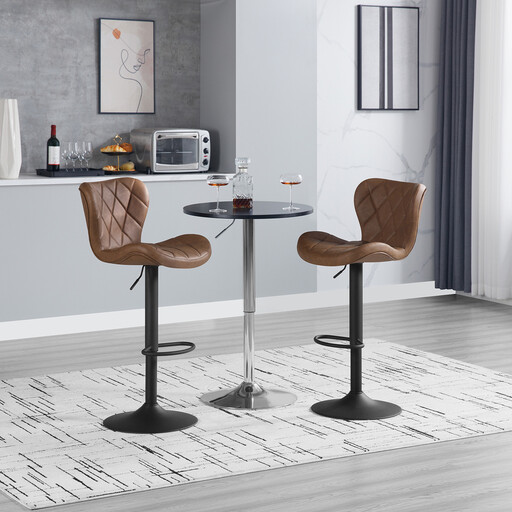
Why This Fits Their Persona: Ideal for kitchen islands and home bars. The seamless height adjustment and 360° swivel function make this bar stool flexible for social gatherings and various counter heights.
The wide pedestal base with a non-slip ring ensures high stability (avoids Trap 1). The faux leather is described as easy to clean, and the high weight capacity of 150 kg indicates a robust construction.
Wide height adjustment range of 61-82 cm; high maximum weight capacity of 150 kg according to the manufacturer's specifications.
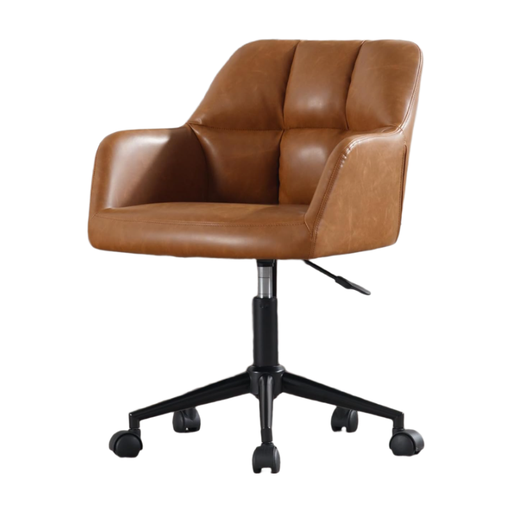
Why This Fits Their Persona: This compact office chair combines functionality with a residential aesthetic. It's ideal for the home office, where space is often limited and the chair needs to blend harmoniously into the living area.
The metal frame with five casters provides the necessary stability and mobility (avoids Trap 1). The clearly defined height adjustment range of 46-56 cm is practical, and the mechanism is designed for daily use (avoids Trap 3).
360° swivel function and casters for maximum freedom of movement at the desk; low-maintenance faux leather upholstery.
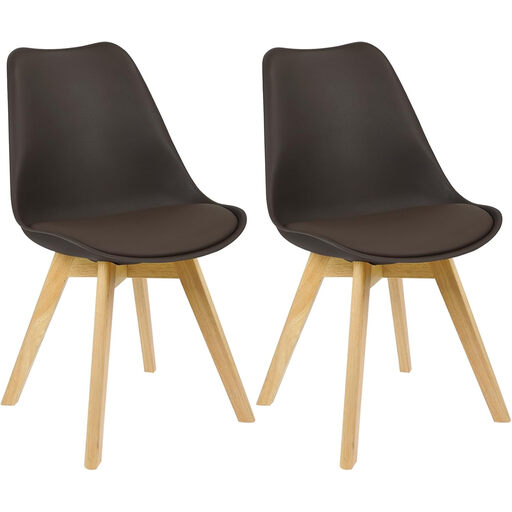
Why This Fits Their Persona: Perfect for those who value a clean, modern design. The combination of solid wood legs and a moulded seat shell fits ideally into minimalist or Scandinavian-inspired dining areas.
The legs made of FSC-certified solid wood with an X-shaped reinforcement ensure high stability (avoids Trap 1). The PU leather seat is easy to clean, which is a plus in the dining area (avoids Trap 2).
High static load capacity of 150 kg according to the manufacturer; pre-installed floor protectors to prevent scratches.
We've compiled a complete, up-to-date list of products that fully meet these strict selection criteria and German safety regulations.
1. How do I properly care for a faux leather chair? Most faux leather covers can be easily cleaned with a soft, slightly damp cloth. Use lukewarm water and, if necessary, a mild soap solution. Afterwards, wipe with a dry cloth. Avoid aggressive cleaning agents, abrasive materials, and direct, intense sunlight, as these can dry out the material and make it brittle.
2. What is the ideal seat height for my desk or kitchen counter? For an ergonomic posture, your feet should be flat on the floor and your knees should form an angle of about 90 degrees. Measure the distance from the floor to the underside of your tabletop or counter. The ideal seat height is about 25-30 cm below this edge. For a height-adjustable chair, make sure this range is covered.
3. What does the maximum weight capacity of a chair mean and why is it important? The maximum weight capacity, given in kilograms, is the weight that a chair can safely support according to the manufacturer without damaging the structure. This measurement is an important indicator of the quality and stability of the construction. A higher capacity (e.g., 120 kg or 150 kg) suggests more robust materials and a more durable design. Adhering to this specification is crucial for safety.