
Lieferung heute & morgen

Qualitätsgarantie

Willkommens-Angebote freischalten: KOSTENLOSE Lieferung | Bis zu 80 % RABATT | Kostenlose 30-Tage-JoyPlus-Testphase
App herunterladen
A toy excavator for children should do more than simply look big and yellow. Age, ease of use, materials, where it will be played with and whether it suits your child’s play style all matter. A small model for the living-room table has different requirements from a sandpit excavator or a remote-controlled construction vehicle.
“Suitable from age 3” doesn’t automatically mean every child can safely use all the features. An RC excavator with several control channels, sounds and lights can quickly become confusing for younger children. On the other hand, a very basic model may not offer enough of a challenge for a child aged 6 or over.
So, look beyond the age recommendation and consider:
Words such as “robust” or “realistic” don’t tell you much on their own. More useful details include ABS plastic, metal parts, dimensions, weight capacity and moving joints. For a ride-on excavator, you should also consider the base, seating position and how stable the construction is.
A toy excavator with a delicate arm may be put under different strain in a sandpit than a model designed for indoor play. Check whether the manufacturer specifically says it can be used indoors and outdoors, and how the product should be cleaned.
A manual toy excavator doesn’t need batteries or charging time. A remote-controlled excavator, on the other hand, may need rechargeable or disposable batteries, charging accessories and the occasional replacement part, depending on the model. If you’re buying a set with several vehicles, also check whether the remote control, battery and charging cable are actually included.
The age rating is a useful guide, but it doesn’t replace checking the safety warnings. Products with small parts may pose a choking risk to younger children. Even a toy excavator for ages 2 and over should be used under supervision, particularly if it has moving arms, buckets or joints.
More detailed models are often suitable for children aged 3 and over. For a toy excavator for ages 6 and over, RC features, multiple movements and realistic construction-site scenarios can be appealing. Always follow the information on the product page and packaging.
For the sandpit, washable plastic models or metal excavators with sturdy joints are practical choices. For a pedal excavator or ride-on vehicle, the maximum weight capacity is particularly important. According to the product details, the Kids Excavator has a metal frame, measures 114 × 41 × 52 cm and supports up to 35 kg. It is designed for children aged 3 to 5.
For small tabletop and construction models, scale and the space they take up matter more. A LEGO excavator or a compact Bruder excavator is better suited to a child’s bedroom than digging in wet soil.
For radio-controlled models, a 2,4-GHz remote control is useful if several children want to play with their vehicles at the same time. Even so, check the range, battery life and charging instructions in the product details.

Why this product suits this play style: This manual toy excavator is listed as suitable for children aged 2 and over. It needs no batteries and can be used indoors or outdoors. At approximately 35 cm long, it is manageable on smaller play areas.
Its simple manual design means no charging or battery costs. The age rating and lack of complicated remote-control features make it an easy model to get started with.
Reinforced plastic, a moving excavator arm and no assembly required, according to the product details.
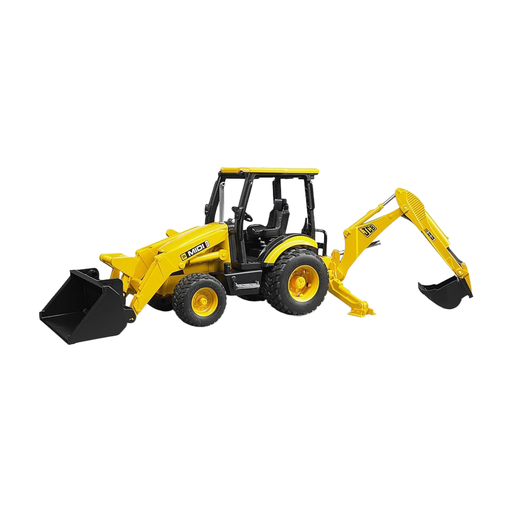
Why this product suits this play style: This 1:16 scale model combines a front loader and rear excavator. It is suitable for children aged 3 and over and, according to the product details, can be used indoors and outdoors.
The features are clearly listed: a moving front bucket, rear excavator, stabilisers and all-terrain tyres. This makes it easier to assess what the model can do before you buy.
Manual operation with no batteries, a length of 41,1 cm and several working attachments and moving features.
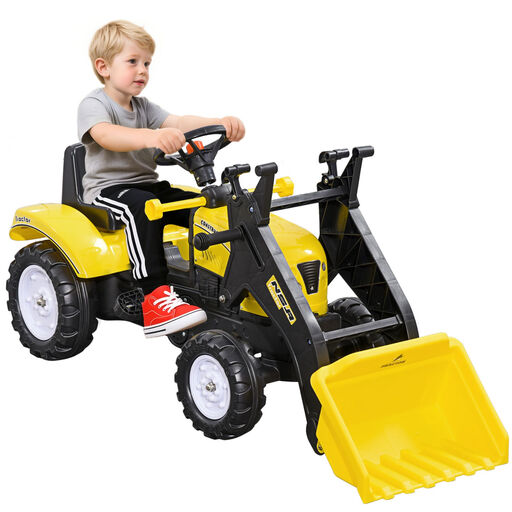
Why this product suits this play style: This ride-on excavator is designed for children aged 3 to 5 and is made for use in the sandpit or garden. Pedal power lets children move forwards and backwards without a rechargeable battery.
The metal frame, enclosed chain and stated weight capacity of up to 35 kg give you clear details about its construction. Adult supervision is still required.
114 × 41 × 52 cm, an adjustable bucket and pedal power with no batteries.
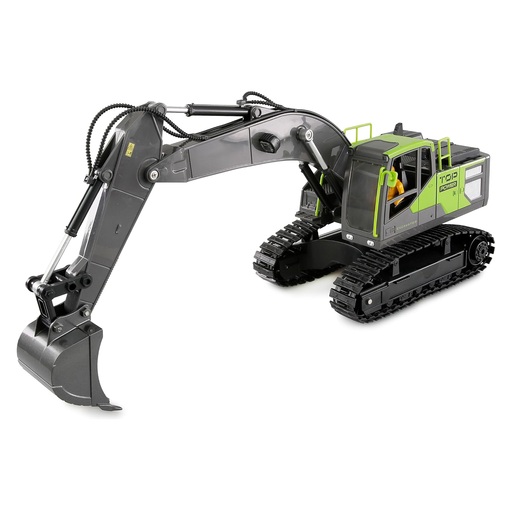
Why this product suits this play style: This remote-controlled excavator is listed as suitable for children aged 6 and over. It offers 13 functions, including driving, turning and moving the metal bucket.
The set lists the remote control, rechargeable battery, USB cable and screwdriver as included. Its 2,4-GHz technology is designed to let several vehicles operate at the same time.
Metal bucket, tracked chassis, rechargeable 3,7-V battery, plus lights and sound effects according to the product description.
We’ve put together a complete, regularly updated list of products that meet these strict selection criteria and the safety regulations in force in the EU.
After playing in the sandpit, remove sand from moving joints and clean plastic parts with a damp cloth. Never immerse electric models in water. Follow the manufacturer’s instructions for rechargeable batteries, and make sure an adult supervises charging.
Check regularly for:
Ride-on and pedal excavators must not be used on the road. For outdoor play, choose a flat, clear area with enough distance from stairs, vehicles and water.
For a toy excavator for ages 2 and over, choose a manual model with few loose small parts, rounded edges and a bucket that moves easily. Check the specific age recommendation and safety warnings from the manufacturer.
Some RC excavators are described as suitable for use on sand, soil or grass. Before buying, check whether the rechargeable battery, electronics and casing are designed for outdoor use. Remove sand and moisture after play.
How long it lasts depends on the materials, how heavily it is used, how well it is cared for and where it is played with. Robust construction toys can last a long time when used properly. Regular checks, dry storage and sticking to the maximum weight capacity all help prevent premature wear.