
Lieferung heute & morgen

Qualitätsgarantie

Willkommens-Angebote freischalten: KOSTENLOSE Lieferung | Bis zu 80 % RABATT | Kostenlose 30-Tage-JoyPlus-Testphase
App herunterladen
Choosing the right brush pen set can be the difference between a frustrating creative project and a successful one. However, the market is filled with tempting offers that often don't deliver on their promises. As your Joybuy Product Recommendation Officer, I'll help you recognise the common pitfalls and make an informed decision based on objective criteria.
Many buyers invest in a large set only to find that the pens are unsuitable for their purposes. Before you spend your money, you should be aware of the three most common problems that occur with low-quality brush pen sets:
To avoid a bad purchase, focus on the technical specifications that are critical for a pen's performance and longevity.
The versatility of a brush pen set largely depends on its tips. The most popular combination is a dual tip:
The ink determines what you can use your pens for.
Instead of being dazzled by a high number of pens, examine the composition of the colours. A well-curated palette with vibrant primary colours, a few pastel shades, and useful greys is often more valuable than a huge collection of redundant tones. Some sets also include a colourless blender pen, which can be used to create smooth colour transitions and highlights. A supplied blank colour chart (swatch card) is also a feature of well-thought-out sets.
Here are some recommendations tailored to different needs and use cases.
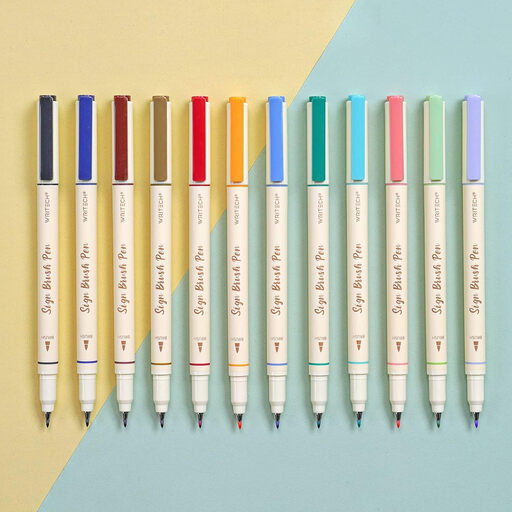
Why This Fits Their Persona: This set is ideal for beginners who want to get into the world of hand lettering or journaling without feeling overwhelmed by a huge colour selection. The curated palette of 12 pastel colours is modern and sufficient for many creative projects.
The felt brush tip, described as wear-resistant, is robust enough for beginners and counteracts the problem of rapid fraying. The manageable number of colours avoids the trap of an overloaded set with redundant tones.
Pressure-sensitive, soft brush tip for learning line width variations; water-soluble ink for easy blending effects.
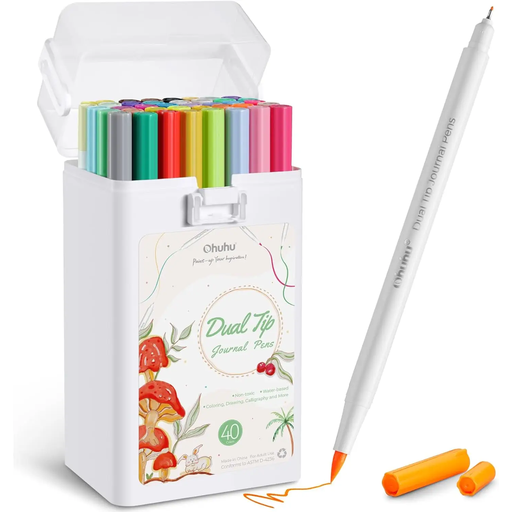
Why This Fits Their Persona: This set is an all-rounder for hobby artists who both draw and letter. The combination of a brush and fineliner tip in each pen offers maximum flexibility for illustrations, calligraphy, and journaling. The 40 colours provide a broad, balanced palette.
The ink is described as quick-drying and non-bleeding on suitable paper, which counteracts the common problem with water-based markers. The ASTM D-4236 certification also indicates tested, non-toxic ingredients.
Dual-tip functionality (0.4 mm fineliner & 1-5 mm brush tip); colour-coded caps and an included colour chart for easy organisation.
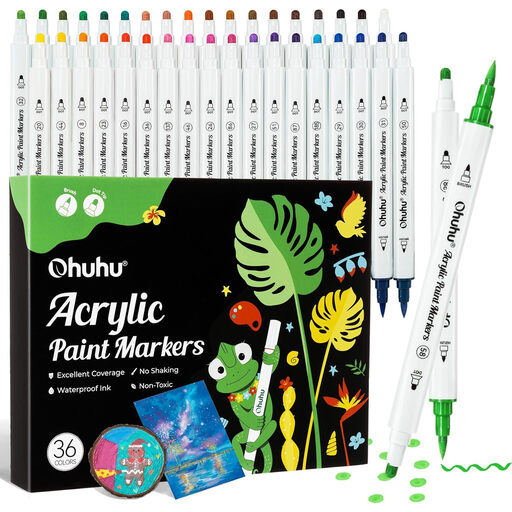
Why This Fits Their Persona: This set is aimed at creatives who work on more than just paper. The acrylic-based ink adheres to surfaces like glass, plastic, metal, stone, and wood. The unique combination of a brush tip and a dot tip opens up new design possibilities.
Because it's opaque acrylic paint, the problem of bleeding through paper is avoided. The high opacity ensures vibrant colours even on dark backgrounds, fulfilling the promise of colour intensity where other sets fail.
Acrylic-based ink for high opacity on various surfaces; versatile dual tip with brush and dot tips (1-5 mm & 1-6 mm).
We have compiled a complete, up-to-date list of products that fully meet these strict selection criteria and German safety regulations.
1. What paper is best for brush pen sets to avoid bleed-through? For pens with water-based ink, like most watercolour markers, paper with a weight of at least 120 gsm is recommended. Smooth marker paper, mixed-media paper, or special watercolour paper not only prevents bleeding but also protects the delicate brush tips and prevents fraying.
2. How do I store brush pens correctly so they don't dry out? Most manufacturers recommend horizontal storage. This ensures that the ink flows evenly to both tips (for dual-tip pens) and that neither tip dries out prematurely. Make sure to always close the caps tightly with an audible click after each use.
3. Can you practice hand lettering with all brush pens? In principle, yes, but pens with a flexible, pressure-sensitive brush tip are optimised for this technique. They allow for the characteristic switch between thin upstrokes and thick downstrokes essential for calligraphy. Sets explicitly labelled as calligraphy pens or pens for hand lettering typically include tips that offer good spring-back and control.