
Lieferung heute & morgen

Qualitätsgarantie

Willkommens-Angebote freischalten: KOSTENLOSE Lieferung | Bis zu 80 % RABATT | Kostenlose 30-Tage-JoyPlus-Testphase
App herunterladen
As a Joybuy Product Recommendation Officer, I see creatives navigating a daunting selection of art supplies every day. A good Brush Pen Set can elevate projects like hand lettering, journaling, or illustrations. However, the market is flooded with products whose marketing promises often don't hold up in practice. Many buyers invest in sets that become unusable after a short time or fail to deliver the desired results.
This guide reveals the three most common pitfalls when buying brush pens and explains which technical features to look for to make an informed decision.
Before you invest in a new set, you should be aware of the typical problems that occur with low-quality pens, which often only become apparent after purchase.
To avoid these pitfalls, focus on objective and verifiable product features. These three characteristics are crucial for the quality and versatility of a Brush Pen Set.
A high-quality set of art pens for artists often offers more than just a single brush tip. So-called Dual Tip Markers are an extremely practical solution. They combine two tips in one pen:
A set that combines both a fineliner and a brush pen in one housing offers maximum flexibility for a wide range of creative applications.
The type of ink is a key factor in how the pens perform. For most hobbyists and for techniques like hand lettering or bullet journaling, water-based ink is the most functional choice. Look for the following properties:
A large set is only useful if the colours are easy to identify and reproduce. Look for sets that include numbered pens and an included DIY colour chart (swatch card). This allows you to document the actual colours and select them precisely for your projects. Additional accessories like replacement tips or a sturdy storage case are indicators of a well-designed and long-lasting product.
Here are some recommendations based on the objective criteria above, suitable for a variety of creative needs.
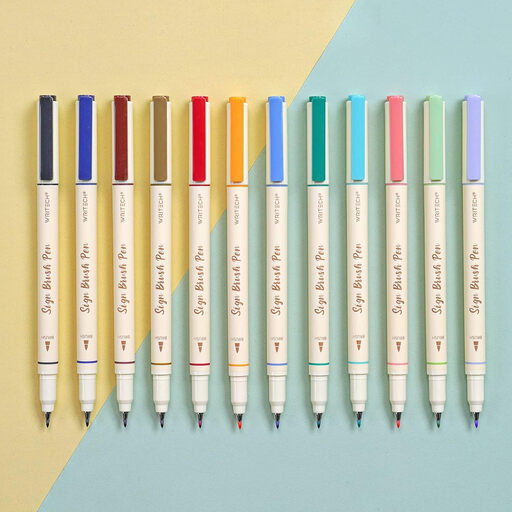
Why This Fits Their Persona: This set of 12 pastel colours is ideal for getting started with hand lettering or designing bullet journals. The manageable colour selection isn't overwhelming and covers the basic needs for decorative lettering and sketches.
The pressure-sensitive, flexible felt brush tip is specifically designed for variable line weights, thus avoiding the trap of unsuitable, stiff tips. The water-based ink allows for initial experiments with blending.
A compact set with a focused pastel colour palette. According to the manufacturer, the pens are designed for beginners in brush lettering.
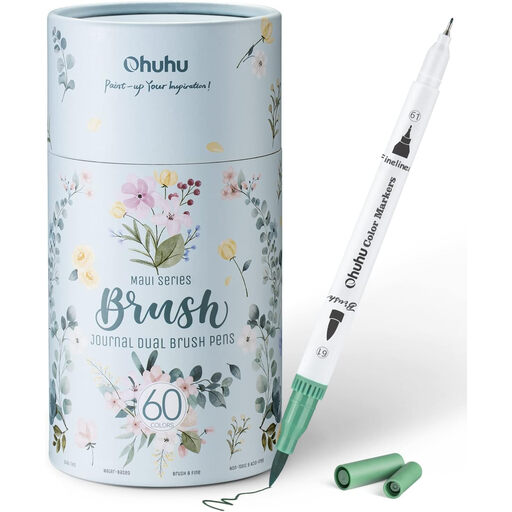
Why This Fits Their Persona: With 60 colours, this set offers enormous versatility for a wide range of projects, from complex illustrations to colourful hand lettering. It's an excellent choice for creatives looking to expand their possibilities.
The dual-tip function (0.4 mm fineliner and 1-6 mm brush) provides the right tip for every task. The numbered pens and the DIY colour chart prevent the problem of inconsistent colours. The water-based ink is designed for watercolour effects.
A wide variety of colours and thoughtful accessories, including 5 replacement tips (3 brush, 2 fineliner), which extends the life of the set.
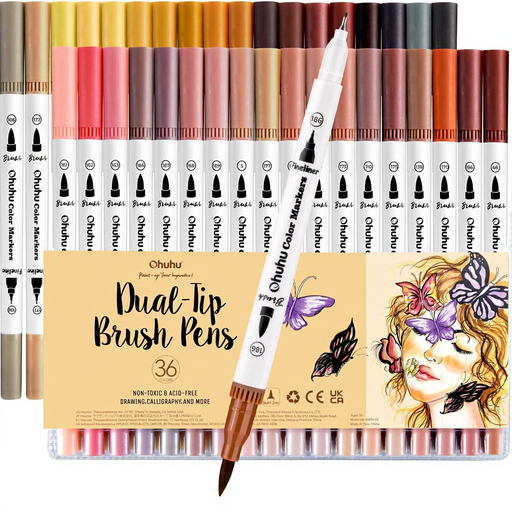
Why This Fits Their Persona: This set is specifically designed for artists who focus on portraits and figure drawing. The 36 carefully selected skin tones allow for realistic and nuanced depictions of skin and hair.
It solves the problem of colour mixing for skin tones, which often leads to unnatural results with standard sets. The dual tips (0.4 mm fineliner and 1-2 mm brush) allow for both fine details and soft shading.
A highly specialised colour palette with 36 skin tones. According to the manufacturer, the water-based ink is non-toxic and washable.
We have compiled a complete, real-time list of products that fully satisfy these strict selection criteria and UK safety regulations.
1. How do I store brush pens correctly to prevent them from drying out? To ensure a long lifespan, brush pens—especially dual-tip models—should always be stored horizontally. This ensures that the ink flows evenly to both tips. Most importantly, however, is to seal the caps tightly immediately after each use until you hear them click shut.
2. What paper is suitable for brush pens with water-based ink? To minimise bleed-through and feathering, the choice of paper is crucial. Use smooth, coated paper or special marker paper. For watercolour effects, heavier mixed-media or watercolour paper with a weight of at least 180 g/m? is suitable. On standard copy paper, the ink will likely bleed through.
3. Can you learn calligraphy with a fineliner and brush pen? Yes, the flexible brush tip of a dual-tip marker is particularly ideal for getting started with modern calligraphy and hand lettering. By varying the pressure on the tip, you can create the characteristic transition between thick downstrokes and thin upstrokes. The fineliner is excellent for subsequently adding decorative details or shadows to your lettering.