
Lieferung heute & morgen

Qualitätsgarantie

Willkommens-Angebote freischalten: KOSTENLOSE Lieferung | Bis zu 80 % RABATT | Kostenlose 30-Tage-JoyPlus-Testphase
App herunterladen
The choice of writing and drawing tools is crucial for any creative project. Brush pens represent a specific category distinguished by a flexible, brush-like tip. This design allows for variable stroke widths, controlled by the amount of pressure applied. The following analysis of the technical features and applications of brush pens will provide a basis for making an informed decision.
The functionality of a brush pen is determined by the interplay of its tip, ink, and body. The following parameters should be considered during selection.
The tip is the defining feature of a brush pen. The primary distinctions are material and flexibility.
The ink's composition affects the colour result, drying time, and blendability.
For most applications in journaling, hand lettering, and illustration on paper, water-based ink is a functional and user-friendly choice.
The number and composition of colours in a pen set should match the intended purpose.
Based on the technical criteria mentioned above, we present two products that cover different user profiles.
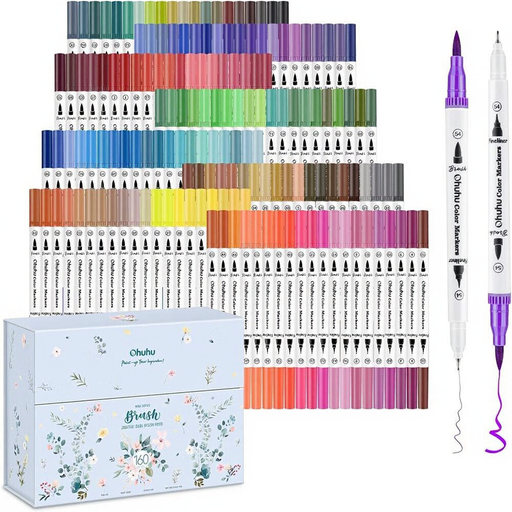
Why we recommend this product This set stands out for its high versatility, resulting from the combination of an extensive colour palette and a dual-tip system. The 160 colours enable detailed and colour-intensive work, while the dual-tip function allows for switching between broad application and fine lines without changing tools.
Pros
Who it's for This set is designed for artists and creative hobbyists looking for a comprehensive pen set for various disciplines like illustration, calligraphy, bullet journaling, or colouring books. The large colour selection and dual tips are particularly advantageous for users tackling complex projects with many details and colour gradations.
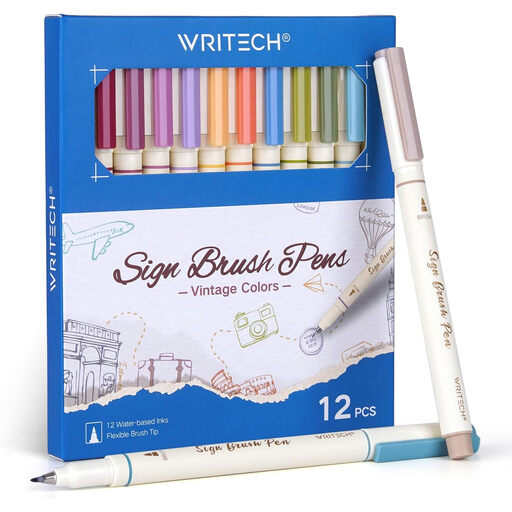
Why we recommend this product This product focuses on a specific aesthetic niche. The curated palette of 12 vintage colours and the pressure-sensitive tip make it a specialised tool for retro-style hand lettering and journaling. According to the manufacturer, the tip's design is tailored to the needs of beginners in brush lettering.
Pros
Who it's for This set is aimed at users who want to achieve a specific vintage look for their hand lettering, journaling, or sketching projects. It is also a great choice for beginners who want to learn the basics of calligraphy pens with a manageable and stylistically focused set.
The products presented cover the use cases of a broad colour spectrum and a specialised vintage palette. If these sets do not exactly meet your requirements for colour scheme, tip type, or quantity, you can find an expanded selection of writing and drawing tools in our Felt-Tip Pens category.
1. What is the difference between brush pens and regular felt-tip pens? The main difference is the tip. A regular felt-tip pen has a firm, usually round or chisel-shaped tip that produces a constant line width. A brush pen has a flexible, brush-like tip that responds to pressure. This allows the stroke width to be dynamically varied from very thin to very broad, much like a real brush.
2. What is the best paper for brush pens? For water-based colouring pens like the ones presented here, smooth, heavy paper is ideal. Paper weights of 120 g/m² or more are recommended. Special marker paper, mixed-media paper, or smooth watercolour paper (hot press) prevents ink from bleeding through and lines from fraying (feathering). Additionally, smooth paper is gentler on the pen's tip.
3. Can you also paint with brush pens? Yes, especially with water-based brush pens. The ink can be applied directly to the paper and then blended with a damp brush or a water brush pen to create soft transitions and watercolour effects. Alternatively, the colour can be applied to a smooth, non-porous surface (like a ceramic tile or a laminating sheet), diluted with water, and then picked up with a brush.
Written by: Joybuy Product Recommendation Officer