
Lieferung heute & morgen

Qualitätsgarantie

Willkommens-Angebote freischalten: KOSTENLOSE Lieferung | Bis zu 80 % RABATT | Kostenlose 30-Tage-JoyPlus-Testphase
App herunterladen
Brush pens for drawing and hand lettering vary considerably in their ink, nibs, paper compatibility and intended uses. A large art marker set isn’t automatically the best choice for fine illustrations, while a small set of artist pens can quickly fall short for larger colour projects.
If you’re buying brush markers, calligraphy pens or sketching pens in the UK, don’t focus on the number of colours alone. The technical features matter, as does whether water-based or alcohol-based ink is better suited to your project.
A high number of colours may look appealing, but it tells you little about how practical the set will be. For hand lettering, you’ll usually need a flexible brush nib that can create fine upstrokes and broad downstrokes with varying pressure. A fineliner, on the other hand, is useful for outlines and small details.
A fineliner and brush pen set can therefore be more versatile than a larger set with just one nib type. Check whether the product description gives specific details, such as a 0.4 mm fineliner or a 1–6 mm brush nib.
On suitable paper, water-based ink can be blended with water. This is useful for watercolour marker effects and colour gradients, but can lead to smudging if you add more colour over the top. Pigmented, waterproof drawing pens behave differently: once dry, they may be suitable for outlines or hatching, but it’s best to test them on an inconspicuous area first.
Terms such as ‘waterproof’, ‘permanent’ or ‘lightfast’ should always be checked against the specific product description. They don’t guarantee the same results on every type of paper or in every application.
Alcohol-based ink dries quickly and is often suitable for layering and blending. However, it can bleed through thin paper and may produce odours. Water-based ink is often easier to use for journalling and school or university notes, but can bleed on unsuitable paper.
For important drawings, we recommend a quick test using:
A flexible brush nib is useful for creating variable line widths. A 0.4 mm fineliner nib is ideal for fine outlines, hatching and lettering. Wider brush nibs are suited to filling areas, sweeping strokes and calligraphy.
Dual-tip art markers combine both functions in one pen. They save space and are handy for bullet journalling, sketching and hand lettering. A single brush nib, on the other hand, may feel more comfortable if you want to focus on pressure and variation in line width.
‘Non-toxic’ shouldn’t be taken to mean that a product is suitable for children in every respect. Check the age guidance, warnings and any safety certifications.
Always cap brush pens securely after use. Many markers are best stored horizontally to help distribute the ink evenly. Replaceable nibs, colour coding and a colour chart can make them easier to use over the long term.
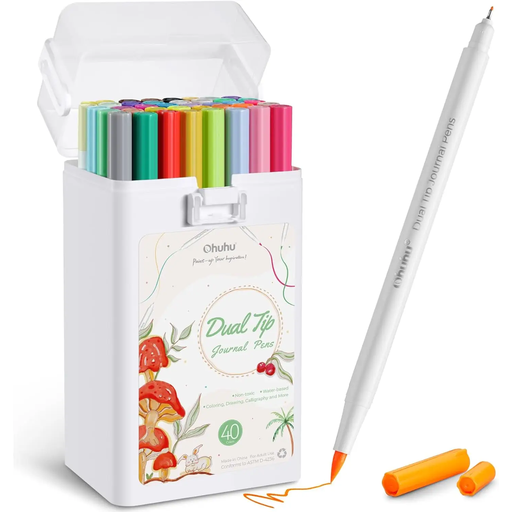
Why this product suits you: This set combines 40 colours with a 0.4 mm fineliner nib and a 1–5 mm brush nib. It covers drawing, journalling and simple calligraphy in one set.
The two nibs reduce the need for extra fineliners. A colour chart helps you choose your shades before using them in your project.
40 numbered colours, water-based ink and dual tips for details and broader strokes.
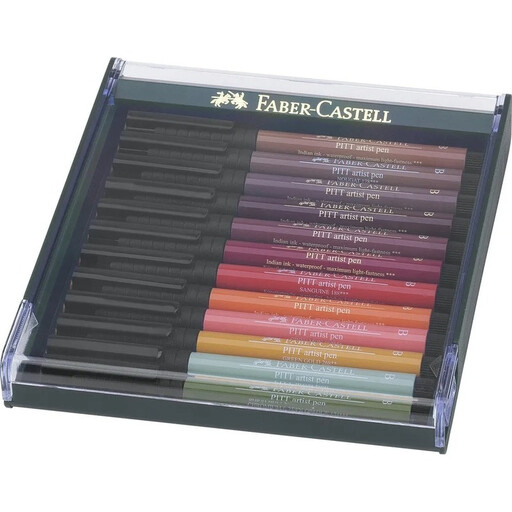
Why this product suits you: The range focuses on earthy, natural shades, making it suitable for illustrations, hand lettering, hatching and portrait sketches.
The product information describes the drawing ink as pigmented, waterproof and permanent. This can make it easier to add finishing touches, as long as you take the paper and drying time into account.
Flexible brush nib, 12 earthy shades and low-odour, acid-free, pH-neutral ink, according to the product information.
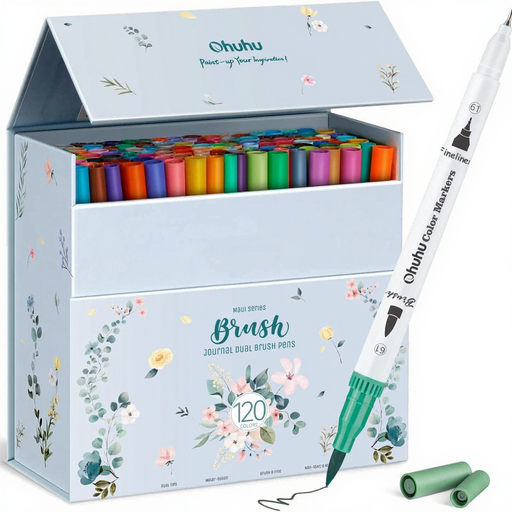
Why this product suits you: The extensive colour palette is aimed at illustrators, manga and portrait artists, as well as anyone who regularly works on large colouring projects.
The pens are numbered and come with a colour chart, storage case and replacement nibs. This makes them easier to organise and maintain.
120 colours, a 0.4 mm fineliner and a 1–6 mm brush nib. Water-based ink can be worked with water on suitable paper.
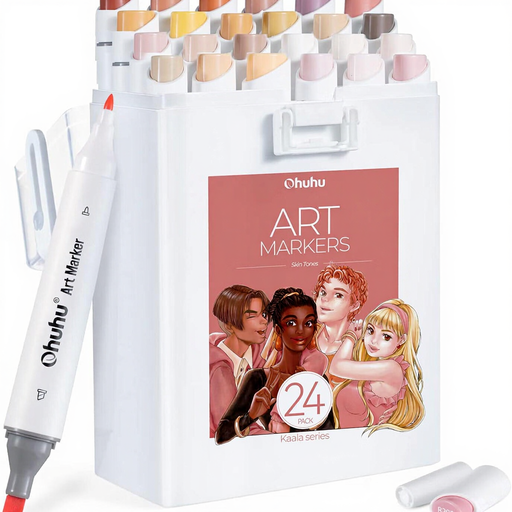
Why this product suits you: This set focuses on skin tones for portraits, fashion illustrations and character drawings. The slim dual tips work well for both larger areas and fine details.
The colour palette is designed for a specific purpose, so you don’t have to choose a general-purpose set with lots of colours you won’t use.
24 skin tones, fine and broad nibs, and alcohol-based ink for layering and blending. Good ventilation and suitable paper are essential.
We’ve put together a complete, regularly updated list of products that meet these strict selection criteria and fully comply with the safety regulations in force in the EU.
A set with brush and fineliner nibs is a practical choice to get started, as you can practise broad strokes, fine outlines and simple lettering with the same pens. A moderate number of colours makes it easier to keep track of them. Start by testing the pens on the paper you use most often.
Their lifespan depends on how you use them, how securely you cap them and how you store them. Replace the caps straight after use, follow the manufacturer’s storage instructions and avoid putting unnecessary pressure on the nibs. If you use your pens frequently, replacement nibs or individual replacement colours can help your set last longer.
No pen is completely bleed-proof on every type of paper. Water-based ink can bleed on thin paper, while alcohol-based ink often shows through more. For clean results, choose marker, watercolour or mixed-media paper with a higher paper weight. A small test before starting your project can help you avoid buying the wrong pens.