
Lieferung heute & morgen

Qualitätsgarantie

Willkommens-Angebote freischalten: KOSTENLOSE Lieferung | Bis zu 80 % RABATT | Kostenlose 30-Tage-JoyPlus-Testphase
App herunterladen
A brush set can make choosing easier, but it is not automatically suitable for every purpose. Artist's brush sets, acrylic brushes, basting brushes and sanding accessories differ considerably in terms of materials, shape and care. If you focus solely on the number of brushes included or on terms such as “precise” and “durable”, you may end up buying something that does not suit your intended use.
A set containing numerous, very similar sizes can be less practical than a small selection of round brushes, flat brushes and, where appropriate, filbert brushes. A narrow tip is needed for fine lines, while broad areas can be covered more evenly with a flat brush.
Synthetic bristles retain their shape and are suitable for many water-based paints. With watercolours, however, water absorption and a controllable tip are more important. For acrylic paints, easy-to-clean synthetic fibres are often a practical choice. An oil paintbrush or a brush used with solvents should be cared for with the appropriate cleaning agent after use.
A nickel-plated ferrule can help reduce corrosion, but it does not replace proper cleaning. Wooden handles should not be left in water for long periods, as the material may swell or warp. The connection between the ferrule and handle should also be secure. Loose bristles or a ferrule that is coming away can make it harder to maintain control, particularly when working on details.
The following shapes are relevant for different tasks:
For an artist's brush set, the size information should be as specific as possible. Details such as “small”, “medium” or “large” are less helpful than the actual number or width.
According to the product details, the synthetic filaments in the ROLLINGDOG sets mentioned are suitable for gouache, watercolour and acrylic paints. The ferrules are made from nickel-plated metal and the handles from wood. This combination provides a clear basis for painting on paper or canvas and for craft projects.
For fine painting brushes, it is also important to consider whether the tip can be reshaped after cleaning. A silicone oil brush for the kitchen is subject to different requirements: food-safe silicone, easy cleaning and a heat-resistant operating range are key. A kitchen brush is not interchangeable with an artist's brush or model-making brush.
Water-based paints should ideally be rinsed out with water immediately after use. Other types of paint require a suitable solvent. The bristles should be gently reshaped, after which the brush should be stored horizontally or with the tip facing upwards. Prolonged soaking, especially of the wooden handle, should be avoided.
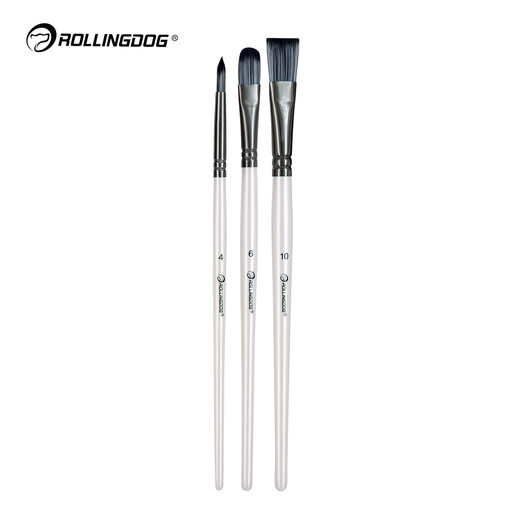
Why this product suits this profile: The set focuses on three basic shapes: a flat brush, a filbert brush and a round brush. This gives beginners a manageable selection for areas of colour, transitions and details.
The three different shapes avoid a set containing many almost identical brushes. The product details specify synthetic filaments and coated wooden handles.
Three clearly defined brush types; according to the product description, suitable for gouache, watercolour and acrylic paints.
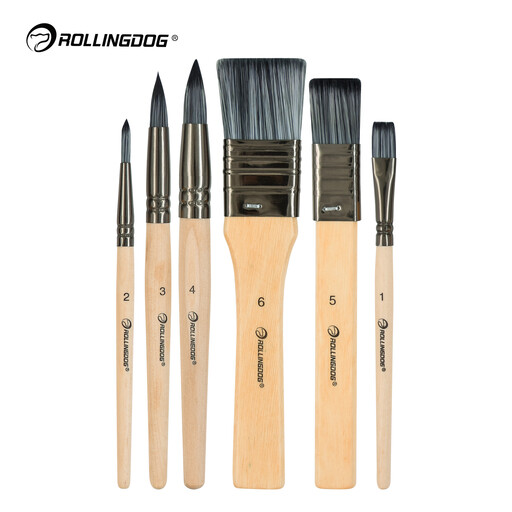
Why this product suits this profile: Six sizes cover a range of detailed and broad painting tasks. Included are three flat brushes measuring 8, 15 and 25 mm, plus three round brushes measuring 4, 8 and 10 mm.
The specified widths make it easier to choose the right brush for the area. The care instructions recommend cleaning immediately and avoiding prolonged soaking.
Six defined sizes; nickel-plated ferrules and wooden handles according to the product details.
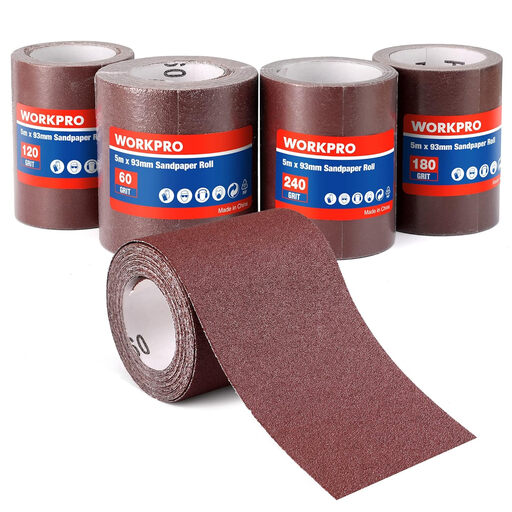
Why this product suits this profile: For DIY enthusiasts, home improvers and model makers who need sanding accessories alongside their brushes, this roll of sandpaper offers different grits for several stages of work.
The 60, 120, 180 and 240 grits are marked on the roll. This makes it easy to distinguish between coarse material removal and finer smoothing.
Four rolls, each 5 m long and 93 mm wide; aluminium oxide grit for wood, metal, paint and other surfaces.
For culinary applications, a barbecue brush should be explicitly suitable for food use and the intended temperature. The Maxcook oil dispenser combines a 280-ml glass bottle with a removable silicone oil brush. According to the product details, the components are made from soda-lime glass, PP and silicone. The brush can be used to apply oil, egg, honey or jam. Before buying, check how easy it is to clean, its heat resistance and whether the bottle can be handled safely.
The Maxcook 3-piece barbecue accessories set contains tongs, an oil brush and scissors. It is aimed at barbecue enthusiasts looking for several utensils in one set. A kitchen brush of this kind should be stored separately from artist's and decorating brushes.
When sanding, remember: coarse grits such as 60 are suitable for removing material, while finer grits such as 180 or 240 are used for smoothing. Wear eye and respiratory protection, and ensure adequate ventilation, particularly when working on painted surfaces.
We have put together a complete, regularly updated list of products that fully meet these strict selection criteria and the safety regulations applicable in the EU.
For acrylic paints, sets with synthetic filaments and several round and flat brushes are a practical option. The key factors are suitable sizes, a sturdy handle and washing the brushes immediately after use. Dried acrylic paint can often be very difficult to remove from the bristles.
The lifespan depends on the paint, cleaning method and storage conditions. Cleaning brushes straight away, rinsing them gently and storing them in a dry place can help preserve the shape of the bristles. Prolonged soaking and drying the brushes with the bristles pointing downwards should be avoided.
For model making, several detail brushes and at least one small round brush are useful. A small flat brush can be added for priming or covering larger areas. Look for specific size information and clean the brushes according to the type of paint used.