
Lieferung heute & morgen

Qualitätsgarantie

Willkommens-Angebote freischalten: KOSTENLOSE Lieferung | Bis zu 80 % RABATT | Kostenlose 30-Tage-JoyPlus-Testphase
App herunterladen
A brush set for acrylic paint should offer more than just a high piece count. What really matters are the right brush types, secure connections between bristles and ferrule, and sizes that suit your particular project. Artists, hobby painters, students, model makers and DIY enthusiasts can easily end up buying a set that looks comprehensive but fails to deliver controlled strokes for detailed work.
A set packed with lots of near-identical brushes may cover fewer techniques than a small artist brush set featuring different shapes. For acrylic paint, round brushes, flat brushes and filbert brushes each serve distinct purposes:
Before buying, it’s worth looking at the actual composition of the set rather than just the number of pieces.
Labels like “professional”, “precise” or “high-quality” mean little without concrete details. Instead, check whether the set includes information on synthetic filaments, ferrule material and handle type. Nickel-plated or aluminium ferrules can be more corrosion-resistant than uncoated metal parts. As for handles, smooth wood or plastic surfaces matter because they affect cleaning and handling.
Acrylic paint is water-based, but once it starts to dry it can be difficult to remove from bristles. Leaving a brush standing in water for a long time can loosen the connection at the handle. Similarly, using solvents without following the manufacturer’s instructions can cause problems. A good detail brush set will only keep its shape if it’s cleaned immediately after use and then dried properly.
For miniatures, model making and fine contours, fine painting brushes with a narrow tip are ideal. For furniture, doors, edges or larger canvas areas, wider flat brushes are more practical. A 3-piece set with flat, filbert and round brushes can cover different techniques, while a 6-piece set with multiple sizes offers more gradation for lines and areas.
Bear in mind that size references aren’t always consistent between brands. For individual products, concrete measurements like 4 mm, 8 mm or 25 mm are more helpful than numbers alone, such as #2 or #6.
Synthetic filaments are commonly used for acrylic paint. They pick up the relatively fluid paint in a controlled way and can be cleaned with water. For brushes for oil and watercolour paints, different requirements apply depending on the paint type. A set described as versatile may be intended for gouache, watercolours and acrylic paint; still, check the product description and the recommended cleaning method.
For model making and small craft projects, shape retention and a clean, tapering tip are more important than a particularly large bristle surface.
The ferrule should be firmly attached to the handle so that there’s no movement between handle and bristles when you guide the brush. Nickel-plated ferrules are described as corrosion-resistant in several sets. A smooth wooden handle can feel comfortable in the hand, while plastic handles are generally more resistant to moisture.
For renovation work, compatibility with a mini paint roller set or a separate painter’s tool set is also worth considering. Brushes handle edges and touch-ups, while a roller can cover larger, smooth surfaces more evenly.
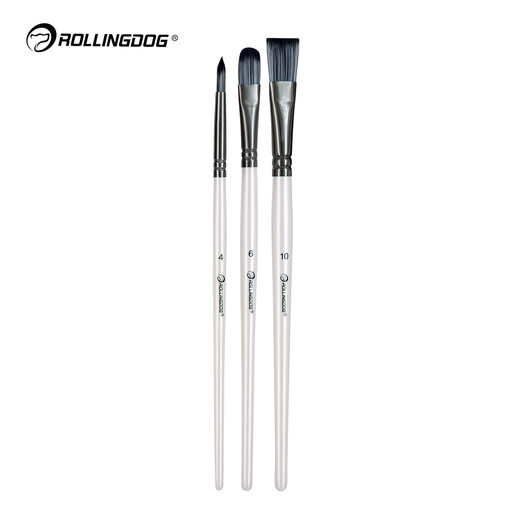
Why this product fits the profile: This compact set includes a flat brush #10, a filbert brush #6 and a round brush #4. Beginners get three different shapes for acrylic paint, gouache or watercolours without having to buy several individual brushes.
The three clearly named brush types prevent you from ending up with a collection of many, barely distinguishable sizes.
Synthetic filaments, nickel-plated ferrule and coated wooden handle.
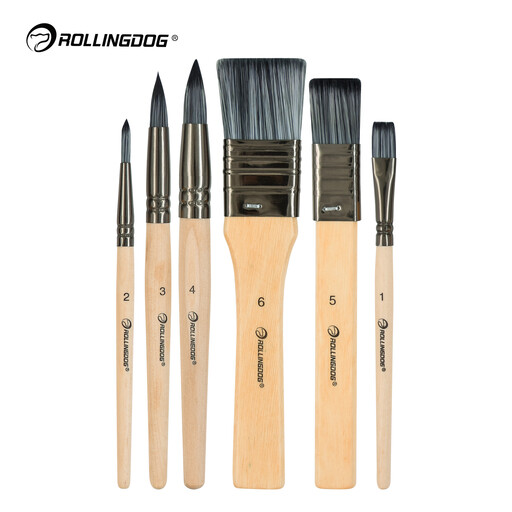
Why this product fits the profile: Six flat and round brushes in various sizes allow for graded lines, areas and mixed techniques on canvas, paper or other suitable surfaces.
The product description lists both brush types and specific widths from 4 mm to 25 mm.
Synthetic filaments, wooden handles and suitable for acrylic, gouache and watercolour paints.
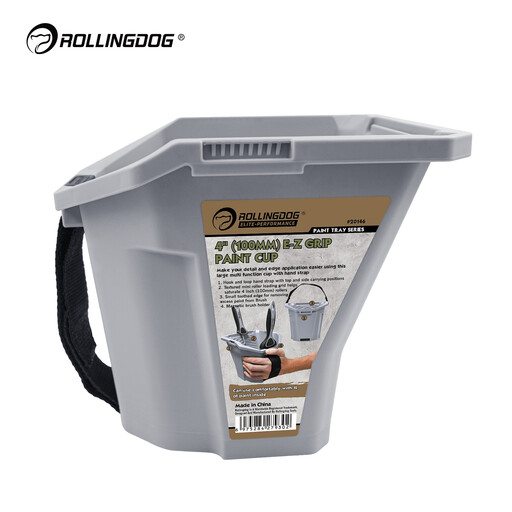
Why this product fits the profile: For doors, furniture, cabinets, wall touch-ups and edge work, this set complements classic acrylic brushes with a 100 mm mini roller and a portable paint tray.
Roller, paint tray and brush holder are combined in one set; compatibility with 100 mm rollers is clearly stated.
Paint tray with up to 1 litre capacity, textured paint pick-up surface and magnetic brush holder.
We’ve put together a full, regularly updated list of products that meet these strict selection criteria and comply with all EU safety regulations.
To extend the life of your acrylic brushes, rinse them immediately after painting. Gently remove any paint residue from the area near the ferrule and reshape the bristles to their original form.
For larger areas, a painter’s tool set or a DIY painting set with a paint tray, frame and roller can be useful. A 4-inch roller with a polyester cover is, according to the product information, suitable for smooth to semi-rough surfaces, as well as walls, ceilings and furniture.
For contours, miniatures and small areas, round brushes with a fine tip are ideal. A set should also include at least one narrow flat brush if you need to work on edges or small priming jobs. For model-making projects, specific bristle measurements and a shape-retaining tip are more important than a high piece count.
The lifespan depends on usage, paint type and cleaning. Frequent drying of acrylic paint on the brush, excessive bending of the bristles and prolonged soaking can all affect the shape and the connection to the ferrule. With immediate cleaning and dry, protected storage, synthetic acrylic brushes generally remain usable for longer.
Some sets are described as suitable for acrylic, gouache and watercolour paints; individual manufacturers also mention oil and watercolour paints. Check this information before buying. When switching between paint types, brushes should be thoroughly cleaned so that no paint residue affects the consistency or colour of the next application.