Class leaders preparing several portions
If you’re cooking Brussels sprouts for several people in one or more batches, compare the usable surface area of each tier. A high total capacity in litres doesn’t tell you how much will fit on one tier.


First, choose a steamer based on how many Brussels sprouts you need to cook per batch and the usable surface area of each tier. The total capacity of a multi-tier appliance won’t all fit on one tier. Separately controlled cooking zones are useful if you want Brussels sprouts and side dishes with different cooking times to be ready together; having several stackable baskets alone doesn’t mean the appliance has this feature. For cooking classes, also consider cleaning, refilling and the permitted use set out in the appliance instructions.
If you’re cooking Brussels sprouts for several people in one or more batches, compare the usable surface area of each tier. A high total capacity in litres doesn’t tell you how much will fit on one tier.
If the Brussels sprouts and side dishes have different cooking times, check whether the zones can be controlled separately. Several stackable baskets don’t automatically mean you can set a separate cooking time for each one.
If the appliance is only set up for the class, consider its footprint, storage and how many parts need cleaning. Allow for the space needed to use the appliance separately from the space needed to store it.
First decide how many Brussels sprouts you want to cook per batch. Then weigh up whether separate cooking-time controls, easy cleaning or a compact footprint matters most.
| What matters when buying | What to check | Who will find this especially important |
|---|---|---|
| Portion size and cooking surface | Compare the planned quantity per batch with the surface area and design of each tier. The REWE recipe uses 800 g for four portions as an example; this isn’t a capacity limit for an appliance. | If I need to cook several portions for a class at once, the usable surface area of each tier matters more to me than the total capacity in litres. Around 36% of consumers put portion size first. |
| Coordinating cooking times | Check whether the cooking zones really can be controlled separately. If there’s a shared timer, plan when to add ingredients at different times, following the appliance instructions. WMF lists two separately controlled zones of 2.15 l each for the KÜCHENminis. | If I want side dishes and Brussels sprouts to be ready to serve at the same time, separate cooking-time controls matter more to me than extra baskets. Around 29% of consumers prioritise coordinating cooking times. |
| Cleaning and refilling | Check the care instructions, dishwasher-safe parts and how to refill the appliance for the specific version. Russell Hobbs lists dishwasher-safe baskets and side water inlets for the 19270-56. | If there’s little time for washing up between classes, I look for easy-to-clean tiers and straightforward refilling. Around 21% of consumers make cleaning and the water supply their main consideration. |
| Worktop and storage space | Check the appliance’s dimensions when in use and the required clearance separately from its dimensions when stored. The Steba DG 2 instructions require at least 10 cm of clearance on all sides; Tefal describes the VC2048’s stackable tiers as convenient for storage. | If worktop space is limited during the class and the appliance needs to be put away afterwards, I plan for both in advance. Around 14% of consumers put worktop and storage space first. |
For the appliances described by Russell Hobbs and Tefal, the total capacity of 9 l is divided between three tiers. This doesn’t tell you how many Brussels sprouts will fit on one tier.
Compare the surface area and design of each tier with the amount you want to prepare per batch.
WMF describes the KÜCHENminis as having two separately controlled zones. Independent cooking-time controls for each basket aren’t specified for the Russell Hobbs and Tefal stackable appliances mentioned here.
If you want ingredients to be ready at the same time, check explicitly whether the specific model lets you set separate cooking times.
The Steba DG 2 instructions rule out commercial use. Whether a cooking class counts as commercial depends on how the appliance is used.
Check the instructions for the appliance you’re considering. If the class is run commercially, confirm that this type of use is permitted.
The features listed apply to the specific product ranges mentioned and aren’t general claims about every appliance from each brand.
The Cook@Home 19270-56 is a countertop steamer with three baskets and, according to Russell Hobbs, a total capacity of 9 l.
The KÜCHENminis steamer is designed with two separately controlled zones.
According to Tefal, the Ultracompact VC2048 has three tiers with a total capacity of 9 l.
The DG 2 is a steamer with two tiers and, according to Steba, a capacity of 3 or 6 l depending on its configuration.
KeMar describes the KFS-3000 as having three stainless steel steaming baskets and a hot pot function.
The following Joybuy models are described as having an electric steam or vegetable steaming function. Check that the tiers offer enough space for the amount you plan to cook for your class; if you’re using the appliance commercially, it’s also essential to check whether this is permitted for the specific model.
 No image available
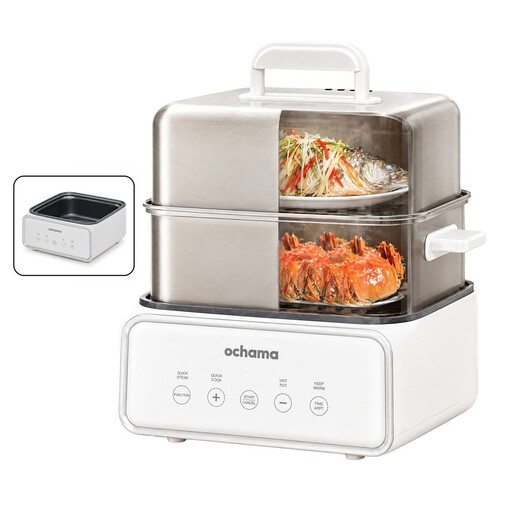
The product description lists vegetables as suitable for steaming and says the two tiers can be used independently or combined by removing the divider.
1500 W; 12 l; removable steaming tray; timer preset and keep-warm function, according to the product description.
 No image available
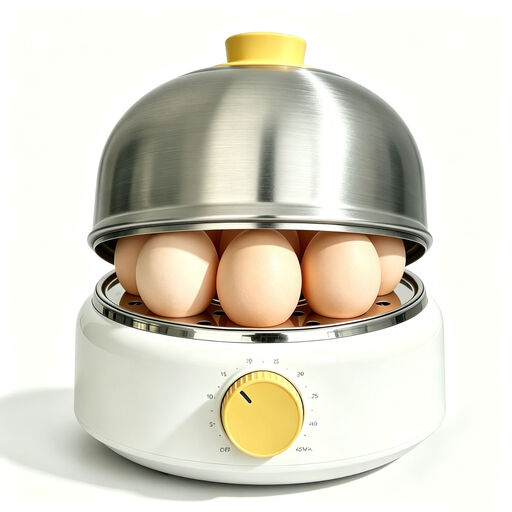
The product description lists an additional steaming function for vegetables. Check whether the tiers are suitable for the amount of Brussels sprouts you plan to cook.
The product description lists a timer and overheating protection; removable parts are described as dishwasher-safe.
 No image available
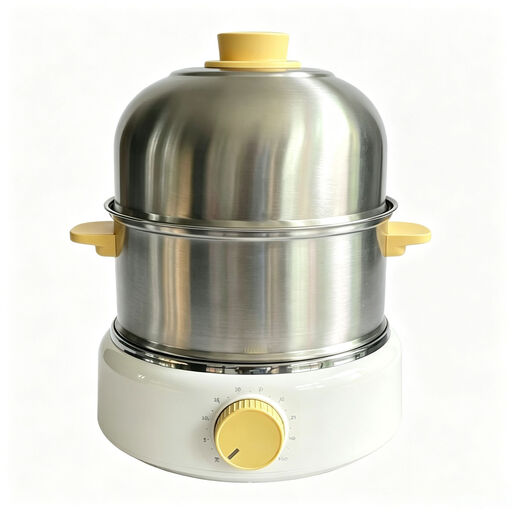
The product description lists a steaming function for vegetables. Before your class, check that the tiers are suitable for the amount of Brussels sprouts you need.
400 W; two tiers; 45-minute timer and overheating protection, according to the product title and description. Removable parts are described as dishwasher-safe.
 No image available
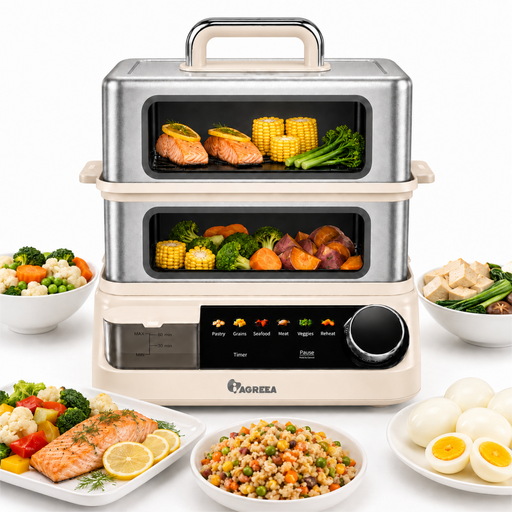
The model has two tiers for vegetables. The seller describes it as for domestic use only, so it isn’t a proven suitable choice for a commercial cooking class.
14 l; 2000 W; two stainless steel tiers, each measuring 300 × 230 mm; external 2.5-l water tank, plus six presets and a timer, according to the product description.
As a recipe example, REWE uses 800 g for four portions. Don’t treat this as a general appliance capacity: divide the planned quantity for your class between the tiers you can actually use, and cook in several batches if necessary.
No. A recipe’s cooking time isn’t guaranteed for every appliance or quantity. REWE’s steamed recipe gives an approximate time of 15 minutes at 100 °C, adjusted to the desired texture. Check whether the Brussels sprouts are cooked to your liking and follow the instructions for the appliance you’re using.
Follow the instructions for the specific appliance version. For the Steba DG 2, these include leaving at least 10 cm of clearance around the appliance, supervising it while in use, and letting it cool down and unplugging it before cleaning. Don’t assume these instructions apply to other models without checking.
According to the Steba instructions, the DG 2 is intended for domestic use and indoors only, not for commercial use. Check whether your planned use counts as commercial and refer to the instructions for the specific appliance.
For new electrical equipment in the relevant 50 to 1,000 V AC range, there are requirements for electrical equipment, including mandatory CE marking. The Bundesnetzagentur lists marking, manufacturer details and German-language instructions among the points to check. Check the details for the specific appliance version; the CE mark isn’t an independent quality mark.
Electrical appliances must not go in household rubbish. The Federal Ministry for the Environment lists local collection points, manufacturers and, subject to certain legal requirements, retailers as return options.