
Lieferung heute & morgen

Qualitätsgarantie

Willkommens-Angebote freischalten: KOSTENLOSE Lieferung | Bis zu 80 % RABATT | Kostenlose 30-Tage-JoyPlus-Testphase
App herunterladen
Solar lights with the characteristic bubble effect are a popular choice for bathing gardens, balconies, and paths in an atmospheric glow—all without needing a power outlet or complex installation. The rising air bubbles inside create a unique play of light. However, the market is crowded, and not every product lives up to its promises. Before you make a purchase, it's crucial to understand the common weaknesses that often only become apparent after a few weeks.
This guide will help you avoid common buying mistakes and identify the right criteria for durable and atmospheric lighting.
Many buyers are left disappointed because products fail to meet the basic requirements for outdoor use. Pay close attention to these three points to avoid a bad investment:
To make an informed decision, you should focus on objective technical specifications rather than marketing promises. The following three parameters are crucial for the performance and longevity of your decorative outdoor lighting.
The IP (Ingress Protection) rating indicates how well an electrical device is protected against the entry of foreign objects and water. For year-round outdoor use, an IP44 rating is the minimum.
Products with a lower IP rating (e.g., IP20) are designed exclusively for indoor use and are unsuitable for the garden.
The colour of the light has a significant impact on the atmosphere. There are two primary options:
Consider the mood you want to create before buying. Warm white light is timeless and subtle, while RGB light provides variety and a playful character.
The mounting method determines where and how you can use your lights. The most common options are:
solar bubble garden stakes, are inserted directly into the ground. They are perfect as solar path lighting or for marking flowerbeds and lawn edges. Look for a robust stake made of sturdy plastic or metal.solar balcony light as they don't take up any floor space and create a floating, lightweight look.Here are three models that are suited for different user profiles based on their technical specifications.
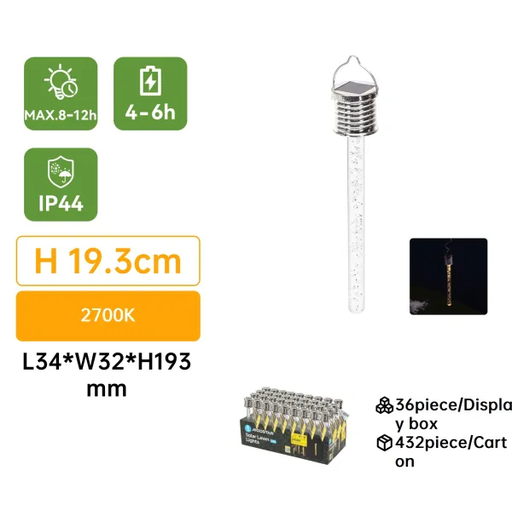
Why This Fits Their Persona: Ideal for users seeking subtle and stylish lighting for their balcony or a small patio. The hanging design saves valuable floor space and can be flexibly attached to railings, hooks, or planters.
The IP44 rating ensures resistance to rain. The manufacturer's stated battery life of 8–12 hours after 4–6 hours of charging addresses the problem of short runtimes.
Lightweight and flexible hanging design (40g); warm white light (2700K) for a cosy atmosphere.
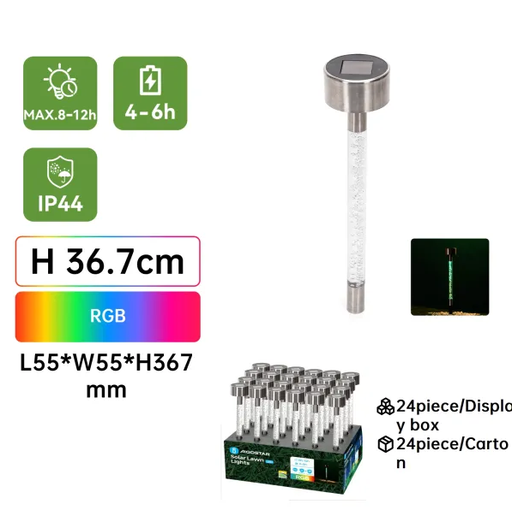
Why This Fits Their Persona: Perfect for garden owners who want to create a vibrant and playful atmosphere. Ideal for highlighting flowerbeds, shrubs, or as decoration for garden parties.
The ground stake construction ensures stable anchoring in the soil, preventing instability. The IP44 certification reliably protects the electronics from the elements.
Automatic RGB colour-changing for varied lighting effects; simple installation as a `solar bubble garden stake`.
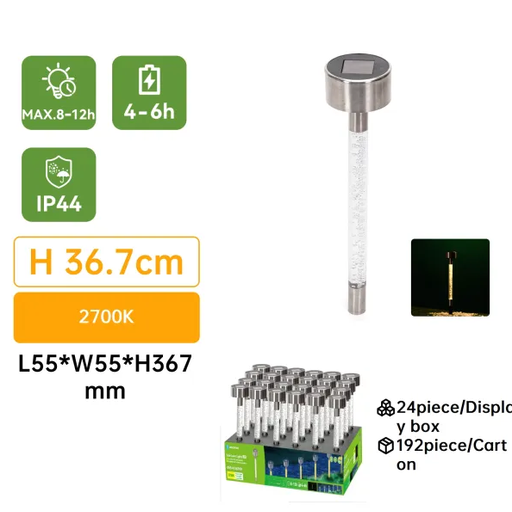
Why This Fits Their Persona: For homeowners who need functional yet decorative lighting for garden paths, driveways, or steps. The warm white light provides orientation and safety in the dark.
The height of 36.7 cm and the sturdy ground stake ensure secure and visible placement. The specified runtime of 8–12 hours ensures reliable illumination throughout the night.
Functional `solar path lighting` with pleasant warm white light (2700K); robust construction for permanent use in the ground.
We have compiled a complete, real-time list of products that fully satisfy these strict selection criteria and UK safety regulations.
The lifespan of a solar light is determined by two main components: the LED and the battery. According to the manufacturer, the LEDs in the featured models have a lifespan of up to 15,000 hours, which is sufficient for many years of nightly operation. The Ni-MH battery is a consumable component, and its capacity may decrease after several hundred charging cycles. However, in most models, it is replaceable, which significantly extends the light's usable life.
Yes, but with reduced performance. The models mentioned here use amorphous silicon solar panels, which can generate power even in diffuse light (e.g., on overcast days), unlike polycrystalline or monocrystalline panels that require direct sunlight. However, on dark winter days, the charging performance is lower, which can lead to a shorter runtime at night. For optimal performance in winter, the lights should be placed in the brightest possible location, and the solar panel should be kept free of snow and dirt.
Correct placement is crucial. Position the solar light so that the solar panel receives as much direct sunlight as possible throughout the day. Avoid locations in the shade of buildings, trees, or dense shrubs. Regularly clean the solar panel with a soft, damp cloth to remove dust, pollen, or dirt, as these can impair charging efficiency. Before the first use, it is recommended to let the light fully charge in the sun for an entire day.