
Lieferung heute & morgen

Qualitätsgarantie

Willkommens-Angebote freischalten: KOSTENLOSE Lieferung | Bis zu 80 % RABATT | Kostenlose 30-Tage-JoyPlus-Testphase
App herunterladen
A bookcase should support your books safely, make good use of the space available and complement your décor. In practice, inaccurate measurements, insufficient load capacity or a lack of wall fixings can often lead to the wrong purchase. This applies to classic freestanding bookcases as well as narrow bookcases, cube shelves and room-divider bookcases.
A shallow bookcase may look like a space-saving choice, but it might not provide enough room for large books, folders or decorative items. So check not only the width and height, but also the internal dimensions of the compartments. In a home office, for example, the height needed for ring binders is important, while in a living room you may want to store books in different formats alongside plants.
Claims such as ‘high load capacity’ are not very helpful without specific weight limits. Check the load capacity per shelf and the total load capacity. It’s best to place heavy books on the lower shelves. The actual load capacity also depends on the bookcase being placed on a level surface, assembled correctly and secured to a suitable wall.
An open bookcase is easy to access and works well for books, plants or decorative items. However, tall, narrow models can tip over under load or if accidentally knocked unless they’re secured. A tip-over restraint or anti-tip kit shouldn’t be treated as an optional extra. Wall fixings are particularly important in homes with children or pets.
Measure the space where you plan to put the bookcase, allowing for skirting boards, radiators, doors and window openings. A space-saving shelf, ladder shelf or corner shelf could work well in a narrow alcove. A corner shelf makes use of out-of-the-way spaces, but needs enough clearance from neighbouring furniture.
Also consider the height: a tall freestanding bookcase should fit the room and be safe to reach. Compact models with three or four tiers are a good choice for low walls or under sloping ceilings.
Many bookcases are made from coated wood-based panels, MDF or a combination of wood-based panels and steel. A melamine resin coating can make the surface easier to clean and help protect it from everyday marks. A steel frame can add stability, but it doesn’t automatically replace the need to secure the bookcase to the wall.
On an industrial-style shelf, screwed metal braces, crossbars and adjustable feet are useful design features. Check whether the feet can compensate for uneven floors and whether the back panel or side rails help prevent items from falling out.
A shelving unit with compartments is ideal for organised storage. Cube compartments can be paired with baskets, making them a flexible option for toys, textiles or office supplies. Adjustable shelves make it easier to accommodate items of different sizes.
An open bookcase can be both decorative and practical in a living room or bedroom. In a home office, shelf height, ring-binder size and sufficient depth are more important. If you’re using a bookcase as a room divider, make sure it’s especially secure, as it will be accessible from more than one side.
The models below are grouped by how you might use them. Dimensions, materials and load capacity are based on the information provided for each product. Before buying, check the details on the product page and read the assembly instructions supplied.
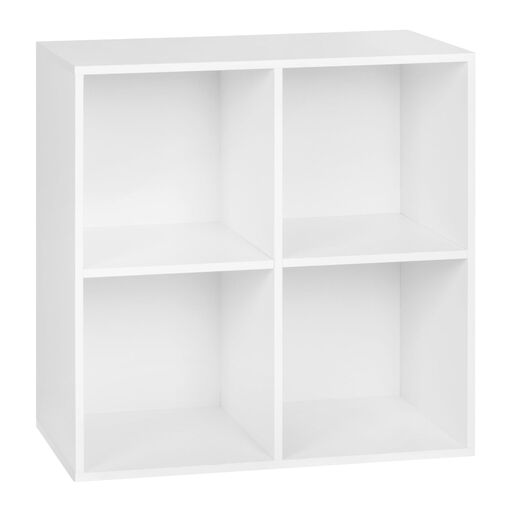
Why this product is a good fit: This compact cube shelf has four compartments and can be set up vertically or horizontally. It’s suitable for a living room, bedroom or home office.
The product details list the dimensions, compartment layout and a load capacity of up to 15 kg per compartment. Feet and an anti-tip device are included.
White finish, four equal-sized cube compartments and flexible positioning. Baskets can be added for extra storage.
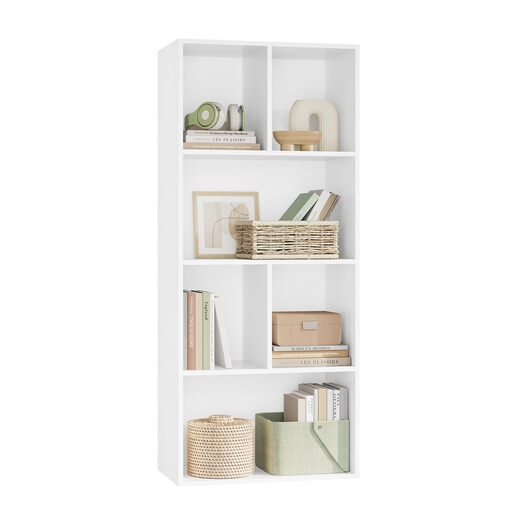
Why this product is a good fit: Six open compartments, FSC-certified wood-based material according to the product details, and a reinforced back panel make this a well-organised option for books and decorative items.
According to the product description, it has anti-tip protection and non-slip feet. The stated load capacity is up to 15 kg per cube compartment.
Can be positioned vertically or horizontally, with six compartments and dimensions of 29 × 50 × 121 cm.
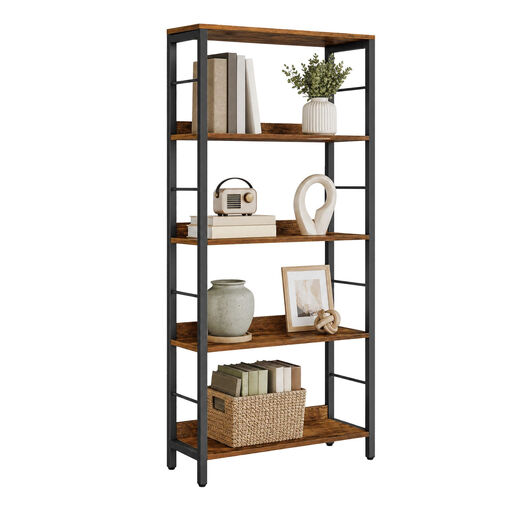
Why this product is a good fit: Measuring 30 × 60 × 144 cm, this industrial-style shelving unit is designed for homes with lots of books, plants or kitchen utensils.
Back panels and side crossbars help prevent items from falling out. According to the product description, an anti-tip kit is included.
Five tiers, a steel frame and a stated load capacity of up to 37 kg per shelf.
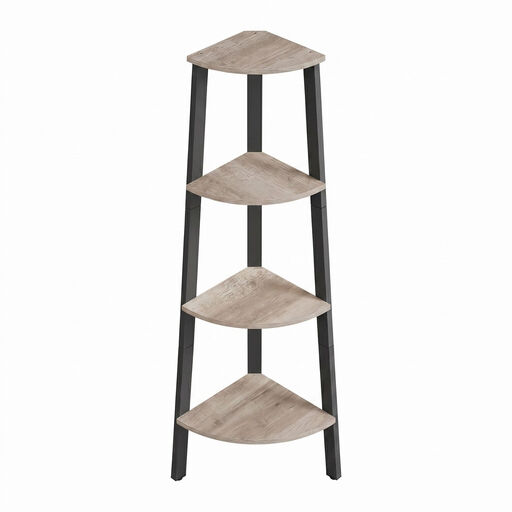
Why this product is a good fit: This corner shelf has a footprint of around 33.4 × 33.4 cm and can be used in a living room, hallway, bedroom or study.
A three-legged frame, adjustable rear foot and anti-tip kit help address common stability issues in corners.
Four tiers, a steel frame and a stated load capacity of up to 5 kg per tier.
We’ve put together a complete, regularly updated list of products that meet these strict selection criteria and the safety regulations in force in the EU.
Assemble your bookcase on a level surface and sort the components before you start. Tall or narrow models should be secured to the wall in accordance with the assembly instructions. Use only wall plugs and screws suitable for the type of wall. If you’re unsure, check the wall material first.
A soft, slightly damp cloth is usually all you need for cleaning. Avoid leaving moisture on wood-based panels for extended periods. After assembly and whenever you move the bookcase, check that the screws, feet and tip-over restraint are still secure.
Compact shelf depths are enough for many paperbacks and smaller decorative items. Large hardbacks, ring binders and baskets need more space. What matters is the internal depth of the compartment, not just the bookcase’s external depth.
Use the anti-tip kit supplied and choose wall plugs and screws that suit your wall. Assemble and level the bookcase fully before loading it. Place heavy items on the lower shelves.
Its lifespan depends on the material, load, assembly and room conditions. Distributing weight evenly, staying within the stated load capacity and checking the fittings regularly can help extend its useful life.